
More on this book
Community


Kindle Notes & Highlights

Read between
July 21 - August 18, 2019

Peterson is intentional in keeping the main idea the main idea: that we, as Christians, live lives of congruence. Put another way, that the inside matches the outside. Or as we used to hear, that we indeed practice what we preach.
During the lecture I had the growing feeling that who he was and what he was saying were completely congruent.
T. S. Eliot’s comments on Charles Williams: “Some men are less than their works, some are more. Charles Williams cannot be placed in either class. To have known the man would have been enough; to know his books is enough….[He was] the same man in his life and in his writings.”
Herman Melville’s comment: “Yes, the world’s a ship on its passage out, and not a voyage complete; and the pulpit is its prow.”*2 The prow and the ship, not two different things but the same thing.
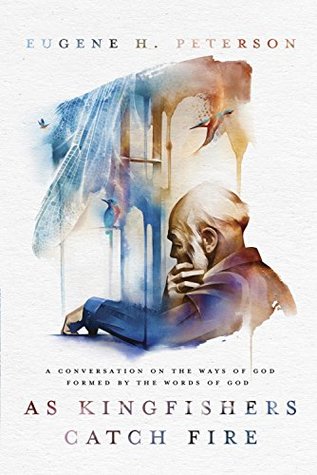
As kingfishers catch fire, dragonflies draw flame; As tumbled over rim in roundy wells Stones ring; like each tucked string tells, each hung bell’s Bow swung finds tongue to fling out broad its name; Each mortal thing does one thing and the same: Deals out that being indoors each one dwells; Selves—goes itself; myself it speaks and spells, Crying What I do is me: for that I came. I say more: the just man justices; Keeps grace: that keeps all his goings graces; Acts in God’s eye what in God’s eye he is— Christ. For Christ plays in ten thousand places, Lovely in limbs, and lovely in eyes not his
...more
The Christian life is the lifelong practice of attending to the details of congruence—congruence between ends and means, congruence between what we do and the way we do it, congruence between what is written in Scripture and our living out what is written, congruence between a ship and its prow, congruence between preaching and living, congruence between the sermon and what is lived in both preacher and congregation, the congruence of the Word made flesh in Jesus with what is lived in our flesh.
His final image is Christ, who lives and acts in us in such ways that our lives express the congruence of inside and outside, this congruence of ends and means, Christ as both the means and the end playing through our limbs and eyes to the Father through the features of our faces so that we find ourselves living, almost in spite of ourselves, the Christ life in the Christ way.
I finally started to get it: preaching is the weekly verbal witness to this essential congruence of what Christ is with his work that “plays” in us. Not just the preaching but prayers at a hospital bed, conversations with the elderly, small talk on a street corner—all the circumstances and relationships that make up the pastor’s life. Not ideas, not goals, not principles, nothing abstract or disembodied, but the good news of the “Word…made flesh” (John 1:14, KJV) becoming our flesh, our limbs and eyes. I still had a long way to go, but at least now I was being a pastor and not staying awake at
...more
I was learning to embrace the congregation just as they were, not how I wanted them to be. They became an integral part of the sermon. Preaching became a corporate act. Common worship was the context: singing and praying, baptisms and Eucharist, silence and blessings. But I soon realized our common worship on Sundays was also developing tendrils that reached into homes and workplaces, casual conversations and chance meetings on the street.
I was discovering an imagination for developing a sense of narrative that kept our lives relationally together in something deeper and wider than anything we were individually. I began to weed out the depersonalizing stereotypes that identified the souls in my care as either problems to be fixed or resources to be exploited. I developed conversations that grew into stories that in turn developed into something akin to a novel in which all these people who were worshiping together were involved with one another, whether they knew it or not or even wanted to be. Congregation was not a collection
...more
The Books of Moses are made up mostly of stories and signposts. The stories show us God working with and speaking to men and women in a rich variety of circumstances. God is presented to us not in ideas and arguments but in events and actions that involve each of us personally. The signposts provide immediate and practical directions to guide us into behavior that is appropriate to our humanity in the particular place and time in which we live, and that is honoring to God.
Using the name of Moses to identify these books does not mean he wrote them, for many unnamed Hebrew prophetic minds told and wrote what was eventually gathered and copied here. Moses, rather, represents the way of life and the way of using language that sets the tone for everything else that makes up Holy Scripture. The five books are foundational for the subsequent sixty-one. Preaching in the company of Moses keeps proclamation personal and local while at the same time breathing the clean air of creation (what God does) and the air of covenant (how God brings us into participation).
Elie Wiesel, retelling the Moses story with a blend of biblical and Talmudic materials, wrote, “Moses [was] the most solitary and most powerful hero in Biblical history. The immensity of his task and the scope of his experience command our admiration, our reverence, our awe. Moses, the man who changed the course of history…his emergence became the decisive turning point. After him, nothing was the same again.”
storytelling language, a language textured by the give-and-take of a life under the formative influence of God’s Word, language that develops in a worshiping congregation, language that invokes God and then listens and prays. It is the language of a mixed company of struggling sinners and faltering saints, preachers and teachers, homemakers and business people—people on pilgrimage, telling their family stories, passing on the counsels and promises of God.
Moses’s presence was profound: his leadership, his integrity, his ordained authority as the leader of the people of God out of the slavery of Egyptian bondage into the service of God, his Sinai transmission of God’s revelation, his provision and instruction for recentering the life of the people in worship. His pastoral care of his flock during all those years in the wilderness shaped all the seemingly disparate stories, instructions, and directions into a coherent whole.
The astronauts did what a lot of people spontaneously do when they integrate an alert mind with a reverent heart—they worshiped.
I decided to quit trying to prove God to others and instead started listening to God speak to me, not making pronouncements on God but listening, listening, listening. Instead of searching Scripture for truths I could use to bully or impress my friends, I would take my place alongside them in this God-Creation and enter into what God was creating in me and around me.
The numbered days, one through seven, provide a rhythmic, ordered structure: everything in order, nothing haphazard, nothing unintentional. The Genesis week is a workweek. God creates. God is not described as a force, an energy, an idea, a principle, an abstraction. He simply goes to work.
The fourth of those commandments is lifted from Genesis: “Remember the sabbath day, to keep it holy” (Exodus 20:8). Use this day to take into account all that God has done for you. Take nothing for granted. And do it every week. Forty years later Moses preached his final sermon to his congregation on the plains of Moab. As they prepared to enter the Holy Land, he repeated these ten commandments, which were to define the way they lived in the life of creation and salvation. The fourth is there intact, newly minted from Genesis: “Remember the Sabbath day, to keep it holy” (Deuteronomy 5:12,
...more
Remember. One day a week stop what you are doing and pay attention to what God has been doing and is doing. Be reverent and worshipful and grateful for the Genesis world we are placed in. Remember in gratitude and worshipful adoration. Hallow this day. Keep this day holy.
In the course of being your pastor, I have come to think of the first page of Genesis as a launching pad for shaping an obedient and reverent life of following Jesus in our daily, ordinary, working, and worshiping lives.
We are keeping company with God in the present, in the now: attending, adoring. Doesn’t it look very much as if Genesis points to the seventh day as the clue to the meaning of creation? There is far more to creation than creation then. There is creation now. The evidence accumulates that if we are to live out the reality and meaning of creation, we are going to be inextricably involved with Sabbath keeping. If Genesis is a text for getting us in on and participating in God’s creation work, Sabbath is our point of entry.
Being a friend is the opposite of being an enemy. That simple contrast stands out above all else in Abraham. Abraham was on such terms with his God that he responded without suspicion and without fear. Abraham somehow knew that God was on his side, that God was for him and with him, a friend.
Abraham was not called the friend of God because he was singled out for special benevolent attention by God, a kind of teacher’s pet. He did not live a charmed life. He was called the friend of God because he experienced God accurately and truly. He lived as God’s friend. He responded as God’s friend. He believed that God was on his side, and he lived like it.
Karl Barth, perhaps our most perceptive theologian in getting inside the biblical stories, wrote concerning Abraham, “He must pass from a well-known past to a future which is only just opening up.”*1 Through all this, Abraham knew that God was for him and with him.
“The gates of salvation do not swing open at all with the solemn disclosure that God would give this land to Abraham. Rather, this promise is strangely contiguous to the statement that at that time the Canaanites were dwelling in the land. Abraham is therefore brought by God into a completely unexplained relationship with the Canaanites, and Yahweh does not hurry about solving and explaining this opaque status of ownership as one expects the director of history to do.”*2
Abraham found everyday, practical ways to express appreciation and loyalty to God, and God found everyday, practical ways to express appreciation and loyalty to Abraham. Abraham was not in love with a dream or aspiring after an ideal. He was God’s friend, period. The evidence? The relationship was worked out on journeys and at water holes.
Religion wasn’t an emotion he carried around with him for comfort or solace. It was one with the routines of the journey. “Remember that big oak tree just outside of Shechem? That is where I listened to God and God listened to me.”
He didn’t keep going back to Shechem when he wanted to get in touch with God. He built an altar wherever he happened to be. Friendship was renewed and nurtured at each stage of the journey. Faith wasn’t a memory of something that started in Ur and Haran. It wasn’t a hope of something that wouldn’t be completed until all the families of the earth were blessed. It was daily, regular, and frequent, using whatever stones he found there on the ground to mark the spot.
Friendship is not a way of accomplishing something but a way of being with another in which we become more authentically ourselves.
Abraham’s life seems curiously empty of accomplishment. With the exception of his intercession for Sodom, he doesn’t seem to have asked his friend God for anything. His relation to God was not mercantile, not utilitarian. He wasn’t taking pains to stay on good terms with God so he might get a good inheritance. His altar building doesn’t seem to have been an insurance policy against disaster. His altars were spontaneous acts of friendship and gratitude, expressions of respect.
Abraham was in touch with the God who was in touch with him. He accepted God’s concern for him as the reality of his life, and he returned it by making God the center of his life. He obeyed, he journeyed, he prayed, he believed, and he built altars. He did none of this perfectly. But perfect is not a word we use to describe friendship relationships. Perfect is a word that refers to inanimate things—a perfect circle, say, or a perfectly straight line. With persons we talk of response, growth, listening, and acting. Abraham did all of that in relation with God, whom he was convinced was
...more
What we do know of Abraham is his quite ordinary friendship with God and God’s friendship with Abraham, using the everyday stuff of the culture—hospitality, altar building, family relationships, famine, sacrifice—but using it all sacramentally, using the visible circumstances and people and things as witnesses and occasions for being in faith present to God as friend. In this he marks the very beginning of the biblical process. It is only right that Jesus gets the last word: “I have called you friends” (John 15:15, NRSV).
Naming an event a miracle doesn’t mean we can’t understand it. It means we can’t anticipate it. It means we can’t reproduce it. We cannot control it. There is more going on than we can comprehend. There is more to life than we can account for. Miracle is a word Christians use to name events, at least some of them, that God brings about.
The core message of the gospel is that God invades us with new life, but the setting for this is most often in the ordinariness of our lives. The new life takes place in the place and person of our present. It is not a means by which God solves problems. God creates new life. He is not a problem solver but a person creator.
What I hope happens as I set this Isaac story before you and as you worship this morning is that you will be observant and aware and in love with this life that is in you and before you. We are in training in order to enjoy and nurture and encourage and affirm every instance of life. We are determined never to be negligent of it and always aware of it. We want to avoid abusing it and instead practice celebrating it. God creates life among us. Christ’s birth is the climaxing birth story that summarizes and emphasizes and continues in a sequence of miracle births.
There is a great deal about God that has to do with faithfulness. God is consistent. We can depend on his character. There is solidity and continuity built into the creation. We gain a sense of ease and familiarity with the laws: moral, natural, and spiritual. We learn to live without anxiety.
More to God than you can ever understand or anticipate. Being a Christian is not learning how to live by some rules so we are in touch with reality or getting trained in proper behavior so we will not get our fingers burned or our legs broken or our hearts broken or our consciences wounded. The great thing about living in faith with God is what we can’t anticipate, can’t predict. Sooner or later in the Christian way, we are going to laugh.
(their stories are told in Genesis)—God was the initiating, activating, providing, creative word. They lived in a universe that was God dominated. They lived, in other words, by faith. But their descendants in Egypt lived in a world dominated by work. When God dominated their lives, they lived free. When man dominated their lives, they lived enslaved.
Moses led them across the hot sands to Sinai, a gigantic volcanic mountain in the Arabian desert. Here they camped and began a life of learning what it means to be God’s people instead of Pharaoh’s. Here they would discover how to live as free people and not as slaves. Discover what it means to live by faith and not by works. Discover what it means to live under the provident blessing of God and not under the tyranny of Pharaoh. For four centuries they had been building grandiose pyramid tombs to hold a few mummified corpses. Now they would go to work building a living community of faith.
The next thing must surely have taken them by surprise: a volcanic eruption of divine wrath. God exploded in anger. In Scripture, God’s anger is always evidence of God’s concern, his involvement, his commitment to his people. God is not indifferent to us, not unconcerned. God is not impersonally, unemotionally cold to us. He created us, saved us, has plans for us. A vast, beautiful, and complex creation is provided, a world in which we can live to the glory of God. A painfully achieved, deeply experienced redemption is enacted so we can experience the love of God. And then in a moment of
...more
God is angry. It matters to God when we forsake these great gifts of a living faith and embrace an infantile superstition. It matters to God when, in stupidity or sloth, we degrade and diminish our lives by worshiping something that is beneath us at the very moment he is providing the means of exalting and enhancing our lives by showing us how to live in holy love.
The anger gets our attention, but it does not destroy us. What it does is provoke and stimulate prayers of intercession. Moses pleads for the people. Moses prays for mercy. He cries out for compassion. Moses, who has been bringing God’s word of salvation and revelation to the people, now brings the people’s need for mercy to God. Moses, the preacher of God’s Word, now becomes the intercessor for the people in their need. In Moses we see what is finally accomplished wholly and wondrously in Jesus Christ—that eternal act of atonement in which we are saved from the consequences of our sins and
...more
Paul’s letter to his friend Timothy: The only credentials I brought to it [this life] were invective and witch hunts and arrogance. But I was treated mercifully because I didn’t know what I was doing—didn’t know Who I was doing it against! Grace mixed with faith and love poured over me and into me. And all because of Jesus. Here’s a word you can take to heart and depend on: Jesus Christ came into the world to save sinners. I’m proof—Public Sinner Number One—of someone who could never have made it apart from sheer mercy. And now he shows me off—evidence of his endless patience—to those who are
...more
Scripturally, love as a verb is initially presented as briefly as possible as a simple imperative without context. No confusion over how it feels or what you might get out of it. Just do it. No reasons given. No rewards promised. Just do it. Love your neighbor as yourself. For anyone carefully reading or listening to Scripture, Leviticus 19:18, this out-of-the-blue occurrence, comes without conditions or arguments. It stands bare and unadorned, stark and unexplained. And I find it interesting that the Jewish community still uses Leviticus as the textbook to teach children to read. It is an
...more
Fast-forward to the first letter of John in our New Testaments. Leviticus 19:18 references to love language occur steadily through Psalms and the Prophets, the Gospels and the Letters. Near the end, in a quite glorious climax, Pastor John’s first letter outdoes all the previous mentions of love. The single sentence in Leviticus turns out to be a seed that brings forth a hundredfold yield.
This letter was written to a congregation that John was responsible for near the end of the first Christian century. His congregation, as it turns out, was pretty much a mess. He describes them with words and phrases like lie (1:6), hate (2:11), and children of the devil (3:10). He points out their failure to love their fellow Christians (3:10), how they “deceive” themselves (1:8), and how they refuse to help people in need (3:17). He mentions the antichrist three times (2:18, 22; 4:3), a scary word if there ever was one. And John uses forms of the word sin more than twenty times in five short
...more
Every act of love requires creative and personal giving, responding, and serving appropriate to—context specific to—both the person doing the loving and the person being loved. Because of the totally personal, particular, and uniquely contextual community dimensions involved in even the simplest act of love—the circumstantial complexity and inescapably local conditions—there is a sense in which we cannot tell a person how to love, and so our Scriptures for the most part don’t even try.
Leviticus comes out more or less the same: God loves you. Christ shows you how love works. Now you love. Love, love, love, love. Just do it. Amen.
Moses was given the task of leading the Hebrews into a free life, getting them accustomed to being trusted, to being loved, to worshiping God instead of fearing him.
