
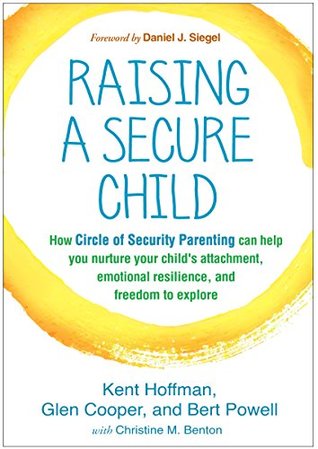
More on this book


Kindle Notes & Highlights

Read between
July 26 - August 6, 2017

the developing young child has two groups of needs: needs for comfort and safety on one side and needs for exploration on the other.
The relationships we form sustain us—even define us—because in every “and” we form we become something more than we would be alone.
Modeling perfection and the pursuit of it does not promote healthy development. Pressuring ourselves to always get it right or to guarantee that our children never experience the pain we may have experienced growing up creates an anxiety that our little ones can’t help recognizing. Working too hard actually compromises our children’s need to trust in our faith in relationship, an essential foundation of security throughout their lives.
The more children feel safe and secure within their primary relationships early in their lives, the more relaxed and resilient they will be when facing the challenges and opportunities that will emerge as they get older.
Being authoritative flows from the confident presence of being bigger, stronger, wiser, and kind and from prioritizing helping our children feel better over making ourselves feel better.
Fear is the cheapest room in the house. I would like to see you living in better conditions. —HAFEZ, 14th-century Persian poet
Children absorb the messages they’ve gotten from the way their parents respond to hearing shark music, and these messages often take shape in their behavior. When it comes to attachment, children’s behavior comes in the form of cues (direct, clear bids for a need to be answered) and miscues (indirect, contradictory messages, or misdirection away from the child’s true need), and the trick is to know which you’re seeing.
“Behavior problems” are not a demand for attention. They are a sign that the child finds the cost of revealing his true need higher than living with the painful consequences of the misbehavior.
We don’t see things as they are, we see them as we are. —ANAÏS NIN, The Seduction of the Minotaur
We do not learn to greet our feelings, especially the difficult ones, alone. We learn to greet them in relationship.
