
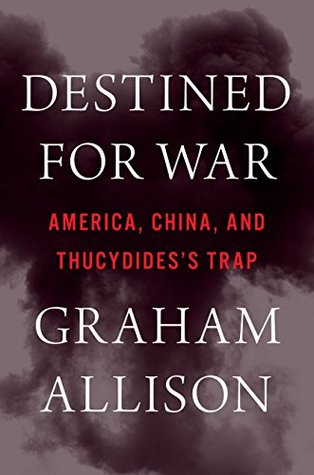
More on this book
Community


Kindle Notes & Highlights

Read between
December 5 - December 9, 2023

Instead of suicide, Xi chose to embrace the reality of the jungle. There—in his apt word—he was “reborn.”
The leader of 1.4 billion people and a Communist Party with 89 million members was actually rejected the first nine times he sought to join the Party, succeeding finally on his tenth attempt.
never state an unambiguous objective and a date in the same sentence.
Xi concluded that Gorbachev made three fatal errors. He relaxed political control of society before he had reformed his country’s economy. He and his predecessors allowed the Communist Party to become corrupt, and ultimately hollow. And he “nationalized” the Soviet military, requiring commanders to swear allegiance to the nation, not the Party and its leader. As a result, this “left the Party disarmed.” When opponents rose up to overthrow the system, in Xi’s words, there was nobody left who “was man enough to stand up and resist.”36
“The day Gorbachev said to the masses in Moscow: do not be afraid of the KGB, I took a deep breath. He is sitting on top of a terror machine that holds the damn pile together, and he says: do not be afraid.”
“Between being loved and feared, I have always believed Machiavelli was right. If nobody is afraid of me, I am meaningless.”
“A civilization is the highest cultural grouping of people and the broadest level of cultural identity people have short of that which distinguishes humans from other species,”
“Differences do not necessarily mean conflict, and conflict does not necessarily mean violence,”
Confucian cultures reflect an ethos that reinforces
“the values of authority, hierarchy, the subordination of individual rights and interests, the importance of consensus, the avoidance of confrontation, ‘saving face,’ and, in general, the supremacy of the state over society and of society over the individual.”
government powerful enough to perform its essential functions would tend toward tyranny.
the United States of Amnesia, every day is new, every crisis “unprecedented.”
Chinese believe that many problems can only be managed, and that each solution inevitably yields more problems. Challenges are thus long term and iterative.
America’s grand strategy for dealing with
China involves five to’s: to isolate China, to contain China, to diminish China, to internally divide China, and to sabotage China’s leadership.
these convictions “derive from a Chinese conclusion that the US has not, and never will, accept the fundamental political legitimacy of the Chinese administra...
This highlight has been truncated due to consecutive passage length restrictions.
In the 1960s, futurist Herman Kahn (one of the Cold War strategists parodied by Peter Sellers’s movie character Dr. Strangelove) proposed a 44-rung escalation ladder from “subcrisis maneuvering” up to full-scale nuclear war.27 Kahn’s first rung was the “ostensible crisis”—the spark. He explained that in a crisis, two powers would rarely proceed methodically and incrementally up the ladder. Background conditions and accelerants could cause them to skip rungs. As they move up the ladder, each state would assess its position relative to the adversary’s at each rung and calculate how it would
...more
When the cost of intervention is lowest and the effectiveness of action highest, the need to act is ambiguous and uncertain. By the time the necessity for action is obvious to all the players whose support or acquiescence is required, the cost of effective intervention has risen, sometimes to levels that make it
prohibitive. For governments, especially democratic governments in which many parties have to agree before action can be taken, this conundrum tilts the scales markedly toward procrastination rather than prevention—whether in dealing with rising rivals or recurring humanitarian catastrophes.
“A nuclear war cannot be won and must therefore never be fought.”
There is no value for which rational leaders could reasonably choose the deaths of hundreds of millions of their own citizens.
by undervaluing their currency, subsidizing domestic producers, protecting their own market, and stealing intellectual property?
Similarly, current US-Chinese economic relations are so interdependent that they create an analogue of MAD that has been labeled MAED: mutual assured economic destruction.
free markets and free societies proved more capable of delivering the economic, political, and personal benefits people wanted. Despite several decades of dramatic and
frightening ascendency, the Soviet Union failed because its core commitments to command-and-control economics and totalitarian politics could not compete.
The clearer leaders are about underlying trend lines, the more successful they can be in shaping the arc of the possible.
American conceptions of international order begin with US military primacy. But why does Washington have the predominant military force in the world today? Because over the past three decades it has invested several times more than all competitors on defense.
Why has the United States been able to hold the pen in writing the rules of the post–World War II order? While many Americans would like to flatter themselves that it was because of their intelligence, virtue, or charm, the hard fact is that the nation’s overwhelming weight has been the decisive factor.
When comparing the power of two competitors, what matters most is not absolute but relative growth: how much faster you grow than I do. By this “growth gap,” China’s performance is even more impressive.
Applied History is an emerging discipline that attempts to illuminate current predicaments and choices by analyzing historical precedents and analogues.
This strategy is known as “engage but hedge.”9 Its fundamental flaw is that it permits everything and prohibits nothing.
Hedging against such a big adversary has allowed the Pentagon to justify a $600 billion annual budget and the major weapon systems to
which the military services are wedded.
Pause to think about the fact that the current president of China and his wife sent their only child to college not at Xi’s
alma matter of Tsinghua University, but rather at Harvard, where she graduated in 2014.
Though deliberate crafting of strategy does not guarantee success, the absence of a coherent, sustainable strategy is a reliable route to failure.
I am a congenital optimist about America, but I worry that American democracy is exhibiting fatal symptoms. DC has become an acronym for Dysfunctional Capital: a swamp in which partisanship has grown poisonous, relations between the White House and Congress have paralyzed basic functions like budgets and foreign agreements, and public trust in government has all but disappeared. These symptoms are rooted in the decline of a public ethic, legalized and institutionalized corruption, a poorly educated and attention-deficit-driven electorate, and a “gotcha” press—all exacerbated by digital devices
...more
In his book Civilization, Niall Ferguson identifies six “killer apps”—ideas and institutions that drove the extraordinary divergence in prosperity between the West and the rest of the world after 1500. These are competition, the scientific revolution, property rights, modern medicine, consumer society, and work ethic.
I worry that the American work ethic has lapsed into mediocrity, while its consumer society has become decadent.
