
More on this book
Community


Kindle Notes & Highlights


Because I am a transvestite, people often assume that this gives me a special insight into the opposite gender. But this is rubbish: how can I, brought up as a man, know
anything about the experience of being a woman? It would be insulting to women if I thought I did.
In 1976, social psychologists Robert Brannon and Deborah David outlined four basic components of traditional masculinity, or the male sex role. Number one was ‘No Sissy Stuff’. The other three were ‘the Big Wheel’, which describes men’s quest for success and status as well as their need to be looked up to; ‘the Sturdy Oak’, which describes men’s air of toughness, confidence, and self-reliance, especially in a crisis; and ‘Give ’Em Hell’, which reflects the acceptability of violence, aggression and daring in men’s behaviour.
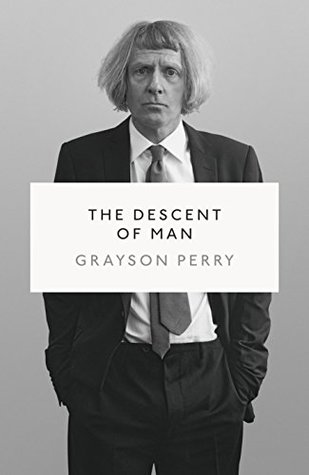
In this book I have focused on four areas of masculinity that I think need examining: power (how men dominate much of our world), performance (how men dress and act the part), violence (how men resort to crime and violence) and emotion (how men feel).
I like the word ‘default’, for not only does it mean ‘the result of not making an active choice’, but two of its synonyms are ‘failure to pay’ and ‘evasion’, which seem incredibly appropriate, considering the group I wish to talk about.
If George Osborne had dressed up as a cross between Flashman and the Grim Reaper instead of a business suit when he delivered his budgets, perhaps we would have had a more appropriate vision of who was controlling the nation’s finances.
Some businesswomen call this necessity to tone down their feminine appearance as ‘taking on the third gender’.
True equality happens when everyone, even the mediocre female, black, working-class ones, has an equal chance of getting the job as their mediocre, white middle-class-male equivalents.
The idea that masculine power resides in such things is not ridiculous, though. Even when I am wearing a dress, I use the men’s toilets – mainly out of respect for an exclusively female space,
A lot of men are sold the narrative of male domination, but lead lives of frustration and servitude. No wonder they get angry.
We all work unconsciously or otherwise at passing as our chosen gender; in fact we all work at passing in many ways, whether it’s our sexuality, class, race, occupation or nationality.
Men are into frippery as much as women, but they cloak it under spurious function.
the now ubiquitous hipster male could be seen as
a reaction against this shop-bought, gym-wrought masculinity.
The cost of male crime to the UK Exchequer runs into tens of billions of pounds every year. What if female
taxpayers decided they were fed up of paying for this? If the government can repeal the so-called ‘Tampon tax’, surely they could ask men to pay for the consequences of the violent chaos
Hiroo Onoda finally surrendered in 1974 after hiding in a Philippine jungle for twenty-nine years after the end of the Second World War. He was crushed, he felt like a terrible fool and had mistakenly killed innocent civilians in that time, but when he returned to Japan he was treated as a hero. To humiliate him further for just doing his duty would have been cruel.
As the author Amanda Prowse wrote in an article about middle-class domestic violence in the Telegraph, ‘In a detached house there is no one to hear you scream.’
The men’s rights movement seems wedded to an inflexible, static vision of masculinity. Women have long focused on what women can be, should be, will be in the future.
A man who does not bottle up anger, fear or sadness also experiences more joy and more intimate relationships.
The appalling ubiquity of online sexist and racist abuse speaks of lonely, angry men. If we don’t teach them emotional literacy, they might well end up living lonely, unhealthy, shorter lives.
ashamed of any of these
Hyde and his groups for talking to me at
