
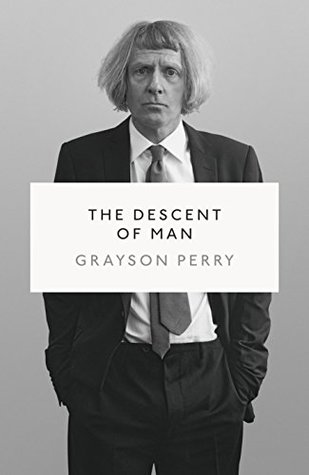
More on this book
Community


Kindle Notes & Highlights


Examining masculinity can seem like a luxury problem, a pastime for a wealthy, well-educated, peaceful society, but I would argue the opposite: the poorer, the more undeveloped, the more uneducated a society is, the more masculinity needs realigning with the modern world, because masculinity is probably holding back that society.
Masculinity needs to change. Some may question this, but they are often white middle-class men with nice jobs and nice families: the current state of masculinity is biased in their favour. What about all the teenagers who think the only manly way out of poverty and dysfunction is to become a criminal? What about all the lonely men who can’t get a partner, have trouble making friends and end up killing themselves? What about all the angry men who inflict their masculine baggage on the rest of us? All of us males need to look at ourselves with a clear eye and ask what sort of men would make the
...more
What if half the victims of masculinity are men? Masculinity might be a straitjacket that is keeping men from ‘being themselves’,
in the end I opted to call him Default Man. I like the word ‘default’, for not only does it mean ‘the result of not making an active choice’, but two of its synonyms are ‘failure to pay’ and ‘evasion’, which seem incredibly appropriate, considering the group I wish to talk about.
They think they got the job because they are brilliant, not because they are a Default Man, and being a Default Man they are therefore presumed more competent by other Default Men. If they do something bad, it is also down to the individual, and not to do with their gender, race or class. If a Default Man commits a crime, it is not because fraud or sexual harassment, say, are endemic in his tribe (coughs), it is because he is a wrong ’un.
The Department of Masculinity has an office staffed by Default Man in all our heads, constantly sending out unconscious memos. If Default Men approve of something it must be good, and if they disapprove it must be bad, so people end up hating themselves because their internalized Default Man is berating them
The most pervasive aspect of the Default Man identity is that it masquerades very efficiently as ‘normal’ – and ‘normal’, along with ‘natural’, is a dangerous word, often at the root of hateful prejudice. ‘You and your ways are not normal’ is a phrase often blatantly thrown in the face of oppressed minorities.
Default Man has been governing much of our world for a long time. He has done many things well, but it is time for him to relinquish his dominance. I think diversity in power can only make for a better society. Women and minorities bring very different life experiences to bear on their decisions.
I have heard many of the ‘rational’, i.e. masculine, arguments against quotas and positive discrimination, but I feel it is a necessary fudge to enable just change to happen in the foreseeable future. At the present rate of change, it will take over a hundred years before the UK parliament is 50 per cent female. I’d love to see it in my lifetime.
True equality happens when everyone, even the mediocre female, black, working-class ones, has an equal chance of getting the job as their mediocre, white middle-class-male equivalents.
It has become very difficult to unpick masculinity from common sense, functional design and justice. Men have been able to decide how things are so comprehensively for so long that it becomes difficult to dispute the idea that ‘that’s just how things are, love’.
The strict code of old-school masculinity, where shopping for clothes feels feminizing, is absorbed at a young age. The idea that you can buy the role off the peg assaults the unconsciously held notion that the man is the authentic, natural, uncorrupted one.
The idea that gender is performative and that most of us work at passing as a member of the dominant binary system is unsettling. So habituated is the performance of gender that some people might dispute that we do perform
Men are into frippery as much as women, but they cloak it under spurious function. They spend as much, if not more, on non-essential stuff to bolster their gender role. Nearly every masculine garment is coded to associate the wearer with dramatic versions of their gender role. Each extraneous buttonhole, pocket and patch is not really about real function but is as decorative as a lacy frill.
Males may have evolved with more muscle and a fondness for risk taking, but I believe most of the harm caused by men is a result of conditioning.
Men commit 90 per cent of violent crime. That statistic alone should motivate a government to put gender at the centre of policy, but I’m not hearing it. The cost of male crime to the UK Exchequer runs into tens of billions of pounds every year. What if female taxpayers decided they were fed up of paying for this?
When crimes are reported, the causes are invariably said to be the economy, imbalances in society, religious extremism perhaps. Rarely is the main reason talked about – it’s just too mundane.
Hiroo Onoda finally surrendered in 1974 after hiding in a Philippine jungle for twenty-nine years after the end of the Second World War. He was crushed, he felt like a terrible fool and had mistakenly killed innocent civilians in that time, but when he returned to Japan he was treated as a hero. To humiliate him further for just doing his duty would have been cruel. Maybe we should see young men who act out the extremes of masculinity in a similar light, and tell them that the war is over, and help them adapt to life in modern society.
psychologist Alice Miller thought that the brutality of Hitler and the Nazis found a receptive population in 1930s Germany because of how they had been parented. Reared on corporal punishment and blind obedience to their fathers, is it any wonder that the electorate found the ruthlessly authoritarian Nazis strangely familiar?
they were locked into a ritualistic playing out of the basest masculinity. They had just the bones of it, any culture, skill, aspiration or discipline having long since boiled away. A bit like Donald Trump really.
I am not going to advocate that the answer to young male crime is bringing back conscription, but national service was the last time we had a formalized coming-of-age ritual for a majority of young men. Many men talk of their time in the military as the making of them: it helped them to leave behind a chaotic childhood, and was a time of re-parenting. ‘I’m yer muvver now, son,’ says the sergeant major to the private. We do need to find a way of dealing with unsocialized masculine energy.
A risky, collective boy’s own adventure in the name of a seductively black-and-white world view. A chance to play out all those bedroom dreams of anti-establishment heroism for real. ISIS is not breeding killers, it is just appealing to disaffected young men seeking a place where their anger, alienation and ideals of manhood seem to fit.
thirties that I felt I was able to sort through that trunk. And before all you book-reading, middle-class sissies think that male violence is perpetrated by the ‘other’ – the poor, the uneducated, the foreign – just ask a divorce lawyer.
Men like a clearly defined mission statement, but what if the problem is that men like a clearly defined mission statement? What men might need is a set of skills to negotiate the daily challenges of life, big and small, which have no clear winners and losers.
The men’s movement has been kicking along since the 1960s. It grew alongside second-wave feminism, the Black Power movement and student activism. It started as a men’s liberation movement that looked at how boys and men needed to adapt to a world of gender equality. It looked at the restrictions of the male role, very much in the same way as feminists looked at the female role. Early men’s movements campaigned alongside women, but very soon they split into opposing camps who were either pro-feminist or anti-feminist.
it is clear that they are trying to turn the clocks back to a time when real world gender relations matched their sexual fantasies. They have not cottoned on to the fact that to be an attractive man in the twenty-first century you might have to be a bit, well, feminist.
Men need to learn to equip themselves for peace.
Call me naive, but I believe all humans are born good. Goodness is surely evolutionary: we want the human race to survive and the best way to do it is together. Evil is the behaviour of people who have been really fucked up.
I also believe that all humans are born with the same deck of emotions, males and females. I believe male and female brains are pretty much the same. We have very similar hardware, it’s the software – the way we are wired by experience – that is different. Males have the potential to be just as soppy and soft, tender and sweet, as females, it’s just that males build up this brittle crust that masks and contains those feelings.
downplaying of their emotional complexity is, I think, the aspect of masculinity that we most urgently need to change.
At this point, the parents of Islington rise up as one and refute my claim. ‘We bring up our boys as free, loving, tender, empathetic, gentle souls,’ they say. I’m sure they do, and the young men in question are probably delightful, and a tiny privileged minority, and I’m pretty sure their mothers still do most of the childcare and housework or employ other women to do it.
This numbing does not mean we stop having the feelings, it just stops us from being aware that we are having them. Those feelings are still churning away, tensing our bodies, writing unconscious scripts for us, storing up stuff to unload on to the world, on to our kids, but preferably on to our therapists. This numbness also inhibits the ability to have good relationships as well,
Qualities that I might easily assign to masculinity are often inconsistent: physical bravery does not translate into social courage; confidence to dress how I desire does not extend to confidence about what I make.
Despite men still dominating the arts at the top end, heading cultural institutions, directing movies, their work getting huge auction prices, most of those starting a career in the arts are women. Girls make up 90 per cent of performing-arts students. At the University of the Arts London, where I am Chancellor, 70 per cent of its nearly 18,000 students studying mainly visual art are female. As well as being brought up as potential breadwinners, boys are conditioned to be poorer communicators and less in touch with their emotional bodies, hence they think the arts are not for them.
Men can and will talk about tricky emotional subjects, but perhaps need the cover of a manly context and maybe anonymity to do it with ease.
Brené Brown, a research professor in social work, gave a remarkable TED talk called ‘The Power of Vulnerability’.
This idealized man is very brittle. He is so fragile that a casual rejection or slight can cause him to shatter and collapse. A survey of secondary-school boys found that their biggest fear was being ridiculed.
Sometimes I have the feeling that men see their bodies as a liability, corruptible, full of messy feelings, when all they want is a vehicle to transport the magnificent head of state, their brain.
Often the difficulties we face in relationships with partners is a mismatch between the power relationships that turn us on sexually and the ones that work on a day-to-day emotional basis.
The study surprised many with its finding that in couples where the man did many of the chores that are considered to be feminine – ironing, cooking and vacuuming, for example – they reported less frequent and less satisfying sex. Housework does not make a man sexier. Esther Perel, a couples therapist, puts it bluntly: ‘Most of us are turned on at night by the very things that we’ll protest about during the day.’
A sign of impending change may be the increasing occurrence of the male who performs traditional masculinity inadequately. The doofus, the klutz, the geek, the nerd, Homer Simpson, David Brent, any number of male comedic personas.
More than once I have had conversations with men about the embarrassing manoeuvring they do to avoid making lone women fearful when walking down dark streets, such as hanging back or changing their route. ‘I’m not a rapist, honest!’
We men need to stop thinking of masculinity as immutable, even within our own lifetimes. One thing therapy has taught me is that you can change how you feel about things, even deep fundamental things.
We need to stop dismissing men as cardboard, brittle, inflexible, unable to change. After all, they have pretty much the same brains as women. I think the problem is that the male role at the present time is very constrictive.
