
More on this book
Community


Kindle Notes & Highlights


The hospital itself is a paradox. Despite its occasional terrors, it is undeniably an oasis for the ill and infirm, a clean, well-lighted place. Sick people come, bringing their hopes and fears and we minister to them with our, mostly, good intentions.
Hospitals are filled with caring staff, but resilience and determination are prized as highly as empathy.
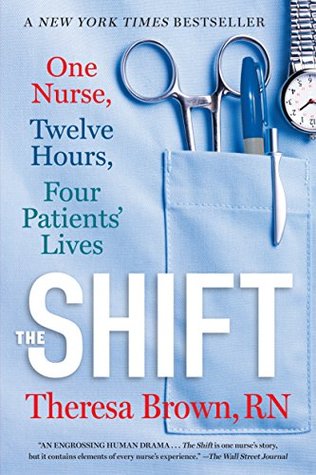
A shift lasts twelve hours. Twelve hours of holding a few lives in my hands, trying to make order out of the chaos of bodies and disease, working within a health care system that sometimes forgets it exists to serve human beings rather than bureaucrats or businessmen.
The patients are the key to the entire shift: they can make a day intolerably frustrating or unbelievably rewarding, or occasionally both.
This unknown fourth patient feels like a vulture perching on my shoulder, hungry to scavenge my peace of mind, so I try not to think about it. Three allows me to treat my patients as people. Instead of rushing from room to room I can move at a human pace and also be on top of everything going on with them:
My eyes glaze over when I try to understand health care economics from a manager’s point of view. I say, put the patient at the center and figure out the money from there.
protocols. It’s frustrating to be restricted from knowledge, but it’s humiliating to be trusted with the daily care of people who have life-threatening conditions and not be trusted with the level of Internet access required to learn about their problems.
In the age of reimbursement based on patient satisfaction scores, nurses are discouraged from asking people to “please stop yelling because it makes it impossible for me to think.”
We need a menu that includes the option: spent time comforting patient with life-threatening diagnosis. But nothing that empathy-intense gets included in our required paperwork.
The few times I’ve been asked to rate my own pain from one to ten I’ve found it inaccurate and unhelpful. Hurts some, hurts a lot, and oh-my-God give me relief now seems like a more appropriately human scale.
Touch connects the essential humanness of nurse and patient, reminding me that we are two people with a shared mission: healing, if we can.
Of course I have things written down, but nurses spend the shift recalibrating the tasks we have and their urgency.
Pride’s at work here. I’m too proud to tell her the assignment feels potentially overwhelming, that I’m afraid I can’t do it. I will not make myself vulnerable in front of someone who has power over me because I want to show I can do it all, that I’m that good:
Nurses sometimes joke at change of shift that it was a good day if “everyone was still breathing when I left.” That may sound like we set the bar way too low, but illnesses can be unconquerable.
Ambiguity is anxiety-producing, but the appearance of indifference combined with a lack of control may be what mattered the most here.
I want to say, “Am I a doctor? Did I enter that order?” but I don’t. It won’t help. Nurses sometimes serve as intermediaries in this way: physicians take their frustrations with each other out on the bedside nurse because we’re safer.
I’m ready to brush off his gratitude, to say I’m only doing my job, when I bite my tongue. “You are very welcome,” I
It’s a tradition among firefighters, at least in Pittsburgh, to cover for members who get sick. Individual volunteers from different crews around the city signed up for each of Ray’s twenty-four-hour shifts. They worked, but Ray got the money, so his leukemia diagnosis didn’t also lead to a sudden loss of income or health insurance.
We don’t call the hospital after we’ve left to ask how so-and-so did. We give our all while we’re there and then we go. This isn’t indifference but practicality.
“If we could know the future our jobs would be a lot easier.”
