
More on this book

Kindle Notes & Highlights

Read between
February 4 - February 4, 2019

Émile identified himself to the guards Duchâtel and Duthion on that same Wednesday morning, February 14. He wrote the date and place of his birth in Duchâtel’s notebook, saying that his father was dead and his mother still living, although he refused to provide her address.
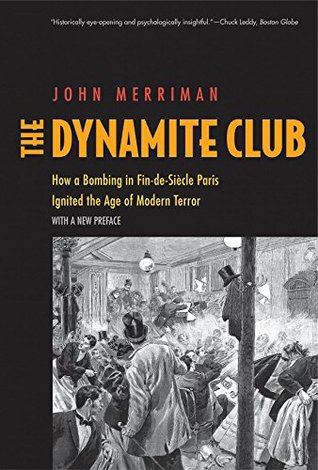
The bomber had chosen random victims — he simply threw his bomb into a group of people. This time the target was not the government or one of its officials or representatives, or a public monument, or the office or house of a wealthy financier or captain of industry, but rather ordinary people having a beer and listening to music in a café.
The amnesty of 1880 had never really been accepted by the French upper classes, who had refused to pardon the insurgents. The flame of vengeance for the Commune still burned, and now it had killed.
But the bourgeoisie and its police had not counted on unknown men, waiting in the shadows, appalled by police action, eager to lash out, “in turn, to hunt the hunters.”
On May 24, Émile was buried in the cemetery of Limeil. Jules Henry and several compagnons later returned to plant a shrub at the tomb. In Belleville, as news of the execution spread, people looked at each other and asked, “Who is next?”
Émile Henry against his cause when he threw his inexplicable bomb into the middle of quiet, anonymous people who had gone to a café to drink a beer before going home to go to bed.”
The “dynamite psychosis,” which the Parisian press succeeded in deepening, led the Chamber of Deputies to pass a third “scoundrelly law” on July 28, 1894. While the previous laws had cracked down on anarchist publications, the new law sought to abolish the movement altogether by expanding further the definition of anarchist propaganda and what constituted complicity with anarchist deeds.
After his release from prison, Fortuné Henry took a job working for the Central Pharmacy in Paris, where he had earlier been employed.
The French state, against which the anarchists struggled, helped lead Europe into a murderous war in 1914.
