
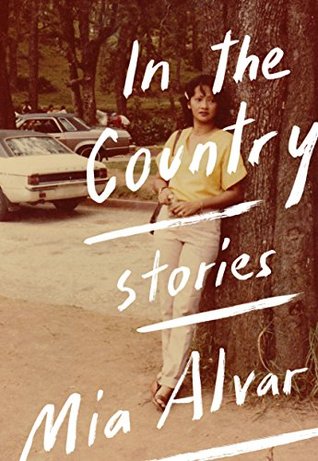
More on this book
Community


Kindle Notes & Highlights


But while Tokyo could match New York for all its rushing, solitary people, in Manila no one seemed alone but me. At ARRIVALS each brown face would find the cluster of faces it belonged to and merge into a heap of arms and laughter and chatter.
On the highway, skinny boys in wifebeaters dodged the traffic, some wearing flip-flops, others barefoot, their shins and calves dark with scabs. They carried trays of gum and cigarettes.
After that, like a new celebrity or clothing brand, the ghost seemed to be everywhere for me. My first trip to Manila had been packed hour to hour with castings and photo shoots;
The one thing I learned about Manila was this weird and hazy ghost story, which kept on changing shape. Every stylist, every makeup artist knew a different legend of the white lady. “They say the Japs
Loneliness, whenever I felt it, hit me generally as a hole somewhere between my heart and gut, and now I tried to fill it. “Keep it,” I told the cashier who tried to hand me change.
I looked up then from my tray into the window of the restaurant. And there, as if it had just fallen from the sky or risen from the ground, was a dress: white and gauzy, fluttering at the straps and hems, like something by Alberta Ferretti. And there was a body in the dress, a long-limbed woman who turned and walked away just as I caught her eye. She seemed to be alone, and tall for someone local.
felt proud, as if the white lady proved my membership in some club I didn’t know existed.
The “land” was a Technicolor vista of rice terraces and sky. The photographer shouted to me about Marilyn curves and a time in America
Jorge’s and Will’s friends were mismatched, too. Three of them looked young and put-together. I recognized at least one designer shirt. Two others seemed greasy, aging, toothless. We sat on the gritty, unclean floor. The coffee table, when I touched it, had the heft and coldness of real marble.
But girls who live or die by their metabolisms, whose reactions to caffeine, herbs, or laxatives can mean the difference between shot-girl double shifts and a thousand dollars an hour just to sit there?
It made me wonder what secrets my body was hiding from me, when and where my own flesh would betray me after the years I’d spent getting to know it.
People don’t think beauty’s an accomplishment. Maybe they’re right, but close your eyes for just a moment and imagine this world without beautiful people in it. Is that a world you’d want to live in?
“There’s Manila for you,” Will said. “Everybody but their mother under the same roof.” “Everybody and their mother,” I corrected.
Outside, a heavy white mist hung over Balete Drive. In daylight I saw that the tree branches reached so far up that they made arches over the street. The hanging vines thumped and swished over the windshield.
“One, two, three, cheese,” he said, and snapped the plastic button. I’d been at this work for years. I could imagine almost anything and then become it, visually speaking. For this very last picture, I put aside the all-American sex-heat and became the white lady of Balete Drive, cold and not exactly there. I made like moonlight flooding the camera lens. I receded to a bright puddle and dissolved. Perfect. Right there. Here we go. By the time they touched my image—blurred it, altered me—there would be nothing left.
Our babies learned math from Irish nuns and played soccer with Bahraini children and changed their accents at will. “Watch her bob that head from side to side like a Bumbai,”
And so our husbands made their secret bets indoors, on the same notepads where we wrote the grocery lists. Now and then a great male chorus erupted from the den, hooting
We lived and worked in Bahrain at the pleasure of a people who mystified us. Everything we knew about the Arabs one day could be voided by what we learned the next. Luz
These katulong—“helpers,” as we called them—were often younger but always aging faster than we were, their skin leathering from the desert sun, their spines hunching over brooms and basins, their lungs fried by bleach and petroleum vapors.
She was taller than her flatmates, taller than us, taller than most of our husbands and even some of our teenagers, whom we’d raised on fresh vegetables and fortified milk. Her heels added more height still. She had the fair skin and narrow nose we’d all tried for as young girls in Manila, before we understood that creams and clothespins wouldn’t help. Her hair, the improbable color of Sunkist soda, followed the slant of her jaw, longest at the chin and shortest at the nape, with bangs that stood in front like stiff feathers.
Between Arab bosses and Indian subordinates, British traffic laws and American television, we craved familiar flavors and the sound of a language we knew well.
Baby’s origins put an American twist on a story we’d all heard before. As children in the Philippines, we hardly knew a family that didn’t have its second, secret, “shadow” family. Husbands left the provinces for Manila, wives left the Philippines for the Middle East, and all that parting from loved ones to provide for them got lonely.
Only Baby never thanked us. She seemed to take each ride as her birthright, her long legs striding to claim the passenger seat before any of her flatmates could.
The thought of Fidel Bautista, Pirmin Ocampo, and Vic Ledesma as lusty wolves was enough to make us choke on our adobo.
Our fathers never wore a suit or wedding ring between them. “Mine chased skirts instead of looking for a job,” said Paz Evora. “Mine drank away what he could win at jueteng,” said Fe Zaldivar. “Mine was a dog,” said Vilma Bustamante, “who couldn’t learn how to sit or stay.”
Let’s pray Alfonso gets this promotion, or I’ll be sore all week. But mostly they were tender if not inventive lovers. And if they sometimes took us before we were ready, if they sometimes shrank from us before we felt a thing, if they fell asleep faster than we could get started, we remembered their long hours and hard days, the work that gave us beds and private rooms in the first place.
any case, something nudged her back into her mother’s line of work, the seedy industry that claimed so many girls back home.
Her shape had changed. The once slim, flat waistline had “popped,” as they say, tenting the black crepe out in front of her.
“Do you know what you’re getting into? One day you wear their clothes, the next you’re a slave to a stranger’s way of life. Are you prepared to convert? To raise your child as one of them? To lose your child, if things don’t work out?”
“If he’s an Arab, he can have a second wife,” said Baby. “They’re allowed, isn’t it?” This much she knew.
Baby smiled, and then obliged her, with simple words that no one could misread. “He’s a Catholic, like you. A kababayan. If he’s here, I’ll point to him. But you sent him out with the kids.” She’d been saving up
Rico Salonga confessed to a horrified Luz that, although he’d been a faithful man, he didn’t see the big deal about mistresses, so long as wife and kids were well provided for.
the Arabs had their own solution to the Baby problem. And—for her own good, for our suffering friends and the very sanity of our beloved circle—they’d deployed it. A British obstetrician, one of Flor Bautista’s colleagues, had accompanied them a few days earlier to visit Baby. I’ve seen women in your predicament give birth in handcuffs, warned the doctor, just before they went to jail. Baby was advised to catch the next plane to Manila. This is Bahrain, Lourdes Ocampo reminded her, not Olongapo City.
For the first time they seemed capable of harming us. And yet none of them “pulled a Baby” on us, as Lourdes Ocampo termed it, that year. In fact, they acted shyer and more self-effacing than before, as if atoning on behalf of Baby, ashamed that one of their own had wronged us so,
Then came the nineties, and a war that put this strange hot chapter of our lives on the map. Two decades later, we watched from living rooms in Toronto and Dallas and Honolulu as the Pearl Monument, once a fixture in our lives, the roundabout through which we drove our children to the park or ice cream shop, was razed to the ground, its white fragments like the shattered bones of a whale.
Some had children without marrying at all. When we met our hybrid grandchildren, with their hyphenated names, we almost wept at their beauty. We couldn’t stop touching their hair or trying in vain to name the color of their mesmerizing eyes.
But some of us formed shadow families of our own, after all. We boarded buses, crossed whole continents on trains, or watched the lights of our old cities shrink as we climbed into the sky. We moved into apartments whose leaks and leases we would have to handle on our own; we lay awake in single beds, sensing that we’d snipped a cord not just from home but from the law of gravity itself, and if we tumbled off the planet altogether no one, for a while, might know.
Now we were outcasts, of a certain sort, as well. Time had toppled our pillars of domestic and family life without her help. It might be overstating things to say we’ve walked a mile in Baby’s high-heeled shoes; we had advantages she didn’t, after all, to ease our lonely exile from the land of perfect wife- and motherhood.
We know these images have more to do with our own obsessions than with any Baby that existed or exists. We know the likelihood of seeing her this way is slim. And still we picture it, every so often: this rare reunion with our distant past, the chance to look at her again and maybe recognize our selves.
chicken in a coop. It was true my mother had friends in Monte Ramon’s finest men: engineers; police officers; even, on one occasion, the mayor. These guests showed their gratitude to my mother in various ways.
Countless men in Monte Ramon were good to my mother. I refused to believe, however, that she could somehow be degrading herself in the exchange. In her own words, my mother repaid her friends with “company and comfort—that’s all,” and I did not consider it my province as a son to challenge her.
I had longed for the day when my schoolmates would find a new target, a victim other than me. Now that she was here—a girl, who seemed unfazed by the teasing—I felt none of the relief I’d expected. I felt only shame at my own school-yard weakness, and a deep curiosity about this girl they called the Negrita.
Annelise’s had set my heart racing. I’d never heard a child speak to adults with such boldness, or stand almost with pride while being disciplined.
“I’m the ‘scholarship girl.’ The nuns took me on as their charity case.”
I prayed for Dr. Delacruz to become my father. I prayed that he would win my mother’s heart at last, with all the gifts and dishes he brought us and the amount of time and care he lavished on me. I prayed that she would come around, as Reyna had with Joe in Pusong Sinugatan, to the one suitor she had overlooked.
beating. I could still see her scar and was imagining the feel of knives and needles on my own flesh, and wondered if this—the cold sweat above my lip, the difficulty breathing—was how Annelise had felt in the street after the parade.
While I got back into my trousers she switched on the transistor radio, finding Pusong Sinugatan. Ignacio, one of Joe’s unscrupulous rivals for Reyna’s affections,
There was a German pill, said Dr. Delacruz, which women in both Europe and America had taken for my mother’s symptoms. “It calmed their nausea and helped them sleep.” I was confused. Their union was taking a long time and veering in a direction I hadn’t foreseen. I scrambled to reword my prayers to the Virgin,
I simply couldn’t stand by and watch a pregnant woman suffer without taking action. So I wrote the prescription. The day you were born, I saw my mistake.” My mother looked pale and stunned, as if we had been robbed and found ourselves in a sala emptied of its sofa, its cabinet, its
The idea I’d been polishing like a precious stone slipped from my hands. And with it, all ideas that had carried and sustained me through the years seemed to be crumbling too.
