
More on this book

Kindle Notes & Highlights
by
Hilary Klein
Read between
October 1, 2017 - January 20, 2020

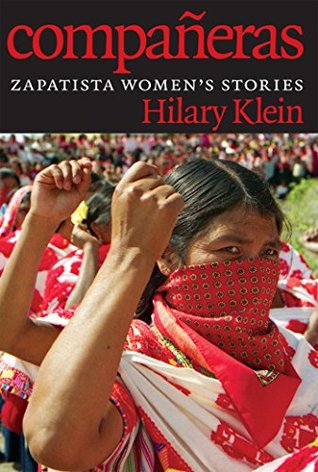
Peasants turned warriors, mothers turned revolutionary leaders—dozens, hundreds, thousands of Zapatista women gather, tiny and darkskinned, with red bandannas covering their faces and masking their individual identities, long black braids hanging down their backs, their fists in the air.
They have marched, they have organized, and they have planted seeds—both real and symbolic. They have stood up to the Mexican army and to their own husbands. They have changed their own lives and they have changed the world around them.
women’s liberation and social revolution illustrates that popular struggles cannot achieve collective liberation for all people without addressing patriarchy and, likewise, women’s freedom cannot be disentangled from racial, economic, and social justice.
In the words of Comandanta Ester, from a speech she gave in Mexico City’s central plaza in 2001, “We are oppressed three times over, because we are poor, because we are indigenous, and because we are women.”2
There are clear boundaries of Zapatista territory, however, and this is meaningful because in this small corner of the world, the Zapatistas are experimenting with self-government that functions independently from the existing state and federal system, alternative education and health care infrastructure, and an economic system based on cooperation, solidarity, and relationships of equality.
Mexican government in 1996, which recognized indigenous rights and promised indigenous autonomy. The Zapatista movement arguably helped bring an end to seventy years of one-party rule in Mexico when the Partido Revolucionario Institucional (Institutional Revolutionary Party, PRI), which had monopolized state power since the Mexican Revolution, lost the presidential elections in 2000. And, through its national mobilizations and dialogue with other sectors of the population, the EZLN is also credited with the strengthening of Mexican civil society.
Zapatista women have served as insurgents, political leaders, healers, educators, and key agents in autonomous economic development. Women’s participation in the EZLN has helped shape the Zapatista movement which has, in turn, opened new spaces for women and led to dramatic changes in their lives. A woman who was abused as a teenager at the hands of a husband chosen by her father would later join a caravan ofthousands ofZapatistas marching on Mexico City to demand indigenous rights. Along the way, she would meet with other Mexican women and urge them to fight for their liberation as she had.
...more
Some names in this book are women’s real names, some are nombres de lucha (literally meaning “names of struggle,” these are pseudonyms that Zapatistas choose for themselves),
“We can’t live like we did before. Things began to change because we organized. It’s clear to us what women’s lives were like before, and how we want our lives to be now. We want respect and we want rights for women.”1
The patrón [landowner] sent us to work and he didn’t care if we died from working. My parents worked very hard, but it was always for the patrón. We didn’t have anything to eat because all our parents’ work was for the patrón. The only thing we had to eat was ground-up chili mixed with corn and water. Sometimes we ate banana roots, or we mixed green bananas in with the corn for the tortillas so it would go further. We often went hungry because we worked very hard, but all the work we did was for the patrón.4
“The men also had to carry heavy loads to the city,” Amina said. “They had to carry boxes on their backs because there were no horses and no roads. They carried boxes of eggs and boxes of chickens to Comitán because that’s where the patrón’s children lived.” Since there were no roads, the indigenous peasants often had to carry the landowner himself to and from the city as well. Murals in Zapatista territory that depict life on the fincas often include an image of the landowner and his wife sitting in an exquisite litter and being carried by several indigenous peasants.
The

Wtf
