
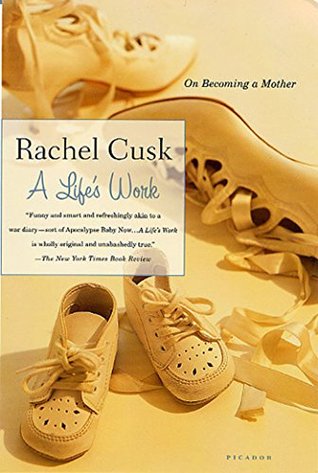
More on this book
Community


Kindle Notes & Highlights


When she is with them she is not herself; when she is without them she is not herself; and so it is as difficult to leave your children as it is to stay with them. To discover this is to feel that your life has become irretrievably mired in conflict, or caught in some mythic snare in which you will perpetually, vainly struggle.
Pain, in other words, has been created by its expectation, and also by the fact that MEN make women lie on their backs and stay still during labour, when any primitive woman could tell you to stick with your sisters, stay on your feet, and keep MEN well out of it.
To be a mother I must leave the telephone unanswered, work undone, arrangements unmet. To be myself I must let the baby cry, must forestall her hunger or leave her for evenings out, must forget her in order to think about other things. To succeed in being one means to fail at being the other.
After three or four weeks I reach a distant point, a remote outpost at which my grasp of the baby’s calorific intake, hours of sleep, motor development and patterns of crying is professorial, while the rest of my life resembles a deserted settlement, an abandoned building in which a rotten timber occasionally breaks and comes crashing to the floor, scattering mice.
My experience of the regularity of hours and days and seasons has altered so dramatically over the past few weeks that time has become a sort of undifferentiated mass ordered only by the exigencies of the baby’s sleeping and waking, her crying and equally baffling contentment.
The prospect is exciting, for it is when the baby sleeps that I liaise, as if it were a lover, with my former life. These liaisons, though always thrilling, are often frantic. I dash about the house unable to decide what to do: to read, to work, to telephone my friends. Sometimes these pleasures elude me and I end up gloomily cleaning the house, or standing in front of the mirror striving to recognise myself. Sometimes I miss the baby and lie beside her crib while she sleeps. Sometimes I manage to read, or work, or talk, and am enjoying it when she wakes up unexpectedly and cries; and then the
...more
I read somewhere that it is inappropriate to refer to a mother and her newborn child as two separate beings: they are one, a composite creature best referred to as mother-and-baby or perhaps motherbaby.
I read that my daughter is receiving my antibodies, my resistance, through my milk and sometimes I imagine I can feel it flow out of me like a river of light. I imagine it lining the little hollow of her body, strengthening her walls. I imagine my solidity transferring itself to her, leaving me unbodied, a mere force, a miasma of nurture that surrounds her like a halo.
My daughter quickly comes to replace me as the primary object of my care. I become an undone task, a phone call I can’t seem to make, a bill I don’t get around to paying. My life has the seething atmosphere of an untended garden.
I have given up my membership of the world I used to live in. Sometimes I listen to music or read, and it is like a ray of light coming in from outside, bright and painful, making me screw up my eyes.
When we go for a walk I see young women in the street, beautiful and careless, and a pang of mourning for some oblique, lost self makes my heart clench. I look down at my daughter sleeping in her push-chair, the dark fringe of her lashes forming arcs on her pale skin, and a contrary wind of love gusts over me; and for some time this is how I am, blown this way and that, careering around like a crazy, febrile gauge trying to find north.
I have put bears in my daughter’s crib, amongst other things, as if to suggest that I know something she doesn’t about comfort and safety and sleep, but their glassy, affectless eyes are blind to our nightly dramas.
I talked about how difficult it all was, about the anarchy of nights, the fog of days, about friendlessness and exile from the past and exclusion, about the wordless tyranny of babies and the strange, obsessive task of being alone with them all day, about my feelings of claustrophobia, my feeling that I was shut in a box, that I couldn’t breathe.
I miss my daughter’s babyhood already. In her growing up I have watched the present become the past, have seen at first hand how life acquires the savour of longing. The storm of emotion, of the new, that accompanied her arrival is over now. I find that I am living in the knowledge of what I have, so that I see happiness before it quite passes. It has taken me a year to achieve this feat, this skill that has eluded me over a lifetime. I understand that it means that I am standing still.
Motherhood sometimes seems to me like a sort of relay race, a journey whose purpose is to pass on the baton of life, all work and heat and hurry one minute and mere panting spectatorship the next; a team enterprise in which stardom is endlessly reconfigured, transferred. I see my daughter hurrying away from me, hurtling towards her future, and in that sight I recognise my ending, my frontier, the boundary of my life.
Mothers are the countries we come from: sometimes when I hold my daughter I try to apprehend this belonging for her, to feel myself as solid and fixed, to capture my smell and shape and atmosphere. I try to flesh out her native landscape. I try to imagine what it would be like to have me as a mother, and when I do it seems remarkable to me that this mysterious and momentous transaction has been accomplished here, in my house. The transaction I refer to is not that which has brought my daughter into existence: it is the process by which a mother has been made of me, and though I know it ...
This highlight has been truncated due to consecutive passage length restrictions.
As my daughter grows more separate from me, so the silences become longer, the glimpses more sustained. I realise that I had accepted each stage of her dependence on me as a new and permanent reality, as if I were living in a house whose rooms were being painted and forgot that I had ever had the luxury of their use. First one room and then another is given back to me. Stairs are just stairs again. Nights are once more vague and soundless. Time is no longer alarmed and trip-wired: things can wait, can be explained and deferred. My body has lost its memory of her birth and sometimes I feel
...more
Increasingly, motherhood comes to seem to me not a condition but a job, the work of certain periods, which begin and end and outside of which I am free. My daughter is more and more a part of this freedom, something new that is being added, drop by daily drop, to the sum of what I am.
My relationship with her is like my relationship with anybody: it takes the form of a search for oneness, a oneness lost but haunting with the prospect of its recapture. It is incredible to me – who remembers that oneness, the image on the snowy screen of her two-inch-long body lying in my darkness, as if it were yesterday, as if it were still there – that our joinedness is for her such a distant state.
