
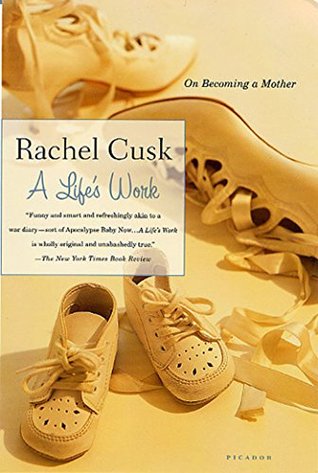
More on this book
Community


Kindle Notes & Highlights


As my stomach grows bigger I realise that getting in touch with it is about as useful as a field getting in touch with the motorway being built through it.
Guiltily I would think that I had baptised her early in the eternal doctrine of human pain, of things passing, of what was loved vanishing, never to return.
What the outside world refers to as ‘the weekend’ is a round trip to the ninth circle of hell for parents.
There is in truth no utterance that could express the magnitude of the change from woman or man to mother or father,
make comments you no longer understand such as ‘I’ve been in bed for three days with a cold’, and conspicuously do not say ‘why don’t I take the baby so that you can have some time off?’
The last chapter of this history – pregnancy – was as vivid as any other: it contained no hint of an ending, no clue that things were about to change. It is as if some disaster has occurred which has wiped me out, an earthquake, a falling meteor.
project. I’ll be lucky if I ever find the time to make the long journey back to myself, to the old ruin, and hurl a coat of paint over it before the winter of middle age sets in.
My daughter’s pure and pearly being requires considerable maintenance. At first my relation to it is that of a kidney. I process its waste. Every three hours I pour milk into her mouth. It goes around a series of tubes and then comes out again. I dispose of it. Every twenty-four hours I immerse her in water and clean her.
The state of motherhood speaks to my native fear of achievement. It is a demotion, a displacement, an opportunity to give up.
But it is not merely a taboo against complaint that makes the hardship of motherhood inadmissable: like all loves this one has a conflicted core, a grain of torment that buffs the pearl of pleasure; unlike other loves, this conflict has no possibility of resolution.
She is crawling now and has likes and dislikes. She has changed from rucksack to escaped zoo animal.
The floor is flooded to ankle height with her toys. Unidentifiable matter describes paths, like the trail of a snail, over walls and surfaces.
I have given up my membership of the world I used to live in. Sometimes I listen to music or read, and it is like a ray of light coming in from outside,
Months after her birth I still found myself affronted and incredulous, as if at some foreign and despicable justice, by the fact that I could no longer sleep in or watch a film or spend a Saturday morning reading, that I couldn’t stroll unfettered in the warmth of a summer’s evening or go swimming or wander down to the pub for a drink. The loss of these things seemed a high, an exorbitant price to pay for the privilege of motherhood;
We moved out of the city to a university town, a place where people lived in order to forget that the rest of the world existed.
conducted the pitiless business of their conversation.
So our life in the provinces quickly took on the tenor of a prison sentence, whose term could not be set because of the difficulty of admitting to ourselves or others that we had erred.
daughter inching over the top of the stairs, pulling electrical leads that were about to bring the kettle or iron down on top of her, delving into the rubbish. She husked records from their sleeves and shredded letters in their envelopes with the speed of a harvesting peasant. She aimed herself at bottles of bleach or hot cups of tea, trundling across rooms like a slow but deadly missile and changing course only if someone actually went and stood between her and her target. Suddenly our life was like a drama in which a bomb is being disabled against the clock.
The kitchen floor had a hard, tiled surface. We put down rugs, but in spite of them several times each day my daughter’s head would make contact with it. She would pull herself to her feet and stand, often for ten or fifteen minutes, before falling slowly backwards, ramrod straight like a felled tree.
One day she pulled herself to her feet on the rungs of her heavy wooden highchair, and it fell on top of her. I watched from the doorway, too far away to intervene, as she fell straight back on to the tiles with the tower of the highchair bearing down on her. Her head hit the tiles with a crack. Seconds
later, the highchair’s protruding wooden tray smacked against her forehead with the force of a sledgehammer.
I wonder whether my daughter has noticed that in one half of her life she is fed, admired, served, delighted in, played with and lavished with care, while in the other she is left on her own in the dark.
By day her cries are met with brisk, even anxious service. By night, even if she manages to make a noise that sounds exactly like she has pushed her head through the bars of her cot and is being slowly strangled, they are increasingly ignored.
A friend comes to stay overnight, and in the morning puts a slow and disbelieving head around our bedroom door. Since we last saw her, the evening before, we have run marathons, negotiated the Maastricht Treaty, extinguished forest fires. Our daughter now sits on the bed between our broken bodies like some triumphal mini-Napoleon, waving her rattle in victory.
trauma. For almost a year of nights I have gone to bed as one would go to bed knowing that the front door was wide
open, that there was something on the stove, that the alarm clock was set to go off hourly until dawn, with a new method of silencing it to be devised somehow each time.
I see my daughter hurrying away
from me, hurtling towards her future, and in that sight I recognise my ending, my frontier, the boundary of my life.
My relationship with her is like my relationship with anybody: it takes the form of a search for oneness, a oneness lost but haunting with the prospect of its recapture.
I lack the desire for myself that would teach me what to choose; I lack the sense of stardom in my own life that would urge me to adorn myself.
I have the curious feeling that I no longer exist in synchronicity with time, but at a certain delay, like someone on the end of a transatlantic phone call. This, I think, is what it is to be a mother.
