
Kindle Notes & Highlights


hope to invite readers into a sense of curiosity about the intimate particularities of these disappearing others: how they hunt or reproduce, how they take care of their young or grieve for their dead,
insist that nonhuman others are not simply “life forms,” but “forms of life” (Helmreich
“forms of life,” which, adapting Ludwig Wittgenstein, he understands as “those cultural, social, symbolic, and pragmatic ways of thinking and acting that organize human communities” (6). There is, however, no reason why a line must be drawn at the human,
This approach takes seriously Donna Haraway’s (2008) injunction to practice a genuine curiosity in our philosophical engagements with a more-than-human world; it is a practice grounded in “knowing more at the end of the day than at the beginning” (36).
My particular interest is in the strange juxtaposition of care and violence that lies at the heart of this effort and the ethical dimensions of the human–crane relationships that are being established.
Much of the history of Western thought has utilized animals’ understandings of and responses to death to construct a dualism between “the human” and “the animal.”
This dualistic thinking is at the core of a human exceptionalism that holds us apart from the rest of the world and, as such, contributes to our inability to be affected by the incredible loss of this period of extinctions, and so to mourn the ongoing deaths of species. In
in forms both visible and invisible to the naked eye, the waste of human societies circulates in vast atmospheric systems and oceanic currents to accumulate in albatross bodies.
“slow violence” that Rob Nixon (2011) has described: “a violence that occurs gradually and out of sight . . . dispersed across time and space” (2).
There is something slightly disconcerting about being in close proximity to a wild animal that has little interest in you.
Doing so enables us to move beyond the simplistic assertion that we need not worry about the extinction of the Laysan and Black-footed Albatrosses because extinction is an unavoidable reality in the life of all species.
Anna Tsing
“human nature is [and will always be] an interspecies relationship” (144).
The Black-footed Albatross, like any other species, is not a flight way through an empty void, but an entangled way of life, bound up in and becoming as part of a specific multispecies community.
there is an important sense in which, in addition to being carried through time by the efforts of their own generations, species also carry one another, nourishing and being co-shaped as members of a particular entangled community of life.
Perhaps it is we who have not yet “evolved” into the kinds of beings worthy of our own inheritances.
20 to 30 birds but sometimes in excess of 100, often roosting as close as possible to dumps or slaughterhouses, building their nests in tall trees or on cliff ledges, and lining them with wool, skin, dung, and rubbish
The hope is that one day, when the threat is gone and there is a large enough captive population for it to be sustainable in the wild, the vultures might be able to be (re)released.
instead of taking life to produce their nourishment, they consume only that which is already dead, pulling dead flesh back into processes of nourishment and growth.
Jean-Luc Nancy’s (2002) beautiful injunction not to separate life from death: “To isolate death from life—not leaving each one intimately woven into the other, with each one intruding upon the other’s core [coeur]—this is what one must never do”
Consuming the dead is, of course, what vultures do. In taking up this role, they help to stem the spread of contamination and disease (such as anthrax, which is endemic in parts of India).
It is most likely that significant cultural and religious dimensions of Hinduism and life in India account for at least part of this differential treatment—for example, the birds’ association with the mythical Hindu vulture king, Jatayu
“human societies” in general, “are precisely never exclusively human”
the use of diclofenac in the treatment of cattle is often driven by poverty and the need to keep working animals even when they are old and sick.
The disappearance of so many members of a species produces what ecologists call a “functional extinction,” which may well be followed by an actual extinction in coming years.
In the vultures’ absence, there are fears that anthrax may become a more significant health problem—especially in the southern states, where the disease remains endemic
ecosystem degradation and biodiversity loss will often have a disproportionate impact on poor and rural communities (these “two groups” very often being one and the same).
extinction is by its very nature a slow unraveling of flight ways, of complex ways of life that have been co-produced and delicately interwoven through patterns of sequential and synchronous multispecies relationship
To allow the term “extinction” to stand for only the death of the last of a kind is to think within an impoverished notion of “species,” a notion that reduces species to specimens, reified representatives of a type in a museum of life, and in so doing ignores the entangled relations that are a particular form of life.8
While we may all ultimately be connected to one another, the specificity and proximity of connections matter—who we are bound up with and in what ways.
we are required to begin to take responsibility for the ways in which we help to tie and retie our knotted multispecies worlds
I am captivated and unsettled by a singular image, and it is to this image that this chapter responds. It is the image of a penguin returning to a burrow, to a breeding place, that is no longer there or has been transformed so dramatically that it is no longer habitable.
All over the world, animals are drawn to return faithfully to places that no longer exist.
This understanding of place highlights its “storied” nature: the way in which places are interwoven with and embedded in broader histories and systems of meaning through ongoing, embodied, and inter-subjective practices of “place-making”
“biology of subjects” in which, in Brett Buchanan’s (2008) words, organisms are understood to “actively interpret their surroundings as replete with meaningful signs.
Connection and relationship are central to narrative.
The result is an image of animal life as a fractured and disjointed set of “serially placed” experiences, occurring one after the other, but lacking any meaningful organization for the animal itself (a “chronology,” not a “narrative,” in Cronon’s [1992:1351] terms).
Little penguins are philopatric, a term that literally means “love of one’s home” and in biology describes a process in which an animal returns to its place of birth or hatching to reproduce.
once they have bred in a place for the first time—irrespective of whether they hatched there—penguins have a very high degree of fidelity to that place (site fidelity).
Local penguins are sometimes to be found nesting in the dark and dry places underneath houses, sheds, boats, and other structures and vehicles.
The only meaningful use is human use: an extended backyard or an “infinity pool” hanging out over the harbor.
As Rosalyn Diprose (2002) notes, acts of giving are often, perhaps always, premised on prior takings and enclosures, many of which are unacknowledged or deliberately rendered invisible.
how is the language of “the guest,” which is often used in reference to these animals, complicit in erasing a past displacement and claim while also creating an unstable future,
havoc with the simple notion that “nature is silent,” an un-storied landscape awaiting the human inscription of meaning.11
“Caring means becoming subject to the unsettling obligation of curiosity, which requires knowing more at the end of the day than at the beginning”
almost 50 percent of the intertidal areas in China and Korea have been “reclaimed” or otherwise lost over the past three decades
What possibilities for crane life, and for human–crane relationships, emerge within this strange space of captivity?
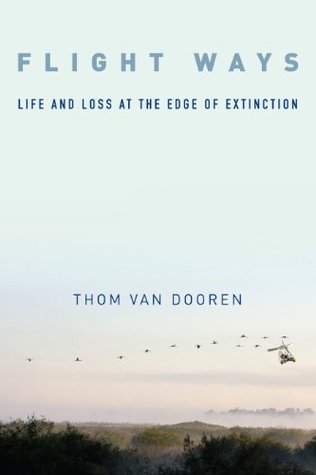
Having been absent from the skies and landscapes of the eastern United States for more than 100 years, Whooping Cranes have been reintroduced and retaught an ancient migratory route by dedicated humans (USFWS
As Maria Puig de la Bellacasa (2012) reminds us, “caring or being cared for is not necessarily rewarding and comforting.” Caring is not achieved through abstract well-wishing, but is an embodied and often fraught, complex, and compromised practice.
Because these birds don’t breed very readily in captivity, we want to maximize the output of any breeding female. So, we know that they lay a clutch of two eggs. What we’re able to do is manipulate that clutch with dummy eggs to have them keep producing more eggs. For most pairs we get more than two eggs. Sometimes we get three, four, five, up to seven or eight eggs out of a single female. And we do that by removing the egg as its laid.
