
Kindle Notes & Highlights

Read between
June 24 - June 24, 2025

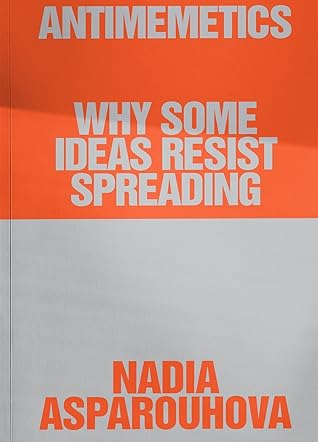
Group chats, as a concept, are a perfect example of the self-censoring nature of antimemes. They are rarely discussed by mainstream media outlets, because, unlike public platforms like Twitter and Reddit, which provide endless content mining opportunities for eager journalists, there is nothing to write about with group chats.
No journalist has access to the most influential group chats, and those who do cannot write about them, or else risk losing their membership. The secrets keep themselves.
Private spaces are where we get to refine ideas and strengthen relationships, but public spaces are the highway where those ideas zip around in hopes of being adopted and, eventually, brought to life in the physical world.
Societies function better when they have a category of ideas that escape precise definition, because ideas that can be measured can be controlled, or even exploited. We keep them imprecise to protect their integrity, splashing around together in the bathtub of blurry. No one can perfectly engineer a community, or love, or culture. Our most cherished ideas are kept safely out of the hands of those who want to play God.
With these three properties of immunity, transmission rate, and symptomatic period, we can now examine how antimemetic ideas become memetic.
In a memetically charged environment, it’s safer to frame ideas as independent, uncoordinated opinions rather than as part of an organized movement – closer to a mafia, or guerrilla-style information warfare, than a public advocacy group. This tactic makes it harder for opposing forces to single out and target who is really behind an idea, which enables it to spread more organically.
