
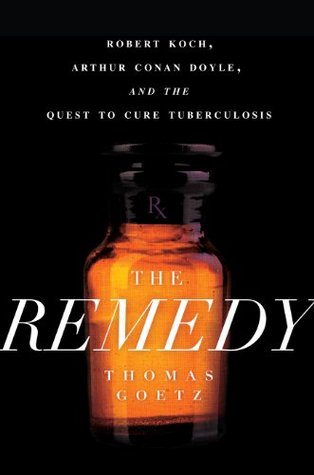
More on this book

Kindle Notes & Highlights
by
Thomas Goetz
Read between
August 6 - August 12, 2019

The antivaccine movement, of course, was confused by the paradox created by all vaccines: The more effective the vaccine, the more invisible its effectiveness became. The perceived side effects, meanwhile, were readily apparent and easily linked to the trauma of inoculation.

So true. Antivaccs fall for this paradox
This tension, of course, is still palpable today. From the animal rights movement to the antivaccine chorus, from creationists to climate change skeptics, science remains as contentious today as it was in the late nineteenth century, on many of the same issues.
In the United States, for instance, vaccine refusal is frequently widespread in the most affluent, most educated communities, where a combination of presumed sophistication (“I know what’s best for my family”) along with a distrust of corporate interests (the hostility toward “Big Pharma”) can result in parents opting to avoid vaccines.
A century after Koch, in 1990, Carl Sagan, the great popularizer of science, expressed this paradox precisely: “We live in a society exquisitely dependent on science and technology, in which hardly anyone knows anything about science and technology.”
Science asks people to take a leap of faith. After Jenner developed his smallpox vaccine, for example, people were asked to roll up their sleeves and get vaccinated against something that nobody would thoroughly understand for another seventy-five years.
Holmes does not, quite profoundly, know everything. Rather, he knows how to gather and assess evidence, to treat a crime scene like an experiment in progress. He knows how to diagnose a crime scene. It is his method that makes him singular. It is his process, his thoroughness—and most of all, his ability to connect small observations with a larger body of knowledge, a process that Holmes calls, famously, “the science of deduction.”
Electricity arrived in 1873, first with the discovery of electromagnetism, and soon thereafter with a series of inventions with profound cultural implications: 1876 brought the invention of the telephone; 1877 brought Thomas Edison’s phonograph; 1879, Edison’s incandescent lamp. Cash registers, dishwashers, fountain pens, and the internal combustion engine were all soon to follow.
The pace of progress amazed even chroniclers of science. The Popular Science Monthly, founded in New York in 1872, editorialized in 1890, “We have frequent cause for astonishment at the rapidity with which modern life is being transformed under the influence of scientific invention and discovery. . . . The telephone makes its way everywhere without pause or check, and the same is true of electric lighting and traction.”
The revolution wasn’t just one of household conveniences. All at once, civilization seemed to break free from centuries of tradition and secondhand wisdom and emerge...
This highlight has been truncated due to consecutive passage length restrictions.
Both men, after all, swore by the same weapon: the microscope (the instrument shows up in more Holmes stories than even the now-iconic magnifying glass).
(At the time, fever cure was still a popular idea. It faded with the development of aspirin and other pain relievers at the turn of the twentieth century, but it is finding new traction today; recent research has shown little to no benefit to reducing a fever through aspirin or other anti-inflammatories, while there may be potential benefits to letting a fever run its course.)
one of Sherlock Holmes’s maxims: “It is a capital mistake to theorise before one has data. Insensibly one begins to twist facts to suit theories, instead of theories to suit facts.”
Koch’s science gave the germ theory scale; it gave it a reach far beyond the laboratory or even the doctor’s office. It moved it into the social realm, where true revolutions happen.
Ivory soap, one of Procter and Gamble’s first products, went on the market in 1879 and was soon followed by other soaps and disinfectants.
So old!
It was this notion of an immune system that Koch lacked in his analysis of tuberculin. Today we understand that the substance was, in fact, causing an immune response in the body. Koch mistook a reaction for a remedy, and that mistake was everything.
As one delegate remarked, “Dr. Koch isolated the tubercle bacteria; today, science has isolated Dr. Koch.”
But the pipe was all Gillette’s inspiration, as was the phrase he added to the script: “Elementary, my dear Watson.” (The line never appears in a Conan Doyle story.)
The public adored each appearance of the scientific detective, but Conan Doyle himself began to take a curious turn. This man who had spent years championing medical science, in both practice and pen, instead became a devout believer in spiritualism and superstition.
By 1918 he was publicly championing spiritualism, a quasi-religion that put great stock in psychics as spirit mediums and in communication with the dead.
But it was impossible to ignore the spectacle that ensued in 1919, when photographs emerged of two girls from Yorkshire, Elsie Wright and Frances Griffiths, playing with fairies. About eight inches tall with ornate wings, and playing miniature pipes, the fairies appeared to be enjoying their time with the girls. Conan Doyle seized on the pictures and, in an essay published in December 1920 in The Strand, pronounced them real.
But Conan Doyle stood firm: “I have learned never to ridicule any man’s opinion,” he responded, “however strange it may seem.” Though fairy skeptics outweighed believers, it would be more than sixty years before the truth came out: The pictures were a hoax, the fairies mere cutouts from a children’s book that the children gazed at while Elsie’s father took photographs. “I thought it was a joke,” Frances explained, “but everyone else kept it going.”
Conan Doyle was once a great champion of science, one who had, through his great invention of Sherlock Holmes, helped convince so many millions of readers that science was a powerful force for good. And now he had been caught up in the most specious of fairy tales. His was an unfortunate delusion.
In every literary or dramatic romance, you will observe that from the time that the villain is unmasked he is innocuous. It is the undiscovered villain who is formidable. So it has been in this wonderful romance of medicine. All this work of late years has been in the direction of exposing the villain. When once this is done, be he micrococcus or microbe, and be his accomplice a mosquito or a rat-flea, the forces of law and order can be turned upon him and he can be broken in to that human system which he has so long defied.
Isaac Asimov wrote that Holmes was “the most successful fictional character of all time” because he represents the triumph of the “gifted amateur who could see clearly through a fog.”
COMPARED TO ARTHUR CONAN DOYLE’S VIVID PRESENCE IN London, Robert Koch’s legacy is rather inconspicuous in his adopted home of Berlin. He is a curious sort of artifact, one of those historical figures whose names appear on street signs and engraved onto building facades but are largely absent from public knowledge.
