
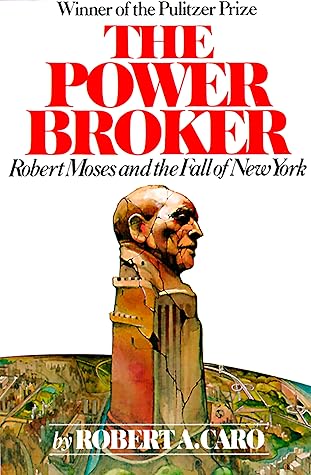
More on this book
Community


Kindle Notes & Highlights

Started reading
March 10, 2025

Democracy does not merely mean periodic elections. It means a government held accountable to the people between elections. In order that the people may hold their government to account they must have a government that they can understand.
arrogance is, after all, one of the coefficients of money.
What good was courage if its only effect was to hurt those you were trying to help?
Their creed was summed up in two quotes: Commodore Vanderbilt’s “Law? What do I care for law? Hain’t I got the power?” and J. P. Morgan’s “I owe the public nothing.”
Taking a man’s land and telling him it would be paid for later was simply unheard of if the land had any substantial intrinsic value, as it always did in settled areas,
Lawsuits take money. The state’s supply of this commodity is comparatively bottomless.
Regard for power implies disregard for those without power
the strongest material available in the world of politics: public opinion.
Then he obtained hundreds more by diverting CWA-paid laborers on other Park Department projects to the Triborough project without CWA permission. (It always took a few days for CWA officials to find out what their laborers were doing, and by then Moses could tell them that since the work had been started, it would be silly not to allow it to be completed. After all, he pointed out, if the laborers were now reassigned, the jobs would be left unfinished—unsightly scars, offending residents of the neighborhoods in which they were located. And if the newspapers got wind of such an example of
...more
a term which comes close to being the ultimate insult among pious Jews. Moses, they said, was an apicoris, “a man who says he isn’t what he is.”
“E finita la cuccagna!” (“No more free lunch!”),
When there is no time for the thinking required for original creation, the tendency is to repeat what has proven successful in the past.
Authority is delegatable; genius is not.
Al Smith, as always, phrased it best. Strolling through a law-school library one day, the Governor noticed a student poring intently over his books. “There,” he said with a smile, “is a young man studying how to take a bribe and call it a fee.” By the Twenties, most honest graft was being worked through “fees,” mostly through legal fees (more politicians belong to the legal than any other profession), but also through the real estate brokers’ fees called “commissions,” the insurance brokers’ fees called “premiums” and the public relations fees called “retainers.”
The service that was provided in 1965—or 1968, the year Robert Moses left power—should be chronicled in depth. Otherwise, future urban historians will dismiss oral and daily press descriptions of that service as exaggeration.
