
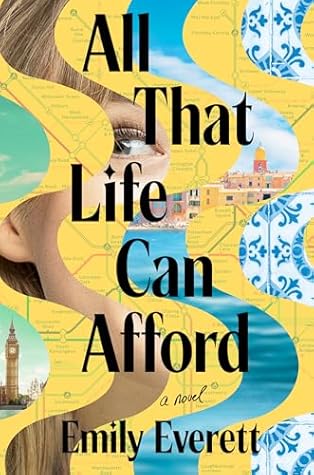
More on this book
Community


Kindle Notes & Highlights


They were irresistible: the books, the soft dreamlike edges of what passed for struggle and suffering in that world—a broken engagement, an elopement, a disinheritance. No one was sick, or if they were, it was romantic, like in Sense and Sensibility when Marianne Dashwood nearly dies from heartbreak. It wasn’t a mundane hindrance, like co-pays or Craigslist or calling strangers on the phone.
mother was gone, yes, but for twenty-two years she’d been the warmest, kindest, gentlest part of my day, someone who always listened to me, understood me. Even when she began to wear down and disappear last year, her hugs were still fierce. Fortifying. Even
in their palatial houses, my students had never enjoyed even a fraction of something so invaluable.
I tried to keep every moment there—like a receipt, like I might at some point be made to account for each moment. The simple and the grand: cold abbeys and sun-warmed baklava. As if these beautiful things would one day be measured against something I’d left behind, something lost and unrecoverable, and I needed to tip the balance.
But I was still picturing the old chair in the library, Mom’s fingers skating over the National Geographic pages. Sea, sky, sun, someday. So certain that there would be time to go. That her chance would come.
with both hands whatever the world would allow me—education, opportunity, everything—fist over fist, until I had climbed so high that nothing could touch me anymore.
Those years had taught Mom and me to be hopeful and taught him to be hard.
“A lot of American writing can be very bootstrappy, you know? That focus on individual choice and fate and forging your destiny. British writers do write about those things, too, but I think they do it more honestly. They tell the truth.” “What truth?” “That where you come from matters, that money and class are real. Those things eliminate and elevate people. They have power.” “I can see why that would
I felt like the trees were listening, silent eavesdroppers to our conversation.
“God, what a tourist,” I joked, feeling somehow exposed. “Must’ve been when I first moved. I’m much better at blending in now.” He smiled and shook his head, eyes on the road. “I doubt you’ll ever blend in.”
And really, why poke holes in it? What a simple, miraculous thing: to be remembered.
The phone rang four times and I heard the click of the answering machine. Even if he’d answered, even if he’d been nice, we’d both have known: it wasn’t really him I wanted to talk to. I wanted Mom to pick up. I wanted to hear her voice on the phone: Oh, honey, hi, what time is it there? I wanted to tell her about living with Pippa and Faye. Dancing with Theo and Elton John. How simple and easy and beautiful life was here, my old life far in the distance, a sailboat slipping out of the orange-streaked harbor. I wanted to say, Wish you were here, Mom.
“Oh, sorry,” I said. “I was just thinking—maybe the angels are a way to make it seem like the whole universe is grieving with you, even the heavens. Like the rest of the world can’t just go on like normal.” Which is, of course, exactly what the rest of the world does.
The cab rides home full of laughter and sequins, shoulders pressed together, sleepy and happy and lucky—I would never be sick of that, I was sure.
Mourning is pretty much a universal thing, right? We all have to do it, at some point. Everyone on the planet is doing it, will do it, but when you’re going through it, it’s only yours.”
“Someone told me, when she died, that the grief would be proportional to how much I’d loved her. Like a balance. They meant it as a good thing—like my pain was a sign of how much we’d loved each other—but it sort of haunted me. Any day where I actually got through work and did all the things I needed to do, got groceries, washed my hair, any day where I felt half normal, I’d feel terrible, like it meant I didn’t love her enough. But I also didn’t have a choice; I had to keep going, keep working.” That’s what happens: each day has newer, smaller disasters for you, and they rise up and claim
...more
This highlight has been truncated due to consecutive passage length restrictions.
I had grifted, but it wasn’t for money. It was simpler, the thing I’d needed since the day my mother died. A place to be loved.
of my drink, “I think I’d be pretty happy if my life made for boring TV for a long while, after all this.” “Probably it will,” Liv said, smiling over at me and Callum. “That’s what being happy looks like.” It was something
But I also didn’t feel the need to fill the pages, as I once had. No one was keeping score; no one was going to check to see what kind of life I’d made for myself here. Whether it was good enough, exciting enough, glamorous enough.
You just had to travel light, since they’d charge you more for a bag than for the seat itself. I could do that; I’d been learning how to travel light all year. What could a person really need? I needed nothing.
When my favorite poet, Frank O’Hara, wrote to his publisher about a long-delayed manuscript, he claimed “various doubt-seasons” had hindered his progress. I never forgot the phrase, and I never outgrew my own doubt-seasons, either. I only learned to weather them—head down, grinding forward—and what follows is a very, very incomplete accounting of the people who made that possible.
My mother never got to read this book, but her love is all over it.
And, like all hard work, it is best done alongside the people you love.
