
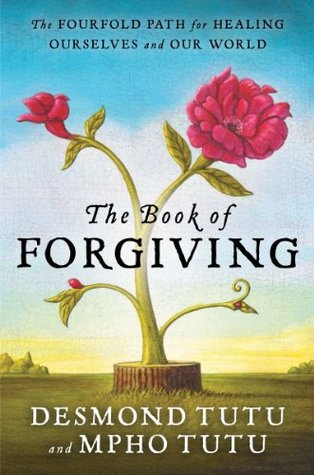
More on this book
Community


Kindle Notes & Highlights

by
Desmond Tutu
Read between
September 5 - October 8, 2022

there is nothing that cannot be forgiven, and there is no one undeserving of forgiveness.
In our own ways, we are all broken. Out of that brokenness, we hurt others. Forgiveness is the journey we take toward healing the broken parts. It is how we become whole again.
Without forgiveness, we remain tethered to the person who harmed us. We are bound with chains of bitterness, tied together, trapped. Until we can forgive the person who harmed us, that person will hold the keys to our happiness; that person will be our jailor.
According to her findings, people who were socially isolated were three times more likely to die prematurely than those who had a strong social web. Even more astonishing to the researchers, those who had a strong social circle and unhealthy lifestyle (smoking, obesity, and lack of exercise) actually lived longer than those who had a weak social circle but a healthy lifestyle.
Unconditional forgiveness is a different model of forgiveness than the gift with strings. This is forgiveness as a grace, a free gift freely given.
Ultimately, forgiveness is a choice we make, and the ability to forgive others comes from the recognition that we are all flawed and all human.
Those who wish to compare how much they have wronged to how much they have been wronged will find themselves drowning in a whirlpool of victimization and denial.
The invitation to forgive is an invitation to search out the perpetrator’s humanity. When we forgive, we recognize the reality that there, but for the grace of God, go I.
When we cannot admit our own woundedness, we cannot see the other as a wounded person who has harmed us out of his or her own ignorance, pain, or brokenness.
it is not the trauma itself that defines us. It is the meaning we make of our experiences that defines both who we are and who we ultimately become.
In any given moment we may be harmed profoundly. It is not fair. It is not deserved. And yet it happens. It is what we do next that matters most.
Telling the story is how we get our dignity back after we have been harmed. It is how we begin to take back what was taken from us, and how we begin to understand and make meaning out of our hurting.
We give voice to our hurts not to be victims or martyrs, but to find freedom from the resentment, anger, shame, or self-loathing that can fester and build inside us when we do not touch our pain and learn to forgive.
When we name the hurt, just as when we tell the story, we are in the process of reclaiming our dignity and building something new from the wreckage of what was lost.
A victim is in a position of weakness and subject to the whims of others. Heroes are people who determine their own fate and their own future.
If we look at any hurt, we can see a larger context in which the hurt happened. If we look at any perpetrator, we can discover a story that tells us something about what led up to that person causing harm. It doesn’t justify the person’s actions; it does provide some context.
you and I must struggle through our anger, grief, and sadness, and push against the pain and suffering on our way to forgiving. When we don’t forgive, there is a part of us that doesn’t grow as it should.
Forgiving is how we move from victim to hero in our story.
To finish the forgiveness journey and create the wholeness and peace you crave, you must choose whether to renew or release the relationship. After this final step in the Fourfold Path, you wipe the slate clean of all that caused a breach in the past. No more debts are owed. No more resentments fester. Only when you renew or release the relationship can you have a future unfettered by the past.
whenever possible we must do the hard work to rebuild right relations with one another. Enemies can become friends, and perpetrators can recover their lost humanity.
A very important but difficult piece of renewing relationships is accepting responsibility for our part in any conflict.
There are times when we truly did nothing, as when a stranger robs us, but even then we have a role in permitting or participating in a society where such desperation exists.
Victims need to tell their stories. Victims need to express how much they have been hurt. And as perpetrators, we need to be fearless enough to stand in front of those we have hurt and open our hearts to make space for their pain. We had a part in creating it, and we have a part in healing it.
1. Admitting the wrong. What have you done? Use this place in your journal to tell the truth and list the facts of the harm you have caused. 2. Witnessing the anguish. Now look deeply at how your actions have harmed the other. Write sentences that begin “I am sorry for . . .” Write as many sentences as you can. 3. Asking for forgiveness. Write the following sentence and finish it: “I would understand if you are not able to forgive me now, but I hope you will be able to forgive me someday because . . .” 4. Renewing or releasing the relationship. You will be asking the person what you can
...more
The reasons for forgiving ourselves are the same as for forgiving others. It is how we become free of the past. It is how we heal and grow. It is how we make meaning out of our suffering, restore our self-esteem, and tell a new story of who we are.
When I develop a mind-set of forgiveness, rather than a mind-set of grievance, I don’t just forgive a particular act; I become a more forgiving person.
