
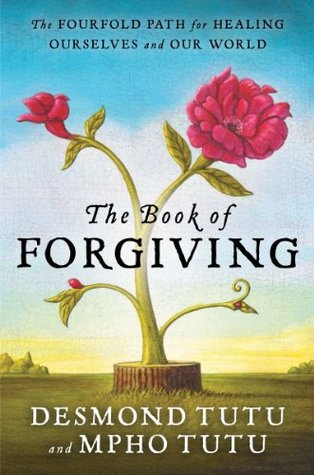
More on this book
Community


Kindle Notes & Highlights

by
Desmond Tutu
Read between
February 9 - February 17, 2018

there is nothing that cannot be forgiven, and there is no one undeserving of forgiveness.
The quality of human life on our planet is nothing more than the sum total of our daily interactions with one another. Each time we help, and each time we harm, we have a dramatic impact on our world.
Fourfold Path of forgiving: Telling the Story, Naming the Hurt, Granting Forgiveness, and Renewing or Releasing the Relationship.
It is our most cherished belief that there is no one who is irredeemable, no situation that is without hope, and no crime that cannot be forgiven.
In South Africa, Ubuntu is our way of making sense of the world. The word literally means “humanity.” It is the philosophy and belief that a person is only a person through other people.
it is perfectly normal to want to hurt back when you have been hurt. But hurting back rarely satisfies. We think it will, but it doesn’t. If I slap you after you slap me, it does not lessen the sting I feel on my own face, nor does it diminish my sadness as to the fact you have struck me. Retaliation gives, at best, only momentary respite from our pain.
Even more astonishing to the researchers, those who had a strong social circle and unhealthy lifestyle (smoking, obesity, and lack of exercise) actually lived longer than those who had a weak social circle but a healthy lifestyle.
None of us wants to have our life story be the sum of all the ways we have been hurt. We are not created to live in suffering and isolation. We are created to live in love and connection with one another. When there is a break in that connection, we must have a method of repair.
When we cannot admit our own woundedness, we cannot see the other as a wounded person who has harmed us out of his or her own ignorance, pain, or brokenness.
We sit in the midst of our hurt and loss, and we face the choice of which path to take: retribution or reconciliation. We can choose to harm or we can choose to heal.
It turned out that the more children knew the stories of their families’ history—the good, the bad, and the ugly—the more resilient the children turned out to be. Knowing their families’ stories turned out to be “the best single predictor of children’s emotional health and happiness.”
Neuropsychiatrist Dan Siegel explains that the best predictor of how well a child will be attached to his or her parents—have positive, loving relationships—is whether the parents have a clear and coherent story about their lives and the traumas they have experienced. In other words, if you are able to talk about your life and the joys and sorrows you have experienced—if you know your story—you are much more likely to be a skillful parent.
To quote the comedian Lily Tomlin, “Forgiveness means giving up all hope for a better past.”
While we may be reluctant to face the truth of our feelings or the depth of our pain, it is the only way to heal and move forward.
“We can’t let go of feelings that we don’t own.”
Grief is how we come to terms not only with the hardship we have endured, but also with what could have been if life had taken a different course. We grieve as much for what might have been as for what was.
Anger may have its say in the present, but it does not have the ability to change the past, and it rarely satisfies our true desires in the future. If I feel anger, I am human; if I stay locked in my anger, I am a prisoner.
The only way to stop the pain is to accept it. The only way to accept it is to name it and, by naming it, to feel it fully.
Raising children has sometimes felt like training for a forgiveness marathon.
We are able to forgive because we are able to recognize our shared humanity. We are able to recognize that we are all fragile, vulnerable, flawed human beings capable of thoughtlessness and cruelty. We also recognize that no one is born evil and that we are all more than the worst thing we have done in our lives. A human life is a great mixture of goodness, beauty, cruelty, heartbreak, indifference, love, and so much more. We want to divide the good from the bad, the saints from the sinners, but we cannot. All of us share the core qualities of our human nature, and so sometimes we are generous
...more
I must caution that many people, even very spiritual people, try to leap over their suffering in pursuit of their inner peace or their sense of what is the right thing to do.
We know we are healing when we are able to tell a new story.
God does not waste his children’s pain.
When people are hurting, they cannot be cross-examined out of their pain. We all want our pain to be acknowledged and understood. We all want to feel safe to express our hurt feelings in all their various forms and textures. If you argue with the person you have harmed, that person will not feel safe, nor will that person feel understood. When someone is hurt, that person wants his or her pain to be understood and validated. Without that understanding, the forgiveness process will stall and you will both remain trapped in an endless loop of telling the story and naming the hurt. Empathy is the
...more
It is not selfish to ask for forgiveness, and in truth it is the highest form of accountability.
There is no asking for forgiveness without admitting the wrong and witnessing the anguish.
No one is bad, and none among us should be defined as the sum total of our worst actions. Kelly Connor is not a killer; she is a person whose actions killed another person. None of us is an offender, liar, betrayer, or monster. We are all fragile and flawed humans who may lie or steal or betray. We are fragile and flawed humans who commit offenses against others. When we do these things, we are not monsters; we are human beings who have become separated from our own goodness.
We lessen the power shame has on us when we give it a voice. Shame hides while truth does not.
We can tell a new story of ourselves. The new story admits that “yes, I have caused pain and suffering.” The new story also recognizes that “the harm I have caused in the past is not who I am today.”
Wadsworth Longfellow said, “If we could read the secret history of our enemies, we should find in each man’s life sorrow and suffering enough to disarm all hostility.”
When I have a forgiveness mind-set, I start to see the world not through grievance but through gratitude.
We change the world when we choose to create a world of forgiveness in our own hearts and minds. It is our nature to forgive, reconcile, and rebuild the broken pieces of our relationships. Every hand that extends itself in a gesture of forgiveness is a hand working toward the creation of peace in the world.
When our losses are great, the depth of our compassion for others can increase exponentially, as can our ability to use our own suffering to transform the suffering of other people.
It is true that when we harm others, we harm ourselves; but it is just as true that when we help others, we also help ourselves.
Restorative justice, on the other hand, begins from the premise that a crime is an act not against the State but against another person and against the community. In this model of justice, accountability is based on the offender taking responsibility both for the harm they have caused and for taking action to repair the hurt. Victims are not peripheral to this process of justice. In the restorative justice model, victims play an integral role in deciding what is needed to repair the harm done to them. The focus is on dialogue, problem-solving, reconciling relationships, making restitution, and
...more
