
More on this book
Community


Kindle Notes & Highlights
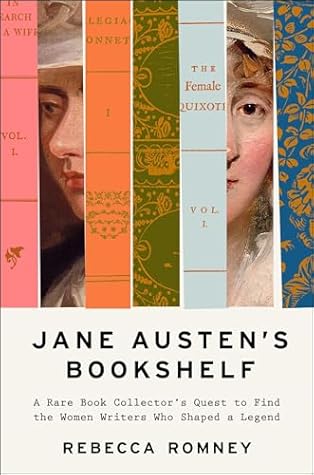
Jane Austen's Bookshelf: A Rare Book Collector's Quest to Find the Women Writers Who Shaped a Legend
Read between
March 5 - March 9, 2025

That tension is visible in how Austen’s brother Henry worked to shape her reputation in his “Biographical Notice” published after her death. In that piece he undersold her eagerness to publish: “For though in composition she was equally rapid and correct, yet an invincible distrust of her own judgement induced her to withhold her works from the public, till time and many perusals had satisfied her.” He couldn’t have known that modern scholars would be able to compare this statement to other sources, proving that was far from the truth. But they did.
In an otherwise clever 2016 book that generated tremendous talk about Austen outside of academic circles, the author stated that “Jane was the only novelist of this period to write novels that were set more or less in the present day and more or less in the real world—or, at any rate, a world recognizable to her readers as the one in which they actually lived.” I gasped when I read that line, thinking about when Edgeworth’s Patronage—published in 1814, between Austen’s Pride and Prejudice (1813) and Mansfield Park (1814)—caused an uproar in London because readers of the time placed “the action
...more

LOL, I gasped too. Many novelists wrote novels "in the present day", with subtitles like "A tale founded on facts".
But hear me out: I do rather feel that publishing as a professional about a book’s literary merit (or lack thereof ) should require one to open it. You know, as a rule.
I've discovered the same thing. Some scholars have glanced at a novel but you can tell they haven't read it cover to cover because they get basic facts wrong.
