
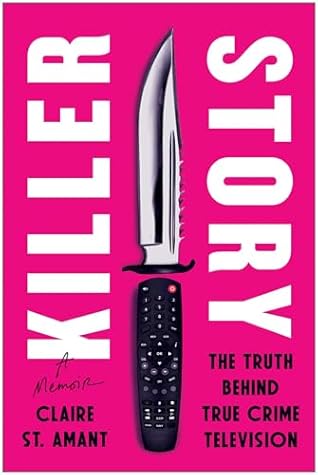
More on this book

Kindle Notes & Highlights

Read between
October 19 - October 22, 2025

One of the ethical boundaries for US journalists is that you have to identify yourself as such if someone directly asks who you are, but otherwise you’re free to observe and report anonymously.
I’ve learned the best way to blend in when I’m in court is to dress like an attorney. Dark suit, sensible shoes, understated jewelry, and no makeup. No one looks twice at me. I’m one of them. On this day, I blend in so well that the prosecutors a few feet away don’t even recognize me, which is particularly amusing as I just interviewed them the week before. But they aren’t looking for me here, at an arraignment hearing inside the jail that’s not open to the public. They don’t expect to see me, and so they don’t.
I never expected to make any real money in journalism. Back then, I couldn’t have dreamed of the six-figure budgets that awaited me in network television, and the seven-figure profits the execs were all pulling down. The truth is, there is a ridiculous amount of money floating around in the media. It just rarely goes to the people actually writing and producing the content.
Working in true crime for too long is crazy. It can really addle your brain. Or maybe it just attracts people who already have a few screws loose.
Neither man was a stranger to the cameras, and they’d both had their fair share of interviews over the years. I knew I couldn’t get them to agree to be exclusive to CBS for this story, which is the gold standard in the interview world. But maybe I could get the next best thing: the first interview after the trial. As our lunch was wrapping up, I wiped the barbecue sauce off my fingers and got down to business. “I recognize this case is too big of a story for just one network to cover, but there will still have to be a batting order for interviews. And, respectfully, I’d hope that you’d
...more
It’s unsettling how much damage one person with a grudge and a gun can do.
An hour of television equates to forty-two minutes of content and eighteen minutes of advertising.
One of the more disturbing lessons from my time covering true crime is just how little some people will kill over. There is actually not a “normal” amount of motivation that’s common to murderers. The stakes can be as little as ten dollars or as much as millions. Some people kill just for the thrill of it and take jewelry or cash as a trophy. Other people leave valuables in plain sight because the crime was never motivated by money anyway.
This was admittedly a lot easier before Donald Trump was elected president in 2016 and declared the media “the enemy of the people.” I always believed in the public service component of journalism. We are quite literally working for the people. I remember one of my college media advisers had a bumper sticker that said “Have you read the news today? Thank a journalist.” Like any industry, there are bad apples, but the vast majority of journalists work hard, for little pay, and in dangerous and stressful settings to bring the news to your fingertips. Our work is on public display, and our
...more
The hardest part about covering murder is that in the end, it never makes sense. There’s this misconception that we can “understand” violent crime and put the pieces together in a logical sequence of events. But in my experience, it’s always haphazard chaos at the end.
Right there in the middle of the happiest place on earth, Jennifer made graphic claims of suffering sexual abuse, torture, and mutilation dating back to her childhood and continuing with her current husband.
