
More on this book
Community


Kindle Notes & Highlights


The axe cleaved the log in two. The cut halves tumbled off the block and fell among the other hacked arcs of wood on the dark earth.
He remembered the table they sat at: a giant wooden industrial spool, pockmarked by bullet holes. Someone had sanded all the splinters down, to make sure you didn’t jab yourself while you drank. That was what history was like everywhere he traveled: someone had sanded the splinters down.
There was always the mob. There was always Krotov too. You didn’t need to copy Krotov’s mind. It copied itself. Krotov was fungal. He spread underground, attaching himself to the country’s root systems, trading information for nutrients. Krotov’s mind wasn’t in his skull: it was diffused in the soil. This thing in front of Nikolai called “Krotov” was nothing but a poisonous mushroom pushed up from the forest floor, born of the mycelium of violence woven through the dirt.
“Their system isn’t for us,” her mother said. “We were left out of their calculations from the start.” “The PMs are supposed to promote human flourishing.” “The question is who gets to be a human. That has always been the question. You look tired. You should sleep more.”
He had seen people crushed. It did not happen because they were good. Goodness had nothing to do with it. People were good, or bad, or neither. Then they were gone. Gone because they had resisted, or for no reason at all.
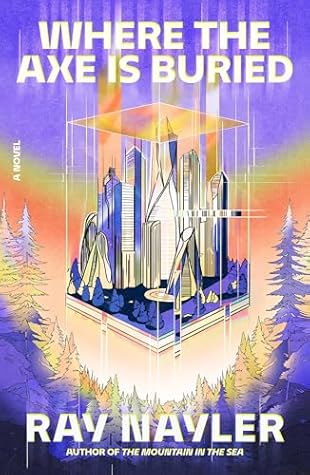
“But I was confused. Later I asked the boy who intervened what it meant to ‘bury the hatchet.’ He told me it meant to end an argument. But what was a hatchet? I asked. A small axe, he said. It was a tradition among some of the Indigenous people to bury a weapon as a way of ending disputes. The North Americans stole this phrase from them, like everything else, and ‘to bury the hatchet’ became an idiom for ending a disagreement. “‘Nonsense,’ I said. ‘No one forgets where the axe is buried. It will always be there to dig up again.’
