
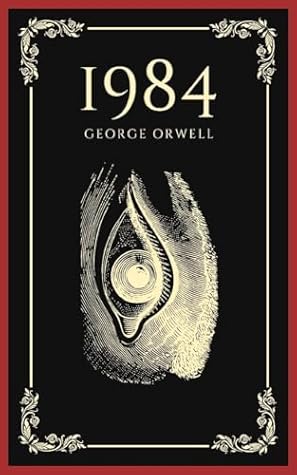
More on this book
Community


Kindle Notes & Highlights


‘Who controls the past,’ ran the Party slogan, ‘controls the future: who controls the present controls the past.’
And yet the past, though of its nature al-terable, never had been altered. Whatever was true now was true from everlasting to everlasting. It was quite simple. All that was needed was an unending series of victories over your own memory. ‘Reality control’, they called it: in New-speak, ‘doublethink’.
Tru-isms are true, hold on to that! The solid world exists, its laws do not change. Stones are hard, water is wet, objects unsup-ported fall towards the earth’s centre.
Freedom is the freedom to say that two plus two make four.
If that is granted, all else follows.
The invention of print, however, made it easier to manipulate public opinion, and the film and the radio carried the process further. With the development of television, and the technical advance which made it possible to receive and transmit simultaneously on the same instrument, private life came to an end. Every citizen, or at least every citizen important enough to be worth watching, could be kept for twenty-four hours a day under the eyes of the police and in the sound of official propaganda, with all other channels of communication closed.
The possibility of enforcing not only complete obedience to the will of the State, but com-plete uniformity of opinion on all subjects, now existed for the first time.
‘Has it ever occurred to you,’ he said, ‘that the whole his-tory of English poetry has been determined by the fact that the English language lacks rhymes?’
