
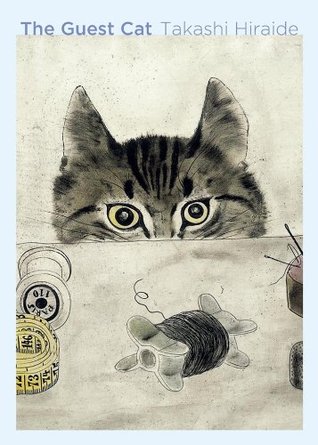
More on this book
Community


Kindle Notes & Highlights

In his discussion of fate, it seems Machiavelli thought that Fortuna dominates at least half our lives, while in the remaining half or a little less, human strength and competence (virtù) attempts to counteract it. He imagined fate as a goddess, capricious and fickle, or as a river, which could flood at any moment.
Machiavelli suggests that only the “skill displayed in times of emergency” can successfully compete with fate.
So let us liken fate to a destructive river here as well. The river rages, flooding the plain, consuming trees and buildings before it, washing away the earth and carrying it away to the other side. As it surges forward people flee, but ultimately they succumb to the water’s momentum. Nothing — no one, escapes.
Living beings, in turning a corner, or in producing the movements required to enter the crack in a certain partially opened door, are endowed with certain properties, something which produces its own little river. These daily movements are repeated, and a certain tendency — a certain current if you will — is generated. Then this minor current, because it is a current, must at some point flow into a larger river.

All he is saying is that cats are liquid lmao
“This is where I will live,” I thought to myself. Perhaps it was because I’d now developed a feeling for the passing of the seasons in our new abode — as if each new house, each new neighborhood contained its own unique experience of the passage of time.
The noble-minded do not thrust others aside in order to make their way in the world. But then they themselves are ultimately thrust aside by the advancing tide.
“For me, Chibi is a friend with whom I share an understanding, and who just happens to have taken on the form of a cat.” Then she told me about a philosopher who said that observation is at its core an expression of love which doesn’t get caught up in sentiment.
perhaps I had embarked on this line of thought merely to distract myself from my own anger and grief.
There’s no way we could expect her to share her grief with us.
a cat left outside on its own will cross any border it wants.
The act of writing also crosses borders indiscriminately. Wouldn’t there be a way to cleanse that thing looming between the neighbor and myself — to purify boundaries and all by performing an even closer examination of the issue through writing?
“Why do they hate us so much for taking care of Chibi?” “Don’t worry about it. We did the right thing.” “We didn’t even touch her.” “Who knows, he may have been brooding about something else.”
The word “to grieve” or “lament” in Japanese is actually made up of two different kanji characters — “sadness” and “resentment.”
Whenever a large number of people gather, flustered and confused, around the occasion of a death, a lot of quick decisions are made according to consensus, which is fundamentally suspect. Often, within the limited time available, some decisions are made which one would never have dreamed of.
Was the goddess Fortuna going on a rampage? Tossed about by her rough waves, moving from place to place, how were we going to manage to find the right current, the one that would lead us to a new home? In my despair, I decided to approach the problem with a sense of detachment.
