
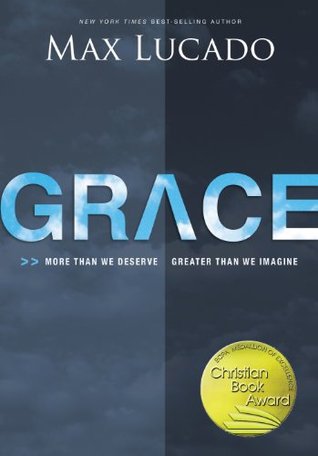
More on this book
Community


Kindle Notes & Highlights

by
Max Lucado
Read between
December 30, 2020 - January 3, 2021

Grace is the voice that calls us to change and then gives us the power to pull it off.1
His dream isn’t just to get you into heaven but to get heaven into you.
To be saved by grace is to be saved by him—not by an idea, doctrine, creed, or church membership, but by Jesus himself, who will sweep into heaven anyone who so much as gives him the nod.
Condemnation—the preferred commodity of Satan.
Our merits merit nothing. God’s work merits everything.
We find it easier to trust the miracle of resurrection than the miracle of grace. We so fear failure that we create the image of perfection, lest heaven be even more disappointed in us than we are.
Grace is not blind. It sees the hurt full well. But grace chooses to see God’s forgiveness even more. It refuses to let hurts poison the heart.
Where grace is lacking, bitterness abounds. Where grace abounds, forgiveness grows.
Confession is a radical reliance on grace. A proclamation of our trust in God’s goodness. “What I did was bad,” we acknowledge, “but your grace is greater than my sin, so I confess it.”
Sustaining grace promises not the absence of struggle but the presence of God.
Grace is simply another word for God’s tumbling, rumbling reservoir of strength and protection. It comes at us not occasionally or miserly but constantly and aggressively, wave upon wave.
Grace creates a confident soul who declares, “I know whom I have believed, and am convinced that he is able to guard what I have entrusted to him for that day” (2 Tim. 1:12 NIV).
Trust God’s hold on you more than your hold on God. His faithfulness does not depend on yours. His performance is not predicated on yours. His love is not contingent on your own. Your candle may flicker, but it will not expire.
Grace creates a resolve to do good, not permission to do bad.
