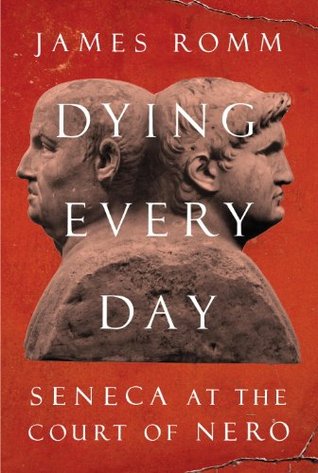
Agrippina did not think much of philosophy and did not want her son exposed to it. Intellectual musings, she felt, were not what a future emperor needed. She wanted her son taught the more practical arts he would need as princeps, above all rhetoric and declamation. The emphasis that these subjects got is attested by Tacitus, who imagined Nero giving credit to Seneca, later in life, for his eloquence. “You taught me not only how to express myself with prepared remarks, but how to improvise,” the princeps tells his tutor, a remark no doubt invented by Tacitus but based on primary research.
...more
This highlight has been truncated due to consecutive passage length restrictions.