
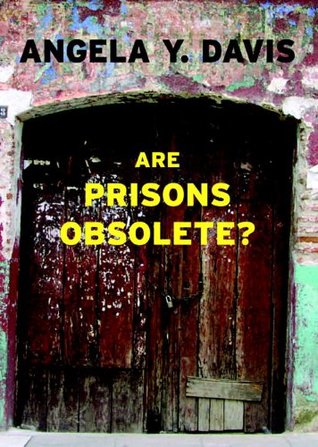
More on this book
Community


Kindle Notes & Highlights

Read between
January 29 - January 31, 2025

Why were people so quick to assume that locking away an increasingly large proportion of the U.S. population would help those who live in the free world feel safer and more secure? This question can be formulated in more general terms. Why do prisons tend to make people think that their own rights and liberties are more secure than they would be if prisons did not exist?
Because of the persistent power of racism, “criminals” and “evildoers” are, in the collective imagination, fantasized as people of color. The prison therefore functions ideologically as an abstract site into which undesirables are deposited, relieving us of the responsibility of thinking about the real issues afflicting those communities from which prisoners are drawn in such disproportionate numbers. This is the ideological work that the prison performs—it relieves us of the responsibility of seriously engaging with the problems of our society, especially those produced by racism and,
...more
Historian Mary Ann Curtin has observed that many scholars who have acknowledged the deeply entrenched racism of the post-Civil War structures of punishment in the South have failed to identify the extent to which racism colored common-sense understandings of the circumstances surrounding the wholesale criminalization of black communities. Even antiracist historians, she contends, do not go far enough in examining the ways in which black people were made into criminals. They point out—and this, she says, is indeed partially true—that in the aftermath of emancipation, large numbers of black
...more
When children attend schools that place a greater value on discipline and security than on knowledge and intellectual development, they are attending prep schools for prison.
Moreover, the prison sentence, which is always computed in terms of time, is related to abstract quantification, evoking the rise of science and what is often referred to as the Age of Reason. We should keep in mind that this was precisely the historical period when the value of labor began to be calculated in terms of time and therefore compensated in another quantifiable way, by money. The computability of state punishment in terms of time—days, months, years—resonates with the role of labor-time as the basis for computing the value of capitalist commodities. Marxist theorists of punishment
...more
I have highlighted the similarities between the early U.S. penitentiary—with its aspirations toward individual rehabilitation—and the repressive supermaxes of our era as a reminder of the mutability of history. What was once regarded as progressive and even revolutionary represents today the marriage of technological superiority and political backwardness. No one—not even the most ardent defenders of the supermax—would try to argue today that absolute segregation, including sensory deprivation, is restorative and healing. The prevailing justification for the supermax is that the horrors it
...more
During the eighteenth and nineteenth centuries, absolute solitude and strict regimentation of the prisoner’s every action were viewed as strategies for transforming habits and ethics. That is to say, the idea that imprisonment should be the main form of punishment reflected a belief in the potential of white mankind for progress, not only in science and industry, but at the level of the individual member of society as well. Prison reformers mirrored Enlightenment assumptions of progress in every aspect of human—or to be more precise, white Western—society.
Studies indicating that women have been even more likely to end up in mental facilities than men suggest that while jails and prisons have been dominant institutions for the control of men, mental institutions have served a similar purpose for women. That is, deviant men have been constructed as criminal, while deviant women have been constructed as insane.
Prior to the emergence of the penitentiary and thus of the notion of punishment as “doing time,” the use of confinement to control beggars, thieves, and the insane did not necessarily distinguish among these categories of deviancy. At this phase in the history of punishment—prior to the American and French Revolutions—the classification process through which criminality is differentiated from poverty and mental illness had not yet developed.
The term “prison industrial complex” was introduced by activists and scholars to contest prevailing beliefs that increased levels of crime were the root cause of mounting prison populations. Instead, they argued, prison construction and the attendant drive to fill these new structures with human bodies have been driven by ideologies of racism and the pursuit of profit.
How often do we encounter the phrase “crime and punishment”? To what extent has the perpetual repetition of the phrase “crime and punishment” in literature, as titles of television shows, both fictional and documentary, and in everyday conversation made it extremely difficult to think about punishment beyond this connection? How have these portrayals located the prison in a causal relation to crime as a natural, necessary, and permanent effect, thus inhibiting serious debates about the viability of the prison today?
But an analysis of the relationship between the military and prison industrial complex is not only concerned with the transference of technologies from the military to the law enforcement industry. What may be even more important to our discussion is the extent to which both share important structural features. Both systems generate huge profits from processes of social destruction. Precisely that which is advantageous to those corporations, elected officials, and government agents who have obvious stakes in the expansion of these systems begets grief and devastation for poor and racially
...more
In the context of an economy that was driven by an unprecedented pursuit of profit, no matter what the human cost, and the concomitant dismantling of the welfare state, poor people’s abilities to survive became increasingly constrained by the looming presence of the prison.
In arrangements reminiscent of the convict lease system, federal, state, and county governments pay private companies a fee for each inmate, which means that private companies have a stake in retaining prisoners as long as possible, and in keeping their facilities filled.
Prison reform rhetoric, which has always undergirded dominant critiques of the prison system, will not work in this new situation. If reform approaches have tended to bolster the permanence of the prison in the past, they certainly will not suffice to challenge the economic and political relationships that sustain the prison today. This means that in the era of the prison industrial complex, activists must pose hard questions about the relationship between global capitalism and the spread of U.S.-style prisons throughout the world.
Radical opposition to the global prison industrial complex sees the antiprison movement as a vital means of expanding the terrain on which the quest for democracy will unfold. This movement is thus antiracist, anticapitalist, antisexist, and antihomophobic. It calls for the abolition of the prison as the dominant mode of punishment but at the same time recognizes the need for genuine solidarity with the millions of men, women, and children who are behind bars. A major challenge of this movement is to do the work that will create more humane, habitable environments for people in prison without
...more
the prison industrial complex is much more than the sum of all the jails and prisons in this country. It is a set of symbiotic relationships among correctional communities, transnational corporations, media conglomerates, guards’ unions, and legislative and court agendas. If it is true that the contemporary meaning of punishment is fashioned through these relationships, then the most effective abolitionist strategies will contest these relationships and propose alternatives that pull them apart. What, then, would it mean to imagine a system in which punishment is not allowed to become the
...more
positing decarceration as our overarching strategy, we would try to envision a continuum of alternatives to imprisonment—demilitarization of schools, revitalization of education at all levels, a health system that provides free physical and mental care to all, and a justice system based on reparation and reconciliation rather than retribution and vengeance.
