
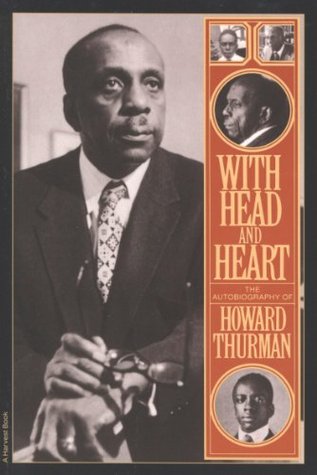
More on this book
Community


Kindle Notes & Highlights
Read between
March 2 - March 27, 2021

At such times I could hear the night think, and feel the night feel.
Again, the boundaries of self did not hold me. Unafraid, I was held by the storm’s embrace. The experience of these storms gave me a certain overriding immunity against much of the pain with which I would have to deal in the years ahead when the ocean was only a memory. The sense held: I felt rooted in life, in nature, in existence.
Eventually, I discovered that the oak tree and I had a unique relationship. I could sit, my back against its trunk, and feel the same peace that would come to me in my bed at night. I could reach down in the quiet places of my spirit, take out my bruises and my joys, unfold them, and talk about them. I could talk aloud to the oak tree and know that I was understood. It, too, was a part of my reality, like the woods, the night, and the pounding surf, my earliest companions, giving me space.
“How dare you turn this boy down? He is a Christian and was one long before he came to you today. Maybe you did not understand his words, but shame on you if you do not know his heart. Now you take this boy into the church right now—before you close this meeting!” And they did. I was baptized in the Halifax River.
Looking back, it is clear to me that the watchful attention of my sponsors in the church served to enhance my consciousness that whatever I did with my life mattered.
Finally, she was able to stop working, and as the years of weariness melted away, she remembered facts about the family she thought she had forgotten, and began to enjoy her reminiscences. As for me, on each visit I would go to my oak tree to lean against it for an intense moment of past intimacy.
I spent hours each week wandering around in the stacks, taking down first one book, then another, examining the title, reading the foreword and the table of contents, leafing through the pages, reading a paragraph here and there, getting the feel of the book and familiarizing myself with writers across centuries who would in time become as closely related to me as my personal friends.
But the differences not only had to do with the general social climate, but were grounded in the inner prism of spirit and mind through which we gazed out upon the external world.
The ceremony of ordination was held at eight o’clock in the evening, and the moment of transcendent glory was for me the laying on of hands, which I had so strongly resisted. During the performance of this ancient and beautiful ritual “the heavens opened and the spirit descended like a dove.” Ever since, when it seems that I am deserted by the Voice that called me forth, I know that if I can find my way back to that moment, the clouds will lift and the path before me will once again be clear and beckoning.
We talked until early light, and then we went to sleep. When we awoke, our lives were bound together in friendship and affection which the years have crowned with a shekinah that remains undimmed.
As I saw it, we were together engaged in an adventure of mind and spirit.
As time went by, I accumulated experiences of this kind and my capabilities and my confidence grew steadily, slowly. I began to explore my inner regions, and to cultivate an inner life of prayer and meditation.
At times I would lose my way in the full tide of emotions as a sense of the love of God overwhelmed me. At such moments we became one in the presence of God. At the same time, my preaching became less motivated by the desire to “teach”; it became almost entirely devoted to the meaning of the experience of our common quest and journey.
Again and again, I was privileged to observe a student grow into awareness, then into self-esteem, and finally into the confidence to begin a quest in her own right.
As if by magic the entire chapel audience was enveloped in an experience of transcendent encounter between person and power.
With a soft pink satin bridal dress shimmering shyly through a network of lace—the whole picture accentuated by the bridal veil—her entrance marked a moment of utter bewitchment.
One of the most daring of these Twilight Hours was the introduction of dance as a spiritual ritual.
I selected four of the universal moods of the human spirit: Praise, Thanksgiving, Contrition, and Faith.
The congregation and the participants were fused in a single moment of spiritual transcendence.
I noted the changes that had taken place since that far-off time.
Among us emerged the kind of communication that is possible only in a climate of honesty and trust.
But when the sun shone and the sea was calm it was pure bliss to experience as a family those moments when the seemingly endless water reached to a circled horizon and made us feel that we and the whole sweep of the world were undifferentiated in a moment of time.
When a man becomes a Christian in a “Christian” country, what is required of him is that he renounce his former, personal life, not the life of his culture and his heritage.
This becomes a personal commitment indicating the change of his private heart, but the change is not of necessity a judgment of his heritage and his culture. But in a country such as India, where the Christian religion is not part of the heritage and culture, it is required of the convert to renounce not only his private past, but also the past of his cultural and social identity.
I had to seek a means by which I could get to the essence of the religious experience of Hinduism as I sat or stood or walked in a Hindu temple where everything was foreign and new: the smells, the altars, the flowers, the chanting—all of it was completely outside my universe of discourse. I had to find my way to the place where I could stand side by side with a Hindu, a Buddhist, a Moslem, and know that the authenticity of his experience was identical with the essence and authenticity of my own.
More than forty years have passed since that morning. It remains for me a transcendent moment of sheer glory and beatitude, when time, space, and circumstance evaporated and when my naked spirit looked into the depths of what is forbidden for anyone to see. I would never, never be the same again.
Will you sing ‘Were You There When They Crucified My Lord?’ “ He continued, “I feel that this song gets to the root of the experience of the entire human race under the spread of the healing wings of suffering.”

It is Gandhi who asked Howard to sing.
The core of my preaching has always concerned itself with the development of the inner resources needed for the creation of a friendly world of friendly men.
There are times when guidance as to techniques and strategy is urgent, when counsel, support, and collective direct action are mandatory. But there can never be a substitute for taking personal responsibility for social change.
It was my discovery that more than campaigns or propaganda, however efficacious in creating the climate for social change, my gifts moved in the direction of the motivation of the individual and what could be done by the individual in his world, in his home, in his life, on his street.
The Sunday morning worship service is so designed as to address itself to the deepest needs and aspirations of the human spirit. In so doing, it does not seek to undermine whatever may be the religious context which gives meaning and richness to your particular life, but rather to deepen the authentic lines along which your quest for spiritual reality has led you.
As a child, the boundaries of my life spilled over into the mystery of the ocean and the wonder of the dark nights and the wooing of the wind until the breath of nature and my own breath seemed to be one—it was resonant to the tonality of God. This was a part of my cosmic religious experience as I grew up. To teach this was another matter.
The fundamental aim of the course, as I saw it, was to help men and women who were going into the ministry to acquaint themselves with their own inner life. I felt that the idea could be caught, but I did not think it could be taught.
The Search for Common Ground, published in 1971, is a radical departure from the rest of my writing. There I sought to examine the paradox of conscious life which, on the one hand, declares unequivocally the uniqueness of the private life, the sense of being an isolate and alone, the urgency to savor one’s personal flavor, but, on the other hand, asserts the necessity to feel oneself as a primary part of all of life, sharing at every level of awareness a dependence upon the same elements in nature, caught up in the ceaseless rhythm of living and dying, with no final immunity against a common
...more
My quest led me to examine theories dealing with the beginning of life as found in creation myths, to study the testimony of living structures, to take a critical look at the dreams of prophets and seers, to go beyond that to the common consciousness binding all of life and, finally, to come full circle to the paradox of identity.
.She possessed what comes through to me as an innate, instinctual sense of the unity of all life. It was this emphasis in her writing that was the first external confirmation of what had always been an active ingredient in my own awareness of life. As a boy in Florida, I walked along the beach of the Atlantic in the quiet stillness that can only be completely felt when the murmur of the ocean is stilled, and the tides move stealthily along the shore. I held my breath against the night and watched the stars etch their brightness on the face of the darkened canopy of the heavens. I had the sense
...more
It is a misreading of the role of feelings to separate them from the function of mind at work! No matter how clear and penetrating and detached may be the vast reaches of creative thoughts at their best, they are but lifeless forms until they are energized by the continuum of emotion that is always present and antedates the emergence of mind. After all, it may be true that what is called “thought” is a function of feeling, reduced to slow motion.
It was years later that I discovered that the possum was a notorious scavenger; but it remains a part of the magical tastes and smells of my youth.
There is a massive vitality in Beethoven’s music that consumes all foibles and mediocrities, leaving only a literal and irreducible reality.
I have often felt that if I were a psychoanalyst I would live under the shadow of a mountain range and use direct exposure to the mountains in all their changes as a part of my therapy.
The periods of greatest personal renewal in my life have been spent on the ocean. I love the sea and know it to be the womb from which all living things have come. There is something ominous about the phrase “the waters covered the face of the earth.” Crossing the Atlantic for the first time was like a homecoming of the spirit. There were times when standing alone on deck, the boundaries of the self dimmed and almost disappeared, and then again affirmed themselves. I felt that I was outside of time, yet watching myself in time.
I take my stand for the future and for the generations who follow over the bridges we already have crossed. It is here that the meaning oi the hunger of the heart is unified. The Head and the Heart at last inseparable; they are lost in wonder in the One.
we live inside all experience, but we are permitted to bear witness only to the outside. Such is the riddle of life and the story of the passing of our days.
