
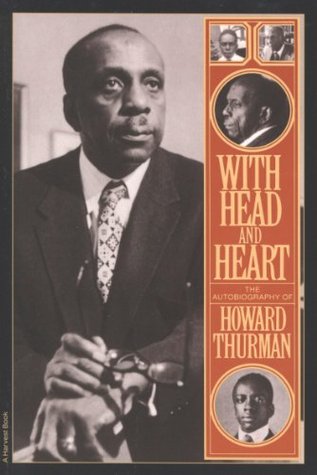
More on this book
Community


Kindle Notes & Highlights

Read between
March 13 - March 17, 2021

Thus, white and black worlds were separated by a wall of quiet hostility and overt suspicion.
“Now that you are a Christian, you cannot behave that way. That was a part of your old life.”
Looking back, it is clear to me that the watchful attention of my sponsors in the church served to enhance my consciousness that whatever I did with my
life mattered.
As a tool of the mind, there is no way by which the value
of this course can be measured or assessed.
At the end of our time together he cautioned me about my reading. “Do not waste your time on superficial books. Any book you can read more than fifteen pages an hour is not worth your time. Read today for what you will be thinking and preaching ten or twenty years from now. Do not preach out of a lunch basket.”
Now for the Mount Zion service I sought to create with my congregation a new interpretation of the sacraments, whose practice had both united and separated thousands of communicants in the Christian world.
As a pastor I learned at close range that the human spirit is capable of great nobility.
When I returned to London and went on to Paris and Geneva, I was aware that God was not yet done with me, that I need never fear the darkness, nor delude myself that the contradictions of life are final. I was ready now for my journey.
When the dust in the streets of my spirit needed settling, I would go out to the old section of the Rock Creek Cemetery. There was a semicircular granite bench there, in front of the famous Saint-Gaudens statue over the grave of the wife of Henry Adams. On it sat the life-size figure of a woman, draped in a cowl from head to foot, her chin supported by her right hand as she leans slightly forward, looking directly into the distance. Her countenance is drained of all emotion, her eyes exhausted from tears—she is at once alive and dead. To sit there alone surrounded by the silence, a slight wind
...more
At Howard, I began to experiment with forms of worship other than usual religious services. The sermon was not always the centerpiece. Within the regular order of service, I provided stretches of time for meditation, a quiet time for prayers generated by silence. I also wanted to develop a service that would permit greater freedom for the play of creative imagination, a vesper service; these were called Twilight Hours. Each Twilight Hour was different in form and texture.
One of the most daring of these Twilight Hours was the introduction of dance as a spiritual ritual.
I selected four of the universal moods of the human spirit: Praise, Thanksgiving, Contrition, and Faith.
