
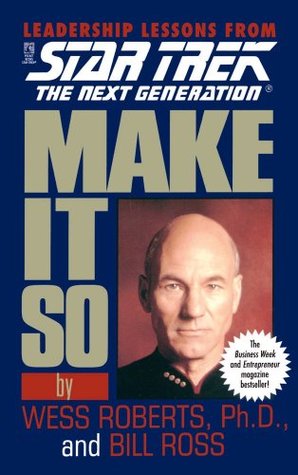
More on this book

Kindle Notes & Highlights

by
Wess Roberts
Read between
February 6 - May 7, 2022

Since an officer is rarely more effective than the capabilities of those around him allow, it is my firm belief that very high on the list of an officer’s principal duties is the responsibility to develop the leadership abilities of his subordinates.
In my mind, focus is the cardinal quality of an effective officer.
To be effective, an officer must have unclouded vision about what is ahead. Such vision demands that the officer deal with all his priorities, but not necessarily in sequential order. Indeed, an officer must develop the ability to see all ramifications of his action, or inaction, at once.
An officer’s effectiveness is in direct proportion to the degree of focus he applies to the m...
This highlight has been truncated due to consecutive passage length restrictions.
Officers should develop the full mental ability to adapt readily to varied demands and to novel situations, and learn...
This highlight has been truncated due to consecutive passage length restrictions.
The demands others make on an officer for his time and attention increases with rank and position. However, as one cannot be omnipresent, it becomes vital that an officer quickly distinguish between profitable and wasteful use of his time and presence.
Clearness and persistence of aim reduce the volume of effort it takes to be effective.
While being sidetracked may result from overloading oneself with too many responsibilities, gifted officers most often fail because of wasteful...
This highlight has been truncated due to consecutive passage length restrictions.
In space, officers can ill afford to allow their crew to become distracted by ...
This highlight has been truncated due to consecutive passage length restrictions.
The surest way for an officer to be selected for higher position is by concentrating on doing his present job well. Indeed, one who focuses too much concern on what his future may hold loses much of his present self.
When an officer becomes convinced that the power of concentration leads to mission success, he will take great pains to cultivate this power in his crew, and will prudently and tirelessly guard against wanton dispersions of profitable effort and valuable resources.
Concentrating on the most important aspects of one’s duties gives all the secondary or mechanical operations of one’s effor...
This highlight has been truncated due to consecutive passage length restrictions.
Urgency should not be construed as haste, but as purposeful action. Such action should be deliberate and executed with patience. Deliberation is not delay, but consideration of options. Patience is not excess indulgence, but diligence. Indeed, the officer who acts with a sense of urgency is one who selects the best option to maximize opportunity at the most opportune time.
it is rarely better to act quickly and err than to tarry until the time of action has past, as the time of action for any one thing is rarely absolute and many errors are fatal.
Despite your competence and ambition to use it, there are times when, without combining your efforts with those of others, you cannot succeed at your mission.
Initiative is an important quality that every officer must learn how to use to perform routine duties and to work through crisis situations. It is also a quality that an officer should develop and reinforce among his crew.
conditions rarely favor even the most experienced officer or crew. Therefore, most mission success depends upon those who are willing to work through obstacles with tenacious and persistent effort.
An officer or crewman’s initiative should be neither blind, fitful, nor easily distracted, and can only be taken when he fully understands his commander’s intentions or when he knows what is expected of him under the circumstances.
There is nothing more limiting of one’s potential than too much fear of the unknown.
Personal initiative is not a quality people have in equal volume. Therefore, an officer must learn to urge, to suggest, and occasionally to restrain others.
While there are times when one is granted considerable freedom to act, such freedom does not grant one impunity from violating laws or the basic rights of others.
An officer who feels he must control every action taken by his crew destroys their will to take initiative when he is not present.
As we have come to understand, the success of difficult missions, as well as the progress of our people, is often due to those who acted when action was required, and those who acted when others saw no reason to take action.
No matter what knowledge one has acquired, it requires the illustration and confirmation of experience to become wisdom.
An officer should broaden his knowledge with and through others. He should also correct and complete his experience through the experience of others.
One officer equipped with technology and tools that he cannot competently use has little, if any, advantage over another who possesses inferior devices and instruments.
A portion of an officer’s power comes with the position he holds. However, the greatest measure of his power comes by knowing his work.
Within Starfleet, a higher value is placed on an officer with the full mental ability to adapt readily to varied demands and unusual situations, and who can meet emergencies with inventiveness, than is placed on an officer who has but more imitative skill.
One of the surest ways to instill competence among the crew is to help them overcome their miscalculation...
This highlight has been truncated due to consecutive passage length restrictions.
Broadly considered, effective communication is the single most important element in resolving a crisis situation. Effective communication is also the single most important factor that can prevent a crisis situation.
Silence is not always golden, but powerful messages can be given without speaking a single word. In other words, what is not spoken is often more important than what is said.
Patience is a quality whose value comes into play when one is attempting to understand another who is having difficulty expressing his thoughts, feelings, opinions, or ideas.
Effective communication does not always lead to agreement. True enough, some of the most effective communications merely result in arriving at the reason why you disagree with the other party.
Cutting another person off midsentence is generally rude. However, there are times when cutting someone off midsentence is the kindest thing you can do for them at the moment.
Always bear in mind that no matter the means by which messages are given or received, your method of communicating must allow messages to be understood. Indeed, effective communication is the lubricant of effective leadership.
rules of conduct create an atmosphere of decency by controlling irrationality.
It is possible that even the most notable officer may become so weakened by flattery that he ceases to cultivate his authority properly, ceases to acknowledge fact, ceases to heed honest criticism
an officer who emphasizes those things his crew share in common, and who has the ability to help them understand what may keep them apart, equips his crew with a great deal of ability to control their own irrationality.
An officer who constantly seeks to find fault in others does not always succeed. Nevertheless, in doing so, one usually causes them harm and creates...
This highlight has been truncated due to consecutive passage length restrictions.
While an officer may not always be persuaded to act on fact, he should never allow himself to be corrupted by the zeal to gain...
This highlight has been truncated due to consecutive passage length restrictions.
Although an officer has every right to expect his crew to follow lawful orders, no officer has the authority to compel any member of the crew to become part of his illegal activity or abuses of his power.
Bear in mind that an officer who respects the authority and power that attend his office exercises them in devotion to his duty to help others succeed.
Because humans are creatures of emotion, we can be drawn into doing the wrong thing by what, at the moment, seems a necessity—necessity that often proves to be the result of either ignorance or denial.
an officer who gains some ends by selfish scheming and underhanded practice may imagine that he has found the key to success. But a day comes when he is understood and even his plausible words lose their value.
It is rather easy to recognize the faults of others, but it is much more difficult for one to admit that he may be responsible for the faults he finds in others.
To be held in high regard, an officer’s actions should not betray his words. Nevertheless, it is also vital that an officer’s actions not betray doing what is right for the common good.
An officer who is routinely true to himself and others is one who can be trusted and relied upon in a crisis situation. This is al...
This highlight has been truncated due to consecutive passage length restrictions.
For reasons of security, an officer may not be able to fully disclose the nature of a mission to every member of the crew. Notwithstanding, under no circumstances should an officer ever...
This highlight has been truncated due to consecutive passage length restrictions.
There may be limited time for a new officer to begin developing a healthy relationship with his crew. But on no occasion should an officer use whatever limited time is available to undo the...
This highlight has been truncated due to consecutive passage length restrictions.
The morale and motivation of the crew is a direct reflection of how they perceive their comman...
This highlight has been truncated due to consecutive passage length restrictions.
