
More on this book
Community


Kindle Notes & Highlights


Gratitude has a way of turning what we have into enough,
Things turn out best for those who make the best of the way things turn out. —Art Linkletter
I may not have gone where I intended to go, but I think I have ended up where I needed to be. —Douglas Adams
It’s like this: if life is a cake recipe that we are trying to perfect, then I’ve got my recipe down JUST RIGHT for the time being (with the ideal amount of flour, sugar, baking soda, etc.). More sugar, for example, would not necessarily make a better cake. In fact, it might ruin it! So if you’re not happy with your life, figure out which ingredients make it bitter and take them out. Don’t believe commercials that tell you to spread more frosting on the top, because then you would simply wind up with a bitter cake that has frosting on it.
I am another you, and you are another me. And the journey continues. Namaste.
Is happiness the absence of suffering, or is it contentment despite the imperfections?
If you really want to do something, you will find a way. If you don’t, you will find an excuse. —E. James Rohn
The most important (and difficult) aspect of ANY job is to focus on the task at hand, and to not worry whether someone else is doing her or his part. It is not our place to judge or comment on somebody else’s job performance. The minute we become more concerned with what someone else is (or is not) doing, is the minute we fail to do our own part.
We cannot control what anyone else is up to; we can only be mindful of what we can each do individually, and do it well.
What comes, let it come. What stays, let it stay. What goes, let it go. —Papaji
Losing an illusion makes you wiser than finding a truth. —Ludwig Börne
Apologizing doesn’t always mean that you’re wrong and the other person is right. It just means that you value your relationship more than your ego. —Anonymous
How people treat you is their karma; how you react is yours. —Wayne Dyer
In the smallest nutshell I could possibly find, the Buddha taught that we cause our own suffering when we get attached to impermanent things. We cling to people, health and youth, even though we intellectually know that nothing lasts forever. That’s why the concept of “letting go” is so fundamental to Buddhism. Acknowledge everything that passes by like a cloud in the sky: some are beautiful, fluffy, and make us smile, while some are dark and cold—but they’re all impermanent.
There is beauty to impermanence, but it can only be experienced without attachment, when we enjoy each moment knowing full well that it will pass and make way for a new one. Only then can we actually celebrate every breath instead of feeling sad about what has passed or what will never be again.
Compassionately understand that everyone is on his or her own path and, furthermore, honor where everyone is on that journey at every moment. No fear, no hatred, bigotry or animosity, just deep understanding, empathy, love, and respect for all beings.
Disagreements aren’t conflicts unless pride and ego get involved, and people DO eventually grow out of those. Sometimes they just need to know that you have already forgiven them, and that it’s okay for them to approach you.
Life becomes easier when you learn to accept an apology you never got. —Robert Brault
Oftentimes the lesson we are to learn is when to say “no,” the right time to walk away, and when to remove ourselves from the very cause of anguish.
If two people can have very different definitions of what “walking distance” means, imagine bigger words like “right,” “wrong,” “God,” and “love.”
What the caterpillar calls the end of the world, the master calls a butterfly. —Richard Bach
We need not agree with, only learn to peacefully live with, other people’s freedom of choice. This includes (but is not limited to) political views, religious beliefs, dietary restrictions, matters of the heart, career paths, and mental afflictions. That said, tolerance does NOT mean accepting what is harmful. So may all beings live in peace, and may all beings be happy.
You can safely assume that you’ve created God in your own image if it turns out that your God hates the same people you do. —Anne Lamott
When you’re not standing at either end, but hanging out in the middle instead, nothing can offend you. Compassion and deep understanding toward others are significantly easier to access when nobody is far away from where you are.
You’re not stuck in traffic; you ARE traffic. We blame society, but we ARE society.
All experiences are as transient as clouds in the sky: anger comes and goes, excitement rises and falls, and tears dry on their own. So practice tenderly watching your feelings and emotions as they move in and out of your mind, just like traffic on a busy street.
Opinions change, perspectives widen, and the opposite of what you know is also true.
Buddhism teaches us to be tolerant and accepting, but tolerance does NOT mean accepting what is harmful. Even if you think there are benefits to staying in a situation that is harmful, I urge you to reconsider. Abuse is never justified, and it is only when we don’t love ourselves enough that we allow others to treat us with disrespect.
If success means being happy, are you on the right track?
One day you will wake up and there won’t be any more time to do the things you’ve always wanted to do. Do them now! —Paulo Coelho
If you get road rage because of slow-moving traffic, annoyed with bank tellers for taking “too long” with other customers, hurt feelings when a friend forgets your birthday, or disappointed when the weather doesn’t clear on the day of your planned picnic, take note that most of your expectations are completely unreasonable and self-centered.
the only reason you’re not disappointed when you don’t find a love letter in your mailbox every day is because you’re not expecting to find one in the first place.
Here’s the trick: instead of focusing all of your energy on “letting go of anger,” focus on increasing your gratitude . . . and the anger will naturally subside.
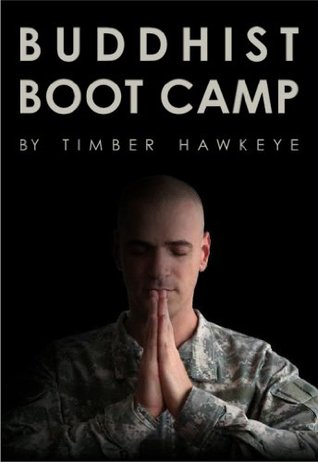
The first principle here at Buddhist Boot Camp is that the opposite of what you know is also true. Accept that other people’s perspectives on reality are as valid as your own (even if they go against everything you believe in), and honor the fact that someone else’s truth is as real to them as yours is to you. Then (and this is where it gets even more difficult), bow to them and say, “Namaste,” which means the divinity within you not only acknowledges the divinity within others, but honors it as well.
You will not be punished for your anger; you will be punished by your anger.
“We can make ourselves miserable, or we can make ourselves happy. The amount of work is the same.”
Unsolicited advice, coercing, controlling, labeling, judging, and meddling are just a few versions of violence that deeply affect us.
I ended up doing what I later discovered is the Buddhist approach to alleviating suffering: I didn’t get rid of my mother, for example; I got rid of my emotional attachment to her. There is a cause for our suffering, and there is a way out. It turns out that I hated her because she never met my expectations of how I thought a mother “should” be. But as soon as I took away those expectations, I finally saw her as my greatest teacher, not enemy, and accepted the fact that she did the best she could.
Gratitude is an amazing antidote to almost any negative feeling. The minute we are angry with someone is the minute we have momentarily forgotten how grateful we are for having them in our lives in the first place. And as soon as we return to gratitude, the anger disappears. It’s amazing!
