
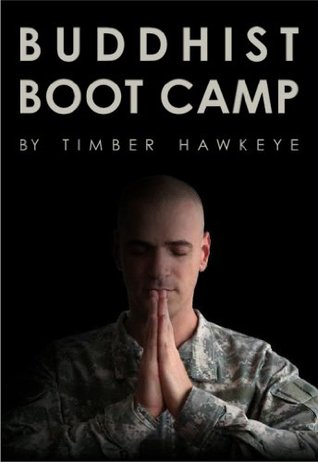
More on this book
Community


Kindle Notes & Highlights


Habitually contemplate whether your thoughts stem from love or from fear. If your thoughts originate in love, then follow them. But if they originate from a place of fear, then dig deep to find the root of your fear.
First things first: stop granting yourself everything you crave. Doing so simply conditions the spoiled kid to know that it can continue having whatever it wants.
The first few times that you try to train your mind you will see the little kid in you throw a tantrum, which is actually hilarious. But it’s understandable; you’ve never said “no” to it before. It’s time you start!
As a result, we spend very little time appreciating where we are today. By being so focused on how things “could be,” we are under-appreciating how great things already are.
Happiness is a choice.
Although we constantly make decisions, we’re not always mindful of their far-reaching consequences.
Then, before making any decision, ask yourself, “Will this action that I am considering get me closer to the kind of life I want to live, or farther from it?” The key, again, is to think of the far-reaching consequences of your decisions, not just instant gratification.
the path of LEAST resistance will often take you farther from your destination than the seemingly more difficult one, but an easy trek in the wrong direction is ultimately far more exhausting and devastating than an uphill climb toward euphoria.
Every decision you make is important.
It is not our place to judge or comment on somebody else’s job performance. The minute we become more concerned with what someone else is (or is not) doing, is the minute we fail to do our own part.
We cannot control what anyone else is up to; we can only be mindful of what we can each do individually, and do it well.
Make an effort to shine no matter what, to love unconditionally, and to be a kind and gentle soul (even when nobody is watching).
A healthy relationship is based on unconditional love, not on the need to possess. Although you put plenty of “heart” into it, you lose nothing by giving love away.
Healthy relationships are a collaboration of sorts: two peaceful warriors spiritually supporting one another on their individual journeys to spread positivity and light.
Buddhism teaches us that if we get attached to impermanent things (and feelings are a perfect example of things that are impermanent), then our lives will be full of anguish. But if we live each moment without getting attached to it, then we can eliminate the very cause of suffering right there and then, and joyfully live our lives.
Buddhism equally honors and respects all beings (period). If you witness ANYONE making exceptions to that rule, those exceptions are illegitimate.
Listen with empathy, and speak with compassion. Healthy communication can open many doors and dispel assumptions we didn’t even know we had.
A stranger is simply a friend you haven’t met yet.
I believe in God, only I spell it Nature. —Frank Lloyd Wright
Scripture can be inspiring—but also dangerous, if you confuse it for the real thing. Admire the teaching, not the teacher.
Your beliefs don’t make you a better person; your behavior does. —Anonymous
Meditation is a method of training the mind to remain calm despite the continuous flux of external conditions.
So even saying, “God, please give me strength,” implies that we don’t already have it (when we actually do).
So don’t focus on what you DON’T have, because energy flows where attention goes
Meditate to keep your mind firmly fixed in the right direction, and it will raise your awareness of things to be grateful for in your prayers.
If the only prayer you ever say in your entire life is “thank you,” it will be enough. —Johannes Eckhart
If you want to familiarize yourself with the precepts of Buddhism, I recommend reading Thich Nhat Hanh’s literary gem, For a Future to Be Possible.
The Buddha was not a God. He never claimed to be a God, the son of God, or a messenger of God. He was a man who gained clear perspective of the world through nothing more than human effort. And if he was able to do it then, we can do it now!
You can choose to be happy, or you can choose to be afraid . . . but the choice is always yours.
Spiritual practice doesn’t make your life longer; it makes it deeper.
Humility doesn’t mean thinking less of yourself; it means thinking of yourself less. —C. S. Lewis
Our beliefs are merely stories in our minds that we ourselves wrote long ago. Knowing that, don’t you feel empowered to rewrite them if they no longer serve you?
As for the church? Well, it’s a business. And like any business, its business is to stay in business.
If you want your life to be a magnificent story, then begin by realizing that you are the author, and every day you have the opportunity to write a new page. —Mark Houlahan
Remain aware of what goes on around you, but try to do it without the mind’s commentary. Observe without judgment, and experience life without resistance.
Instead of spending so much time thinking about what’s missing from your life, remind yourself (if only for twenty minutes a day), of everything you already have: from a comfortable bed to sleep on, to a roof over your head, to clean air, drinking water, food, clothes, friends, functioning lungs, and a beating heart.
You never make the same mistake twice. The second time you make it, it’s no longer a mistake; it’s a choice. What we essentially are is a series of bad decisions.
Anger is like a mask that covers hurt feelings or fear.
When you’re disappointed or irritated, take a moment to think about what you would like to accomplish, and you’ll find that screaming or acting out will rarely, if ever, get you the results you’re after.
anger and gratitude, for example, cannot coexist in the same thought; it is cognitively impossible. The moment you are angry with your spouse, for example, is the moment you stop being grateful for having them in your life in the first place; yet the moment you go back to gratitude, the anger goes away. It’s like magic: gratitude is the antidote to anger.
Something as small as making a decision can be very empowering. We feel in control of our situation (rather than victimized by it), and when things change, we change with them. This flexibility and fluidity doesn’t happen overnight. There is a gap between needing to make a decision and actually making it, and that gap is almost always filled with fear. We fear change and the unknown, so we cling to a past that’s already gone and attempt to avoid a future that is inevitable.
