
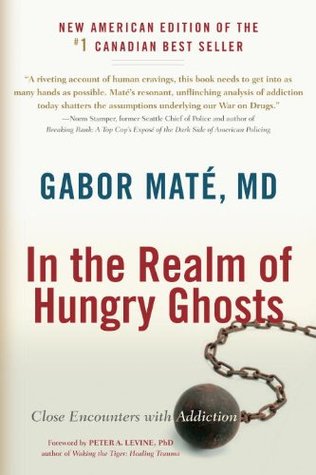
More on this book
Community


Kindle Notes & Highlights

by
Gabor Maté
Read between
October 6, 2024 - January 12, 2025

That is the paradox: the United States leads the world in scientific knowledge in many areas but trails in applying that knowledge to social and human realities.
In our materialist society, with our attachment to ego gratification, few of us escape the lure of addictive behaviors. Only our blindness and self-flattery stand in the way of seeing that the severely addicted are people who have suffered more than the rest of us but who share a profound commonality with the majority of “respectable” citizens.
A sense of deficient emptiness pervades our entire culture. The drug addict is more painfully conscious of this void than most people and has limited means of escaping it. The rest of us find other ways of suppressing our fear of emptiness or of distracting ourselves from it.
Addictions, even as they resemble normal human yearnings, are more about desire than attainment. In the addicted mode, the emotional charge is in the pursuit and the acquisition of the desired object, not in the possession and enjoyment of it. The greatest pleasure is in the momentary satisfaction of yearning.
Like addiction itself, anxiety will always find a target but exists independently of its targets.
Incompleteness is the baseline state of the addict. The addict believes—either with full awareness or unconsciously—that he is “not enough.” As he is, he is inadequate to face life’s demands or to present an acceptable face to the world. He is unable to tolerate his own emotions without artificial supports. He must escape the painful experience of the void within through any activity that fills his mind with even temporary purpose, be it work, gambling, shopping, eating, or sexual seeking.
As we’ve already seen, painful early experiences program both the neurophysiology of addiction and the distressing psychological states that addiction promises to relieve. Yet human beings who are able to direct conscious attention toward their mental processes discover something surprising: it’s not what happened in the past that creates our present misery but the way we have allowed past events to define how we see and experience ourselves in the present.
By structuring such responsible but nonjudgmental self-examination into our routine, by owning the impact of our behaviors on others, we diminish our karmic burden. We are lighter and freer. We have less need to escape into addiction.
While his behaviors are fully his responsibility, the more people around him who can shoulder responsibility for their own attitudes and actions without blaming and shaming the addict, the greater is the likelihood that everyone will come to a place of freedom.
The addict doesn’t engage in his habits out of a desire to betray or hurt anyone else but to escape his own distress. It’s a poor choice and an irresponsible one, but it is not directed at anyone else even if it does hurt others. Loving partners or friends may openly acknowledge their own pain around the behavior, but the belief that somehow the addict’s actions deliberately betray or wound them only compounds the suffering.
Addiction floods in where self-knowledge—and therefore divine knowledge—are missing. To fill the unendurable void, we become attached to things of the world that cannot possibly compensate us for the loss of who we are.
In a state of spiritual poverty, we will be seduced by whatever it is that can make us insensate to our dread. That, ultimately, is the origin of the addiction process, since the very essence of that process is the drive to take in from the outside that which properly arises from within. If we “prefer not Jerusalem”—the “City of Peace” within—above our worldly delights, we fixate on external sources of pleasure or power or meaning. The sparser the innate joy that springs from being alive, the more fervently we seek joy’s pale substitute, pleasure; the less our inner strength, the greater our
...more
People whom we judge are our mirrors. People who judge us call forth our courage to respect our own truth. Compassion for ourselves supports our compassion for others. As we open to the truth within, we hold safe a space of healing for others. They may do the same for us.
