
More on this book
Community


Kindle Notes & Highlights

Started reading
July 7, 2021

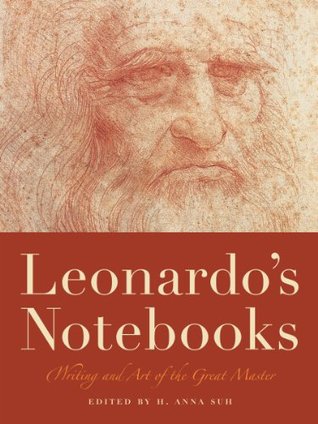
In addition to his dozen or so enigmatic and beautiful paintings, Leonardo left an extensive body of sketches, notes, and writing, which resonates with a modern audience no less than they did with his admiring contemporaries.
Comprising some four thousand pieces of paper, what are loosely called Leonardo’s notebooks are actually several different collections and compilations of his manuscripts. Ranging from subjects as diverse as anatomical studies to the details of grinding and mixing pigments, they offer nearly unfettered access to the great master’s fertile imagination.
Largely self-taught, Leonardo had a chip on his shoulder about his lack of classical education, stating several times that he learned from empirical evidence and his (formidable) powers of observation.
This section introduces his thoughts and instructions on different aspects of the painter’s craft. “On Painting” presents his general ideas about the essentials of paintings, such as the role of light in compositions, guidelines for different kinds of paintings, and tips for the aspiring painter. “Human Figures” compiles Leonardo’s extensive studies of proportion and balance in the depiction of the human body, considered the noblest subject of Renaissance art. “Light and Shade” consists of his meticulous studies on the interplay of bright and dark in painting.
as you go through the fields, turn your attention to various objects, and, in turn, look now at this thing and now at that, collecting a store of diverse facts selected and chosen from those of less value.
The first thing in painting is that the objects it represents should appear in relief, and that the grounds surrounding them at different distances shall appear within the vertical plane of the foreground of the picture by means of the three branches of Perspectives, which are: the diminution in the distinctness of the forms of the objects; the diminution in their magnitude; and the diminution in their color. And of these three classes of Perspective the first results from [the structure of] the eye, while the other two are caused by the atmosphere that intervenes between the eye and the
...more
[Many poor painters], to seem great draughtsmen, draw their nude figures looking like wood, devoid of grace, so that you would think you were looking at a sack of walnuts rather than the human form, or a bundle of radishes rather than the muscles of figures.
To compose [groups of] figures in historical pictures, when you have well learnt perspective and have by heart the parts and forms of objects, you must go about, and constantly, as you go, observe, note, and consider the circumstances and behavior of men in talking, quarreling, or laughing or fighting together; the action of the men themselves and the actions of the bystanders, who separate them or who look on.
And take a note of them with slight strokes in a little book that you should always carry with you. And it should be of tinted paper, that it may not be rubbed out, but change the old [when full] for a new one; since these things should not be rubbed out but preserved with great care; for the forms, and positions of objects are so infinite that the memory is incapable of retaining them, wherefore keep these [sketches] as your guides and masters.
