
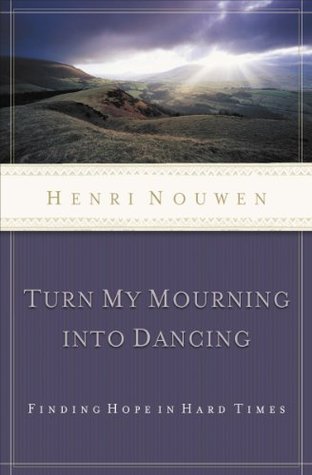
More on this book
Community


Kindle Notes & Highlights

Started reading
August 11, 2018

We limit divine mercy to our human fears. Our efforts to disconnect ourselves from our own suffering end up disconnecting our suffering from God’s suffering for us. The way out of our loss and hurt is in and through. When Jesus said, “For I have come to call not the righteous but sinners” (Matt. 9:13), he affirmed that only those who can face their wounded condition can be available for healing and enter a new way of living.
Typically we see such hardship as an obstacle to what we think we should be—healthy, good-looking, free of discomfort. We consider suffering as annoying at best, meaningless at worst.
We also like easy victories: growth without crisis, healing without pains, the resurrection without the cross.
The way of Jesus looks very different. While Jesus brought great comfort and came with kind words and a healing touch, he did not come to take all our pains away.
Instead, Christ invites us to remain in touch with the many sufferings of every day and to taste the beginning of hope and new life right there, where we live amid our hurts and pains and brokenness.
That is the patient way, slowly leading me from the easy triumph to the hard victory.
I am less likely to deny my suffering when I learn how God uses it to mold me and draw me closer to him. I will be less likely to see my pains as interruptions to my plans and more able to see them as the means for God to make me ready to receive him. I let Christ live near my hurts and distractions.
I remember an old priest who one day said to me, “I have always been complaining that my work was constantly interrupted; then I realized that the interruptions were my work.” The unpleasant things, the hard moments, the unexpected setbacks carry more potential than we usually realize. For
Mourning makes us poor; it powerfully reminds us of our smallness. But it is precisely here, in that pain or poverty or awkwardness, that the Dancer invites us to rise up and take the first steps. For in our suffering, not apart from it, Jesus enters our sadness, takes us by the hand, pulls us gently up to stand, and invites us to dance. We find the way to pray, as the psalmist did, “You have turned my mourning into dancing” (Ps. 30:11), because at the center of our grief we find the grace of God. And as we dance, we realize that we don’t have to stay on the little spot of our grief, but can
...more
If God is found in our hard times, then all of life, no matter how apparently insignificant or difficult, can open us to God’s work among us. To be grateful does not mean repressing our remembered hurts. But as we come to God with our hurts—honestly, not superficially—something life changing can begin slowly to happen. We discover how God is the One who invites us to healing. We realize that any dance of celebration must weave both the sorrows and the blessings into a joyful step.
We tend, however, to divide our past into good things to remember with gratitude and painful things to accept or forget.
It becomes a way to categorize, and in a way, control. Such an outlook becomes another attempt to avoid facing our suffering. Once we accept this division, we develop a mentality in which we hope to collect more good memories than bad memories, more things to be glad about than things to be resentful about, more things to celebrate than to complain about.
Gratitude in its deepest sense means to live life as a gift to be received thankfully. And true gratitude embraces all of life: the good and the bad, the joyful and the painful, the holy and the not-so-holy. We do this because we become aware of God’s life, God’s presence in the middle of all that happens.
When we look at a pruned vineyard, we can hardly believe it will bear fruit. But when harvest comes, we realize that the pruning allowed the vines to concentrate their energy and produce more grapes.
