
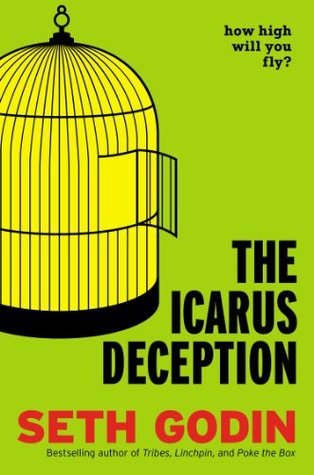
More on this book
Community


Kindle Notes & Highlights

Why So Many Entrepreneurs Have Dyslexia and ADHD
No, I think it’s because their outlier tendencies made it clear to them early on that they would be less likely to be picked. Less likely to be at the top of their class or chosen by the fancy college or recruited by P&G. Precisely because they didn’t fit in, they had little choice but to pick themselves.
Our basic human need to be understood, respected, and missed when we’re gone doesn’t get satisfied easily. As a result, when genuine connection is offered, it’s often taken.
Connection begins with dignity.
When we humanize the person at the other end of the counter or the phone or the Internet, we grant them something precious—personhood. When we treat the people around us with dignity, we create an entirely different platform for the words we utter and the plans we make.
How much connection did you just make? That’s one way to measure whether or not the work you did made a difference.
When you make a daring comment at a meeting, how many people are able to leverage it or respond to it or work with it?
When you produce a video or an app or an idea and it spreads from person to person, it create...
This highlight has been truncated due to consecutive passage length restrictions.
it’s the connection of spirit and dreams that turns the work of one person into art.
It’s not art if the world (or at least a tiny portion of it) isn’t transformed in some way. And it’s not art if it’s not generous. And most of all, it’s not art if there’s no risk.
The linchpin is the cornerstone of a project, the responsibility taker, the one we would miss if she were gone.
The artist is almost certainly a linchpin, but I’m adding another dimension here—it turns out that expending emotional labor, working without a map, and driving in the dark involve confronting fear and living with the pain of vulnerability. The artist comes to a détente with these emotions and, instead of fighting with them, dances with them.
when you expect applause, when you do your work in order to get (and because of) applause, you have sold yourself short. When your work depends on something out of your control, you have given away part of your art. If your work is filled with the hope and longing for applause, it’s no longer your work—the dependence on approval in this moment has corrupted it, turned it into a process in which you are striving for ever more approval.
If it’s finished, the applause, the thanks, the gratitude are something else. Something extra and not part of what you created. If you play a beautiful song for two people or a thousand, it’s the same song, and the amount of thanks you receive isn’t part of that song.
The connection that comes after the art is appreciated lasts far longer than applause ever could and opens the door for you to work to create ever more connection, as opposed to seeking to repeat the evanescent thrill of an ovation.
One definition of propaganda: It benefits the teller, not the recipient.
Myths are about becoming more godlike and achieving our best. Propaganda, on the other hand, celebrates those in power and urges us to willingly comply with their desires.
Six Daily Habits for Artists Sit alone; sit quietly. Learn something new without any apparent practical benefit. Ask individuals for bold feedback; ignore what you hear from the crowd. Spend time encouraging other artists. Teach, with the intent of making change. Ship something that you created.
Your job isn’t to do your job. Your job is to decide what to do next.
The impresario is a pathfinder. She’s the person who figures out what to do next—and then does it. She improvises.
When we strip away self-doubt and artifice, when we embrace initiative and art, we are left with kamiwaza. The purity of doing it properly but without self-consciousness.
Better Art, Three Ways Fly closer to the sun. Become naked and vulnerable in front of those you give your art to, and Seek to make a connection.
It’s precisely the high-wire act of “this might not work” that makes original art worth doing.
Giving up our attachment to what might happen—maybe the boss won’t like it, maybe the market will reject it, maybe my friends will think it’s stupid—is an essential part of commitment.

One way to co-opt your critics. From @SetGodin's book, The Icarus Deception.
The biggest cultural roller coaster of all is the one that pushes us to keep our heads down and comply, the one that is short-circuiting your art. This is the unspoken threat (the one we’re reminded of from first grade) that you’re just one misstep away from being fired, ostracized, thrown out, and exiled from the community.
Like a show dog that could never make it in the wild, industrialism is pampered and brittle.
Artists can’t afford to be fragile. The work is a series of projects and problems to be solved, not a pristine, predictable environment where refined inputs lead to ever-more-refined outputs.
Bold doesn’t always mean bellicose or dramatic. It might merely mean connected.
We’re drawn to connect with people doing art. They are us at our best. They are the new gods of our myths.
Tension focuses our attention. Tension brings us closer, eager to find out how the tension will be relieved.
Change is powerful, but change always comes with the possibility of failure as its partner. “This might not work” isn’t merely something to be tolerated; it’s something you must seek out.
Welcome, O life, I go to encounter for the millionth time the reality of experience and to forge in the smithy of my soul the uncreated conscience of my race. —Stephen Dedalus, protagonist in James Joyce’s A Portrait of the Artist as a Young Man
Assembly-line workers live in fear of the foreman and the union boss—except those who don’t; they point out the inefficiencies, the safety issues, and, most important, the overlooked contributors waiting to make a difference.
Those with grit will persevere because they believe they have no choice, not if they wish to be who they are.
The one with grit, the determination to make a difference—she endures as well as the others, but then she processes that event into something that will allow her to make a bigger impact next time.
The person with grit, on the other hand, understands that the grind is part of the work, that the grind is part of what makes the work interesting, a challenge, worth doing. If there were no grind, you’d need no grit.
Resilience demands flexibility—the willingness to change one thing in order to make up for something that’s broken or failing. The endless emergency of getting it over with is replaced by the daily practice of doing the work.
Blaming the system is soothing because it lets you off the hook. But when the system is broken, we wonder why you were relying on the system in the first place.
It’s not easy to expose ourselves to that much potential shame, so the only alternative is to refuse to accept the shame and merely honor the connections made instead.
while someone can attempt to shame you, shame must also be accepted to be effective.
After you’ve created your art, whatever it is—a service, an idea, an interaction, a performance, a meeting—it’s done. What the audience does with it is out of your control. If you focus your angst and emotion on the people who don’t get it, you’ve destroyed part of your soul and haven’t done a thing to improve your art. Your art, if you made it properly, wasn’t for them in the first place. Worse, the next time you make art, those nonbelievers will be the ones at the front of your mind.
If your efforts fail to move the audience you’ve chosen, then you should learn what worked and what didn’t and incorporate that knowledge into your next effort. Interact with the audience if it helps you learn to do better next time, but not if it gives the resistance an excuse to destroy your future art. Only a self-negating artist
Make a list of the things you can’t talk about at work or with your spouse or with others you care about. The things on this list (and those that you were hesitant to even write down) point to places where you or the organization feel shame. These hot buttons are places where you’d prefer to be invulnerable.
When you talk about these things, when you own them, shame starts to lose its power,
Of course you’re feeling the resistance. That’s a good thing, a symptom that you’re close to doing something that matters. There’s no doubt that you’re feeling it.
The resistance is a symptom that you’re on the right track. The resistance is not something to be avoided; it’s something to seek out. That’s the single most important sentence in this book.
The artist seeks out the feeling of the resistance and then tries to maximize it. The cog, the day laborer, the compliant student—they seek to eliminate the feeling instead. That’s the choice.
the artist’s constant companion is the screaming lizard brain.
Your art at first will be timid. It might not be based on a truly clear awareness of the world, because the lizard brain will cloud your sight in order to protect itself. But day by day, project by project, you can train yourself to ship. Ship small art. Then ship medium art. Then ship world-changing, scary, change-your-underwear art.
