
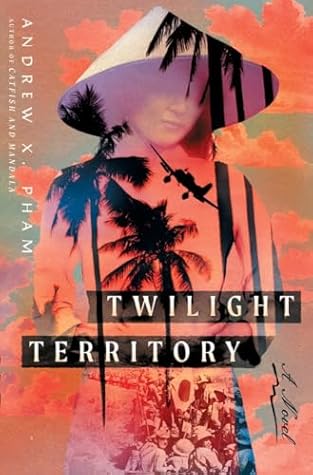
More on this book
Community


Kindle Notes & Highlights


“Indochina,” “Annam,” “Tonkin,” and “Cochinchina” are names coined by the French to delineate their colony without deference to the colonized.
Modern Vietnam comprises 54 ethnic groups, with the Viet (Khinh people) accounting for 87 percent of the population.
She had glossy black teeth, dyed for fashion as a teenager. Since Tuyet’s mother had passed away fifteen years earlier, Coi had been Tuyet’s mother, best friend, and confidante.
Coi, Tuyet, and her two-year-old daughter, Anh, shared a divan in the bedroom. The only other furniture was a small dresser bought from the landlord. Coi’s twenty-two-year-old son, Ha, slept in a hammock strung in the shop.
Recently, there had been a strong Japanese presence in the town since they took over the Phan Thiet airbase from the Vichy French government.
Ha’s father, a village tailor, had committed suicide after he had gambled away their house and savings, leaving Coi and twelve-year-old Ha homeless and destitute.
Major Yamazaki Takeshi had arrived in Indochina two months earlier to take command of the Phan Thiet airbase.
“Fear is not necessary,” he said. “It’s natural; the weak fear the strong.”
She was unaware that she suffered the universal hunger of orphans, a profound yearning to be loved, to be wanted. It rendered her vulnerable.
Wherever we go, we take with us the scars and the karma we’ve earned.”
