
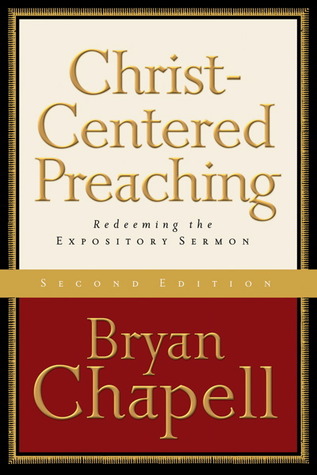
More on this book
Community


Kindle Notes & Highlights

Started reading
September 30, 2019

Especially in the early stages of ministry, no well-prepared preacher considers sermon preparation complete without consultation of an up-to-date commentary.
The first will not listen to what others say; the other will say only what others say.
At the same time, a preacher who says only what a commentator
concludes is trying to preach by proxy.
It is not wise habitually to run to commentaries as the first step of sermon preparation, lest your thoughts start running in a groove carved by one not in touch with what you need to address.22
“The closet [i.e., the place of personal meditation] is the best study.
Literal interpretation occurs when we explain what a biblical writer meant, not what his words may connote outside their context.
present the Word, explain what it says, and exhort based on what it means. This is expository preaching.
Until people can see how the truths of a text operate
in their lives, the exposition remains incomplete.
A Divine Authority
When we say what God says, we have his authority.
People sit in the pews to hear what God confirms in his Word.
If you cannot say, “The Bible says . . .” about the core truths of the message, then the congregation owes no more regard to your conclusions than it does to any philosopher’s speculations.
Preaching that lacks authority leaves a congregation longing for the divine voice.
Preaching with authority relates more to the confidence and the integrity with which a preacher
expresses God’s truth than to a specific tone or posture a preacher assumes.
They sound as though they are trying by their efforts to make the Word authoritative rather than trusting its innate power to touch the soul.
“Now let me and everyone who speaks the word of Christ freely boast that our mouths are the mouths of Christ. I am certain indeed that my word
is not mine, but the word of Christ.
So must my mouth be the mouth of h...
This highlight has been truncated due to consecutive passage length restrictions.
Our words must reflect his character as well as his truth if our preaching is to remain true to him.
Faithful expository preaching unfolds every text in the context of its redemptive import.
Clear identification of a fallen condition automatically locks a preacher into a redemptive approach to the exposition of a biblical passage.
when preachers specify a text’s purpose, they are pressed to redemptive perspectives.
(2 Cor. 1:20; Rev. 22:13).
