
More on this book
Community


Kindle Notes & Highlights

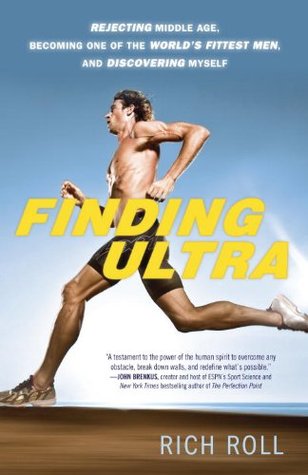
Finding Ultra: Rejecting Middle Age, Becoming One of the World's Fittest Men, and Discovering Myself
by
Rich Roll
Read between
June 21 - July 1, 2019

A former surgeon at the Cleveland Clinic, as well as a Yale-trained rower who garnered Olympic gold at the 1956 Melbourne Summer Games, Dr. Esselstyn concludes from a twenty-year nutritional study that a plant-based, whole-food diet can not only prevent and stop the progression of heart disease, but also reverse its effects.
Dr. Esselstyn’s son Rip, a former swimmer and professional triathlete, and later an Austin, Texas–based fireman, authored a New York Times bestseller called The Engine 2 Diet, which, in plain English, demonstrates the power of a plant-based diet by chronicling the astounding health improvements of his Engine 2 firehouse colleagues who undertook his regime.
And yet another influence on me was former pro triathlete and ultra-runner Brendan Brazier’s Thrive—a go-to primer that details all the hows and whys of plant-based nutrition for both athletic performance and optimum health.
an absolute must-read is Michael Greger, MD’s, groundbreaking New York Times bestseller How Not to Die—perhaps
For the more visually inclined, I suggest checking out a few compelling documentaries, including Forks Over Knives, What the Health, and Food Matters.
It’s crazy how emotional and threatened people can become when the subject turns to food and diet. Merely mentioning plant-based nutrition often prompts immediate debate. But I relish the dialogue. It’s been a kick confronting head-on the arguments of the critics and dissenting voices and putting them to the test. I’ve done my homework. I know how I feel. My results speak for themselves. And over the last decade I’ve been witness to thousands of lives similarly transformed.
If you change your plate, it will change who you are. It will change how you are. It holds the potential energy to change the world. And, if you’re like me, it will unlock deep reservoirs of human potential in your journey to becoming your best, most authentic self.
Proficiency in endurance sports, explained Chris, is all about building the efficiency of the aerobic, “go all day” system.
And sure enough, it did. Only a week later I found myself at Jamba Juice, awaiting a large carrot-and-orange concoction after a morning run, when I casually picked up a copy of Competitor magazine lying on the countertop. One of those free multisport-focused periodicals with race schedules and obligatory running-shoe reviews found in most large cities, a piece in the magazine featured a picture of a large and impossibly muscled African-American man running shirtless in Hawaii. Entranced, I began reading the amazing story of a Navy SEAL known as David Goggins.
And three months after Badwater, he participated in a mysterious event called the Ultraman World Championships. A three-day stage race circumnavigating the entire Big Island of Hawaii, which is roughly the size of Connecticut, the event entailed swimming 6.2 miles, cycling 260 miles, and, on the third day, running 52.4 miles. More than twice the distance of an Ironman! And despite having never before competed in a single triathlon or cycling event, and riding much of the course on a borrowed bicycle in his running shoes, Goggins finished second overall. Unbelievable.
Because the body can ride many more hours than it can run or swim, it’s the optimal and most time-efficient way to build endurance fitness without risking leg and shoulder injuries.
Then there was this bizarre training approach called periodization. It stipulated that a block of heavy training weeks should always be followed by a rest week. Further, it declared that every week should include at least one rest day in which I did absolutely no training. The objective was for my body to repair itself in between heavy loads. Seen another way, all my improvement was slated to take place in those periods between workouts.
Stress + Rest = Progress.
But to me, these ideas were anathema. Go slow to go fast? Rest to improve? What is this craziness? I can’t spare the time to rest!
This predated the minimalist running craze ignited by Christopher McDougall’s bestselling book Born to Run, and I was in no position to argue. Thus, through the remainder of 2008, I found myself clodhopping in shoes that were seemingly more suitable for snow skiing than running.
I discovered, for example, that a blended raw vegetable and fruit–based smoothie pre-workout seemed to give me more energy for my training than a traditional grain-based breakfast of cereal, oatmeal, or toast.
To replenish glycogen, I made sure to eat plenty of complex carbohydrates in the form of sweet potatoes or brown rice. That seemed to work far better than nutrient-poor sources of carbohydrates such as pasta or bread.
And to combat inflammation and repair free radical damage induced by exercise stress, I amped up my intake of nutrient dense foods high in anti-inflammatory antioxidants like blackberries, blueberries, moringa, and turmeric (the nutrient bioavailability of which is enhanced by adding black pepper), supplemented with adaptogens like reishi and chaga mushroom extracts.
I began upping my intake of plant-based whole foods high in protein until I eliminated the majority of these supplements from my diet altogether.
I began eating things like quinoa, beans, lentils, peas, and tofu, a product I ultimately swapped for its more nutritious fermented soy-based cousin, tempeh.
So I took his advice and ditched the gels and colorful powders in favor of electrolyte sources as basic as simple table salt and coconut water, as well as electrolyte products devoid of sugar and artificial ingredients.
And the less gluten I consumed, the better I felt, slept, and performed athletically.
With each successive week, I watched my body change. I became stronger, leaner; my face even changed—until I was almost unrecognizable, in the best way.
Instead, the critical charge is to improve the ratio of exertion to relative speed; something that in my case was improving rapidly and quite dramatically.
It was time to honestly evaluate how I spent every minute of every day. I scanned for wasted time, inefficient hours, and activities that failed to meet the litmus test of mission critical. Utilizing many of the tools set forth in Timothy Ferriss’s The Four-Hour Workweek, I made some drastic cuts, eventually creating a lifestyle template that forms the underpinnings of how I live and manage time today.
On the mental and spiritual front, implementing a consistent meditation practice became paramount. Whether early in the morning, during a free half hour during the day, or even while out on a run or ride, I strived to set aside a few daily moments—not a lot, often a half hour but sometimes just ten minutes—to go inside.
I soon came to realize, though, that as long as the work got done, properly and on time, nobody cared where I was or what I was doing.
On cold rainy nights when I ran drenched and corpse-like through the dimly lit neighborhood streets, that questioning voice would return: Why are you doing this to yourself? I wish I could say I had the answer. Compensation for my awkward youth perhaps? An effort to manifest swimming dreams unrealized? I’d like to think I was taking middle age to the mat and pinning it into submission. Taking a stand for myself to live intentionally for the first time. Maybe it was all these reasons. Or perhaps none. The only thing I knew with clarity was that a voice deep in my heart continued to chant, Keep
...more
With those words, Julie gave me a rare and beautiful gift, a potent reminder that when purpose aligns with faith, there can be no failure and all needs will be met—because the universe is infinitely abundant.
But as I woke one spring morning after yet another restless night, Julie took one look at my forlorn expression and sized me up with a simple sentence. “It’s time for you to get back on the bike.”
It didn’t make logical sense. Yet from her unique perspective, it was the only solution. Pursue what’s in your heart, and the universe will conspire to support you.
And that’s when I understood. If I could summon the courage to pursue my passion with purpose and without fear, I, too, could experience such synchronicity. Somehow, everything would work out.
Because she understood what I was only then coming to realize—that safety isn’t just an illusion, it’s a cop-out.
What’s the worst thing that can happen? she’d ask. We’re healthy. In love. Living life according to our own rules. And that’s all that matters. Everything else is just stuff.
At that point, I wasn’t in a race against my competitors, but rather myself.
That’s when suddenly I recalled a David Goggins quote I’d read years back—the idea that when you believe you’ve reached your absolute limit, you’ve only tapped into about 40 percent of what you’re truly capable of. The barrier isn’t the body. It’s the mind.
Show us who you really are.
Remarkably, I’d actually gone faster than David Goggins had in 2006—the man whose stunning athleticism first inspired this harebrained adventure to begin with.
But what is to be gleaned from such a fortuitous event? Not much. It’s great for the insatiable cravings of the ego. But it’s an utter failure as a learning experience. Conversely, when things go horribly awry you are tested. Because obstacles—in my case the Day Two crash—force you to make decisions. And it’s those decisions that reveal character.
I didn’t get into ultra-endurance sports to win races, beat others, or stand atop podiums. I got into it because it’s a perfect template for self-discovery—a physical, mental, emotional, and spiritual odyssey to more deeply understand myself, determine my purpose, and discover my place in the world.
When asked if I regret “the crash,” my answer is an emphatic no! To me, it was the perfect race. And I wouldn’t change a thing. Because when I crossed that finish line, I finally reached the starting line in becoming the person I was always meant to be. My best, most authentic self. A self-actualization that had nothing to do with time or podiums—and had everything to do with character.
Yet here it was—a challenge not yet attempted that just sat there, almost begging for a go. The proposition fascinated me precisely because it was so lunatic.
This was my first inkling that what we were attempting might mean something to people other than ourselves.
One foot in front of the other. Turn the brain off. Keep it simple and just begin. And so I did.
When I looked at him, all I heard in my mind was his mantra, That’s why it’s called a challenge.
the words of writer Daphne Rose Kingma came to mind: “Surrender is a beautiful movement in which you gracefully, willingly, languidly fall, only to find midway that you have been gathered into some unimaginable embrace. Surrender is letting go, whether or not you believe the embrace will occur. It’s trust to the hundredth power—not sticking to your idea of the outcome, but letting go in the faith that even the absence of an outcome will be the perfect solution.”
My final thought turned to Navy SEAL David Goggins, a third angel for igniting my passion for ultra-endurance.
When you think you’re done, you’ve only tapped into 40 percent of what you are truly capable of.
Getting up off that car bumper to stare down a marathon was the hardest thing I’ve ever done in my entire life.
Experienced in how it feels to be in the “pain cave,” he refused to take no for an answer.
