
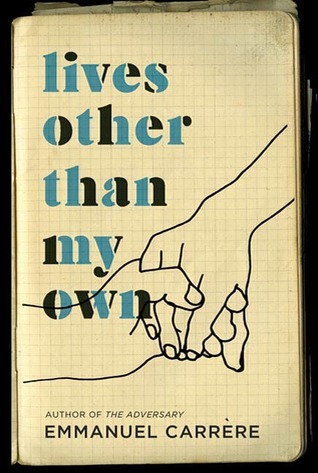
More on this book
Community


Kindle Notes & Highlights

(Étienne’s note, in the margin of the manuscript: “No problem, keep it.”)
grounding his approach in his intuitive understanding that “the worst suffering is the one you cannot share. And a cancer patient usually feels that suffering twice over. Because he cannot share the anguish of sickness with those around him and because beneath this pain lies another, more ancient one, dating back to childhood, and it, too, has never been shared, never been seen. And that is the worst of fates: never to have been seen, never to have been acknowledged.”

This could also perhaps be said of fertility issues
The film they see, Kieslowski’s Red, tells the story of a limping, misanthropic judge, played by Jean-Louis Trintignant, but they pay no attention to this coincidence because after ten minutes she kisses him.
During the one night he spends in Lyon he understands not only that he has fallen in love but that this love is trusting, shared, certain, and that he will build his whole life on it. He calls Nathalie in the morning: I’m coming back, do you want to meet me at my place? Do you want to live with me? She arrives with all her possessions, and they’ve been together ever since.
This is insane
!
Until the middle of the nineteenth century, this impasse sent the delinquent to debtors’ prison, an institution abandoned not for humanitarian reasons but because the upkeep of the prisoners fell to their creditors, not the state, and economic interest eventually outweighed the satisfaction of seeing the guilty punished.
Whhhhhat!? The end of debtors prison is surprising in an unsurprising kind of way
that extended most of the terms and protections of commercial bankruptcy to individuals,
Whatever you think of the underlying law, it only seems fair to extend this from businesses to consumers,right?
It's kinda weird how this book has moved from tsunami deaths to cancer deaths and now to debt
the law is also made for idiots, and for the ignorant, and for everyone who has, yes, signed a contract but who has also been royally screwed.
Incline more favorably toward the wife than the husband, the debtor than the creditor, the worker than the boss, the injured than the injurer’s insurance company, the thief than the police, the litigant than justice.
An unknown quantity, a writer brother-in-law, the author of supposedly dark and cruel books, had turned up at his house to write another one about his dead wife and had asked him for the story of his life, so he’d complied.
Kinda funny way to put it
Étienne had then read some fierce words telling us death was not a gentle thing.
That doewnt sound like a fun thing.
he hadn’t liked the kindly Catholic smiles with which the man had announced that Juliette was now with the Father and we should rejoice in that,
Indeed it's the exact opposite of his death-is-furious speech! All the characters in this book don't seem to like catholics much
I looked at her and wondered if I would still be in touch with her when she was an adult. If I were to write this book, then probably yes. Would I still be with Hélène then? Would we have had some joint role in the girls’ education, as Hélène so fervently hoped would happen?
I’m ambitious, I worry, I have to believe that what I’m writing is exceptional, that it will be admired, and I get excited believing this but collapse when I lose faith.
So I waited until I’d almost finished this project before I even told them about it and then asked them to help by talking about what they are best equipped to recall:
So interesting how meta this is. Here he is telling us, only two thirds of the way through the book about being nearly done with the book and showing in some way the process of the actual writing of the book
Étienne and Juliette were already solidly grounded before they met and would have been surprised to hear there was something missing from their lives.
Oof. In a film, gripping, dramatic music would accompany the heroine’s discovery of that text. We’d see her lips moving softly as she reads; her face would express first puzzlement, then incredulity, and at last amazement. She would look up at the hero, stammering something like: But then … this means? Reverse shot of him, calm, intense: Right. I’m making fun just a little here and it’s true, there is something comical in the contrast between that indigestible prose and the joy it unleashed, but one could make fun this way of almost any human endeavor in which one is not personally involved,
...more
She waved vaguely at the tube connected to the intravenous bag hanging on its little gallows: That.
Quite the image
That, says Étienne, is what I can tell you about my mother.
Whoa so brief and sad
His carefree attitude goes along with candor, trust, renunciation, all the virtues praised in the Beatitudes, and I suspect that what I’m writing here will puzzle him because his anticlerical culture is so intransigent, whereas I’m surprised that fervent Christians like his in-laws don’t recognize this confirmed secularist’s attitude toward life as simply the spirit of the Gospels.
Patrice does not remember a single night, up to the last, when their bodies weren’t touching somewhere, at least a little bit.
The whole thing is sad...but that's so different from e and I. I don't know if I could sleep with so much touching
they could be a help to their friends without having to look sad. * * *
the simple gesture of getting out his camera and pointing it at her began to mean: You are going to die. *
:(
and I remember the opening line: Once upon a time there was a mother who had three daughters.
I was lucky.
On the train back to Paris, I wondered if there was a formula as simple and right as that—he liked to carry, she had to be carried—to define what bound us together, Hélène and I. I didn’t find one, but thought that one day, perhaps, we would.
