
More on this book


Kindle Notes & Highlights

by
Joy-Ann Reid
Read between
October 3 - October 7, 2024

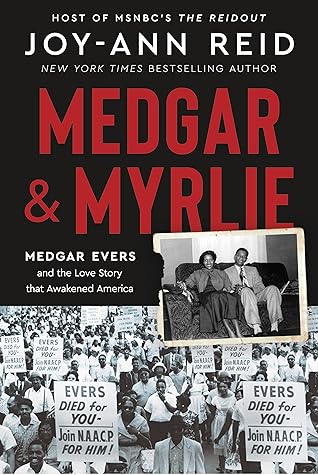
The fundamental argument of this book is that Medgar’s activism, from his role in investigating the Emmett Till lynching and other racist murders of Black Mississippians to the boycott movement he orchestrated in Jackson, was the foundation upon which the later efforts by SNCC, CORE, and other organizations were built.
James Baldwin had it right: Medgar Evers deserves a place alongside Malcolm X and Dr. King in our historical memory, as contemporaries who fought the same demons of white supremacy during the same perilous era, often with overlapping tactics. Medgar Evers, with Myrlie as his partner in activism and in life, was doing civil rights work in the single most hostile and dangerous environment in America: Mississippi.
In that wider world—that distant planet called “Europe”—Medgar Evers was a man; a technician fifth grade in the Quartermaster Corps of the U.S. Army, with the rank of sergeant, after serving in England, at Liege and Antwerp in Belgium, and in France in La Havre, Cherbourg, and Omaha Beach. He was an American, who had seen more of the world than the vast majority of white Americans. He was a World War II veteran and a human being. Yet the moment he returned to Mississippi he was nothing but a nigger.
Though he was young, Medgar was plagued by the questions raised by what he’d experienced in the war. “Why should I put my life on the line for my country, the place where I was born and reared . . . and even while I am here in Europe, I’m still treated [by the U.S. Army] as a second-class citizen,” he told family members and friends. “And then when I return to the country of my birth, I’m treated not only as a second-class citizen, but a human being that they despise and want to see put down and kept on a lower tier than everybody else.”2 He told the story again and again.
“It didn’t take much reading of the Bible,” he said, “to convince me that two wrongs would not make the situation any different, and that I couldn’t hate the white man and at the same time hope to convert him.”
But Europe was not Mississippi. There was no Jim Crow system of formal racial segregation and no Ku Klux Klan. People in England, and especially France, often treated Black Americans with a normalcy that elided race. Medgar’s military service gave him confidence and perspective, and it heightened the contradictions between the mission of fighting for liberty and freedom abroad, while at home as a Negro man he had none.
MEDGAR, CHARLES, AND THEIR SIBLINGS HAD RECEIVED THE standard education of every Black Southern child—the realization that there were three kinds of white people: the ones who hated you but were too cowardly to do anything about it, the dangerous ones who would kill you just as soon as look at you, and the nice-acting ones who despite their kindness wouldn’t do a damned thing about it.
Slavery in Mississippi and throughout the South had been characterized by forced breeding and relentless sexual violence. Yet the sons and grandsons of the men who built that system, and who fought to defend it during the Civil War, built their postbellum Southern culture around the constant fear that Black men were fixated on raping white women. And even though the South’s defeat at the war’s end failed to stop the raping of Black women, these sons and grandsons of enslavers invented a palliative for their fears: lynching.
Not much shook Mr. Evers the way Tingle’s lynching and Medgar’s question had. In answering his son, he had laid bare a Black child’s ultimate vulnerability: that in the white South, in America, you had no protector, no matter how much your parents loved you and how tough they were. Medgar’s mother echoed her husband’s warning to her boys to always be careful around white folks.
Despite the determination of whites to keep Southern Blacks dumb and docile, one Evers daughter finished high school, and both Medgar and Charles finished college, which was unusual for Blacks in that era, and both boys were determined to go to law school, determined to learn how to fight segregation and Negro subjugation via the law. The Evers kids had books at home, and Medgar in particular kept his nose in them.
BLACKS IN THE SOUTH WERE KEPT FROM THE BALLOT THROUGH A mix of trickery and terrorism—a crucial means of maintaining the status quo. Lynchings often targeted those who expressed a desire to vote. White newspapers published lists of Blacks who appeared before a voter registrar or who became members of the NAACP. Being on those lists could mean getting fired by your white employer, being evicted from your tenant farm, or even having the bank foreclose on your home. And because you had to be a registered voter to serve on a jury, the practice of keeping Blacks from voting served a double purpose.
Love does not begin and end the way we seem to think it does. Love is a battle; love is a war; love is a growing up. —JAMES BALDWIN
Myrlie recalled the cries . . . not in the terms of tears, but cries of a broken heart, that the war produced in these men. “They served in other parts of the world, on behalf of America, but were treated like they were nothing, laughed at, all because of the color of their skin. Their bodies bled red blood, just like the others. Medgar’s service in the Army was one of the driving forces that compelled him to do something about prejudice and racism in the country where he was born, in the country he served that treated him just one step above slavery.”
Lynching had become all but commonplace in the former Confederate states, and especially in Mississippi, but the brutal execution of a child from the North appeared to crack a seam in the nation’s quiet acceptance of an apartheid system operating openly in the United States, a country that had shed blood to liberate Europe from Nazism, only to countenance an American version of the same ideology at home.
Mamie channeled Rosebud Lee in insisting that the remains of her once-beautiful boy be on display in an open casket, so that the whole world had to reckon with what the State of Mississippi had done to him, through the hands of those soulless men. For three days, beginning September 3, 1955, nearly fifty thousand people jammed the streets in front of A. A. Rayner Funeral Home, where Till’s mangled body was displayed under a Plexiglas cover. It was said that nearly one in five of those who passed through the building for the viewing required medical intervention, as women fainted and staggered
...more
When the all-white male jury acquitted both men after just ninety minutes of deliberation on September 23, with the predetermined outcome delayed only “to drink pop,” the outrage was electric, and global. Protests erupted in Chicago and across the country. Dr. Howard railed that “a white man in Mississippi will get no more of a sentence for killing a black person as he would for killing a deer out of season.” One international newspaper pronounced that “the life of a Negro in Mississippi” was “not worth a whistle.” 41
The children on the block knew not to stray from the safety of their Negro enclave and into the all-white streets and neighborhoods adjoining their quiet block. As long as they stayed on Guynes Street, they lived as close to a normal, carefree life as a Black child could in that era.
He spoke of the “righteous struggle” he had committed his life to, saying, “let it not be said in the final analysis when history will only record these glorious moments and when your grandchildren will invariably ask: granddaddy what role did you play in helping to make us free men and free women? Did you actively participate in the struggle or was your support only a moral one?”
Mississippi’s notorious “pig law,” passed in 1876, made such a theft punishable as an act of grand larceny with sentences of up to five years.36 The law led to the imprisonment of thousands of impoverished, formerly enslaved men and quadrupled Mississippi’s prison population. Not uncoincidentally, the profits from working convicts at plantation prisons like Parchman State Penitentiary, and the leasing of convicts as free labor to local planters, effectively returned slavery to the state, bringing Reconstruction in Mississippi to an abrupt and hideous end.
The risks of “riding with Medgar,” literally and figuratively ranged from the threat of violence to threats of losing what little normal high school life was available to young Black Mississippians.
Medgar and local Jacksonians joined a second campus rally and marched to the courthouse on Eastland Street, whose principal feature was a sixty-by-eighty-foot mural, depicting contented Black slaves picking cotton while a judge advises a benevolent-looking family of white masters, titled “Pursuits of Life in Mississippi.” “No one could get a fair trial standing in front of that mural,” Rev. Ed King said.9
“One night, Medgar came home, and he said, ‘This has lasted long enough. I can’t take any more of this. I’m going to do my work.’ I never shall forget. I told him, ‘There’s the door.’ He said, ‘I’ll talk to you later’ and left. I was heartbroken. I loved him so much. The children did. We needed him. But I do believe that he was that determined to take the path of civil rights and leave his family. I’ll always believe that. It was a calling to him. I didn’t have another woman to be jealous of,” she said. “I had a cause.”17
“The time came around to make a decision. You stay, or you leave. Darn it, love is such a funny thing. I chose love, and I stayed. Medgar told me to be sure that I knew what I was doing, because he knew what he was doing. . . . So, what do you do when you’re in love? You stay. You learn to work along with that person. . . . For me, I had to learn the deep meaning of prayer, because when he left the house every day, I never knew whether I’d see him again.”
Neither party in Washington seemed particularly interested in Black lives. Despite Abraham Lincoln’s sacrifice and the promise of Ulysses Grant’s administration, Republicans had ultimately betrayed Black Americans, cutting a deal with Southern Democrats to pull federal troops out of the South in 1877 in exchange for installing Republican Rutherford Hayes in the White House. This allowed Reconstruction to collapse under white robes, rifles, and ropes, and the planter class to come back from secession with renewed strength and ferocity. Now these former Confederate states were fighting modernity
...more
“A few close friends said, ‘Please stop. Don’t pursue this anymore,’” Myrlie said. “Medgar’s answer was, ‘I’m in this until they—meaning white authorities—stop me.’ That broke my heart, because I knew that he meant every word he was saying, and he intended to put the children that I had given birth to . . . in danger. I learned that Medgar Evers would do as his heart, his soul, his mind persuaded him to do.” And come what may, “our children, Darrell and Reena, were going to be [among] those first students integrating those schools.”
It was yet another difficult stretch for the Everses’ marriage. Myrlie was at loggerheads with herself. She couldn’t bear to leave the man she loved and didn’t have the heart to take his children from him. But staying meant accepting that the danger she and he lived with every day would now be shared by a nine-year-old and a seven-year-old. Still, Myrlie could do little but give way. “Needless to say, love won,” she said. “I loved my husband. I respected him terribly.”
That blood, she believed, was on the hands of every police officer there and every police officer in Jackson. It was smeared all over Mayor Allen Thompson, who would soon express “shock” on behalf his bloodstained city. Medgar’s blood rained like a monsoon over Gov. Ross Barnett and Ole Miss and over the White Citizens’ Council and the Klan and the Sovereign Commission. Medgar’s blood stained every segregated part of Mississippi.
“The children left after a moment,” she wrote. “I stayed. The tired lines were gone from his face, and I had a terrible urge to hold his head and stroke his temples and say that everything would be all right.”29 To her dismay, though, she soon realized she wasn’t alone; the Life magazine photographer had lingered. When she glared at him, she realized his eyes were filled with tears. And in that moment, she said, the hatred that Medgar’s murder left her feeling at the sight of white skin vanished, never to return.30
“Thank you very much, Mr. Evers,” Peters said. This perfectly encapsulated everything Medgar had fought for: the ballot and the betterment of the country, and Peters’s use of “Mr. Evers” was the honorific Blacks were denied when they shopped or worked in Mississippi. The interview was evidence that Medgar was on the verge of the kind of national prominence in death that he had not quite achieved in life.
