
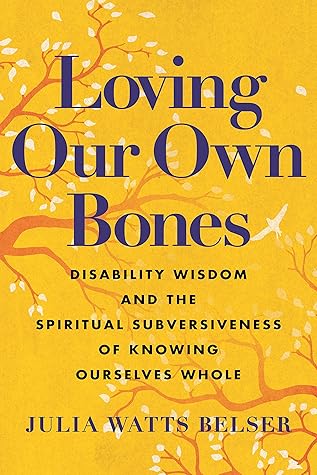
More on this book

Kindle Notes & Highlights

Started reading
November 26, 2025

Approaching disability through the lens of culture allows us to recognize disability as a dimension of human diversity.
This was the first spiritual insight I trace to disability experience, this decision to cherish something about myself that other people didn’t value.
Everything I know about God comes through these disabled bones.
All too often, minoritized peoples get drawn into this trap. We end up asking for acceptance, pleading for recognition, marshaling the case for our own dignity. But none of us should have to argue in this way for our own inherent worth.
For Isaiah, liberation happens through the erasure of disability. It requires the transformation of our bodies and minds so they match a nondisabled norm.
It reminds me of a story I heard from Rabbi Margaret Moers Wenig, about a Deaf child in her religious school. A teacher once promised that child, “One day, in the world to come, you’ll be able to hear.” And the child looked back and said, “No. In the world to come, God will sign.”
But I struggled with spiritual dissonance, torn between talking about God in ways that felt safe and giving voice to the God my own bones know.
Name God as Goddess, and suddenly the presence of the pronoun She throws the implicit gendering of God into sharp relief.
because I know so viscerally the way the Bible can be weaponized, I cannot simply grant it power.
When we approach a sacred text, the question we must ask is not what does it say, but how has it been understood?
I do not trust Jewish tradition to side with me, to speak with competence about my own life. I do not trust it to protect, to value the lives of those I hold most dear.
I also want to name another truth, which I’ve come to realize over many years of building a spiritual life that speaks to my queer feminist disabled Jewish soul: I cannot always find what I need within the text.
As a passionate queer Jewish feminist, as a proud disabled Jew, as a white person committed to disrupting white supremacy and all the interlocked structures of inequality that drive our world and ways of being, I will not try to paper over the times that text and tradition have let me down. But I also won’t assume that there is nothing here for me. I claim this tradition and am claimed by it. I shape it and am shaped by it. I hold it close, and I am held.
