
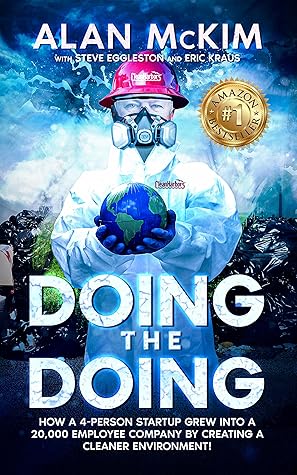
Kindle Notes & Highlights

by
Alan McKim
Started reading
April 18, 2023

throughout my whole career, I have made a business out of taking other people’s trash and making it into something of value.
Throughout my career, I have never forgotten how most people live and how important it is they can rely on us to be paid on time and accurately.
this was not a clean job where people were walking around in white dress shirts and starched collars.
we have resident recruitment and safety programs that are second-to-none at all of our locations across the United States and Canada.
After a couple of months of trying to get a home oil delivery business going, for some reason, I wasn’t deterred and instead pivoted. I started putting some notes together in my daily planner– ideas of what I could do, potential company names, the design for a logo, and which employees I would take if I was to start a cleanup business.
“The key to success is being in the right place at the right time, recognizing that you are there, and taking action.” -Ray Kroc
On March 24, 1980, for $350, I incorporated my new company and named it Clean Harbors, Inc., after my love of Boston Harbor and the beauty it represented.
first three employees who had worked with me at Jet-Line: Steve Ritucci, Harry Davidson, and Fred (Big Mother, aka BM) Sorrentino.
Without cash, it didn’t matter if you were profitable or not. Cash is always King!
If we look back at the Industrial Revolution, protecting the environment was an afterthought, at best. Companies could literally dump their waste anywhere anytime and get away with it with total impunity. They didn’t have to act responsibly, they didn’t have to protect the environment, and they didn’t have to manage or control toxic waste if they did not want to. It was full-on laissez-faire – let things just take their course - at its worst.
It’s a blessing to have good friends and connections,
Mike Hatch. Mike oversaw our fleet of more than 100 vans all with our Clean Harbors logo and signage painted on the side.
Today, we have a fleet of more than 2000 vans and thousands of other transport vehicles with over 4,500 drivers, 500 of which are long-haul operators. Along with that, Clean Harbors today has a large network of rail capabilities with 60 different rail locations and more than 1500 rail tankers. We even operate several barges that transport oil to and from our refineries. Altogether, Clean Harbors Transportation is now in the top 20th largest private fleet in North America.
Land and Disposal Restrictions (LDR) program as part of the Hazardous and Solid Waste Amendments (HSWA) to RCRA.
