

Barbara Kingsolver, the Bard of Appalachia, Pens a Musical Love Story
Posted by Cybil on October 1, 2026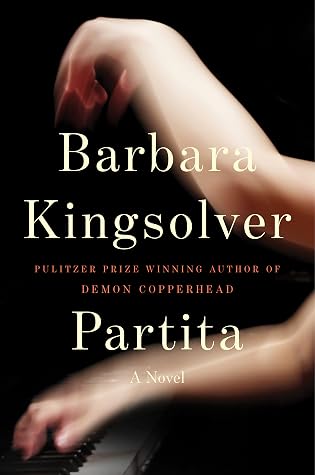
Though Kingsolver had already earned high acclaim as a writer with The Poisonwood Bible, The Bean Trees, and 15 other books, she admits that Pulitzer Prize–winning Demon Copperhead catapulted her to a level of fame that left her with the immense pressure of expectation. What comes next?
Partita, Kingsolver’s latest novel, draws on the expertise and love that she has both for classical music and Appalachia.
Constructed like a musical composition, Partita is narrated by Livia Bohusz, an ordinary girl from a small town with an extraordinary gift for playing the piano. Livia grows up with an overbearing mother and in the shadow of her brother’s suicide. The future seems to brighten when she is awarded a classical music scholarship where she rises to the top at her conservatory and falls madly in love.
But Livia’s love story does not end happily, and the abrupt ending of her relationship not only leaves her semi-destitute and in despair but precedes a series of serious accidents that brings her back home.
Livia relives all of this when her old lover contacts her after decades of silence, wanting to see her again. In a seven-day prelude to her decision, Livia tells her story in the past and present, Da Capo and Al Fine, from the beginning to the end.
Kingsolver spoke to Goodreads contributor April Umminger about Partita. Their conversation has been edited.
Goodreads: You have a great story about getting the idea for Demon Copperhead when you spent the night in the former home of Charles Dickens. How did the idea for Partita come to you?

Demon exploded. That book reached a different audience, both in the U.S. and globally. It reached new demographics. I’m glad for people to have a better understanding of Appalachia and the place and people that are my place and people.
Appalachia—and I’m going to say rural people in general—don’t see ourselves very often reflected in literature, on television, in movies. We are pretty invisible. I was happy to have made my place and people visible.
At the same time, I really felt a pressure of expectation.
A lot of people said, “How are you going to follow that? What’s next?”
It’s a lot.
So I thought, why not write something so different it couldn’t be compared instead of a big saga? I was trying to write the great Appalachian novel—something epic. Why not write something small and contained? A small, contained thing can be very beautiful. I was thinking about a love story, a little love story. That’s where I began, because doesn’t the world need a love story right now?
GR: How did you think about the structure of Partita? I always think that the way you structure your books is a very strong spine for holding the story together.
BK: I had this notion of a character who’s a small-town girl who, just for her own reasons, has fallen passionately in love with music and gets a scholarship to a music school. This propels her out of her world into a new world, and she falls head over heels in love. It’s her first great love affair, and as I conceived it, it would be her last great love affair as well—the happy tragedy of falling so hard for your first love that you’ll never reach that level of passion again. That was my starting point.


I started thinking this would be a richer story if I told it in two timelines, from this narrator reaching back from the vantage point of middle age. That gave me the plot device of the phone call from the ex-love. I gave her seven days to decide whether or not she would see this man, because I was going to stick to the “little” part of the little love story. [Laughs.] It’s a very propulsive tension of her complete inability to decide what was the right thing to do here, because both choices feel like they could blow up her life.
That gave me the idea of constructing this like a musical composition, so each of the seven days is a prelude to the event, whatever it’s going to be. In between those preludes is a chapter of looking back at what they had when they knew each other. I really loved the idea of constructing it like a partita.
I also want to say, no reader should be intimidated. You do not have to know anything more about music to read this novel than you need to know about whaling ships before you read Moby Dick. That’s the magic of a novel. It can take you into a world that’s entirely new to you.
GR: Why focus on music?
BK: Music is an important part of my life, and I’ve never really written about it before—not from the inside.
The world of professional musicians, that kind of dedication, that single-mindedness, the solitude of it, the intensity of it—it pulled me into questions of “why” and “how.”
What is music for? What is it about art that we crave? What is art for—what good is it?
These are timely questions in an era when funding for the arts is getting cut, from the national foundations to kindergarten and grade-school art programs. These are important questions to interrogate with readers. What does art do for us? What does music do for us?
Writing from the vantage point of a musician, Livia, who’s given her life to this, makes for an interesting existential crisis when she’s forced to ask, “Why am I doing this? Who is it for?”
Also, the question of class. Livia comes from a place where very, very few people understand or care about classical music. They care about line dancing in a bar to country music, and she has felt like an outcast in her home world. But then when she goes to her new world, she feels like an outcast because she’s a class migrant.
She’s trying to fit into a world where everybody else has come from urban and more privileged backgrounds. People who don’t give a second thought to the waiters bringing them their pizzas or the janitors emptying the trash cans in their classroom. She belongs to that invisible tribe in her own mind because those are the people she comes from—farmers and laborers.
I found the engine of this novel when I started thinking about class, especially with respect to art, and these class barriers to people who love what we call the fine arts and would like to have better access.
Why is it that a lot of us feel like we wouldn’t be welcome in a concert hall or a museum? Why do we feel that’s for fancier people? And why, from the other way of looking at it, do urban people feel like those arts belong only to them—if they do think that subconsciously or consciously.
These all seemed like exciting questions to dig into. So my little story got bigger and bigger and bigger. It’s still concise. It still takes place over seven days, and I swore I was going to make it a short novel, at least not a door stopper like the last three or four novels I’ve written. I wanted to keep it to 300 pages, and I nearly succeeded.

BK: It certainly hasn’t changed enough, but if I’ve been any part of making Appalachia more visible to people outside the region, I’m glad of that. It’s important to me to represent Appalachia—I’m going to interrupt myself here to say thank you for saying it right, for pronouncing it right (Appa-LATCH-a)—as a person who lives here and feels fully embedded in this culture, which I love very much, despite the fact that we endure a lot of condescension from outsiders, it’s a great pleasure to write about.
The biggest mistake people make about Appalachia is to oversimplify it, to fail to understand how nuanced it is, the complexity, the different kinds of people who live in this place. That’s one thing I can do to make it more real and more respectable and more comprehensible to outsiders.
I’m going to say that the condescension suffered by Appalachians from outsiders isn’t specific to here. It’s rural people all across this country. I know that better than ever now because I have heard from so many people after Demon Copperhead say that I hit the nail on the head. So many rural people said, “It sounds just like life here in the Ozark, or life here in Montana.” So many rural people have written essentially to thank me for putting our lives on the page, the things that matter to us, because we don’t see them.
If you think about it, we constitute somewhere close to half of the population of this country, but we constitute about 0 percent of what we see in our cultural media, in television, in the movies, in literature, even in the news, because those things are all created in urban centers by urban people. It’s probably not a deliberate slight. It’s just that people tell the stories they know, and the stories are not being told by us.
This is not just a problem for the country folk. This is a big part of why our political system is broken right now, why we have such animosity between rural and urban America. A huge proportion of this country feels overlooked, feels disdained, and feels abandoned because we’re up against really scary things. We don’t have hospitals. We don’t have doctors. Our towns are crumbling. We have dead downtowns and a Walmart because of this failure to understand what makes rural life tick and what we need to hold our lives together.
What I can do is tell these stories of rural places to create a better understanding. Demon Copperhead is a really grim story of the devastation of the opioid epidemic in this region. Partita is a story of another kind of Appalachian.
Nobody in Livia’s family is addicted to opioids. Nobody in this novel had to go to foster care. This is another kind of ordinary in Appalachia. These are the people I live among, and it’s another way of being Appalachian.
GR: You start Partita with a quote by Toni Morrison about surviving in part: “Sometimes you don’t survive whole, you just survive in part. But the grandeur of life is that attempt.” The main character in this story, Livia, has an accident, and the way she responds to it feels very much a reflection of this quote and her Appalachian environment and upbringing.
BK: Our narrator goes through a lot.
When I was in the middle of this novel—I always talk through everything with my husband—and at one point he said, “Why do you put your characters through all these terrible things?” And I said, “So that they can come out the other side, and be changed, and be OK in a new way.” Which is so much the story of life.
It did make me realize that this is another story of another Appalachian character going through a whole lot of things. A big difference between Demon and Livia is she has to do it all alone. This was another interesting story for me to tell—how much our resilience depends on our community.
We learn right away a couple of things. One is that she loses her brother to suicide, who’s her best and only friend. She loses him when she’s 11, and because of the circumstances of his death, nobody talks about it. She has to navigate that alone. So that’s step one.
Then she goes to college, where she’s really a fish out of water, and she goes through several more harrowing losses. She’s far from her community, and she doesn’t have backup.
Demon, everything he went through, he had backup. Even in his horrible foster homes, he had his band of brothers—they were up to mischief, and they didn’t make good choices, but they had each other’s backs.
I took her out of her community, and a lot of the terrible things that happened to her, layer upon layer, happened because she didn’t have support to get the help she needed. This ultimately catapults her into finding community of a different sort.
I will promise readers that everything’s gonna come out OK. I am never going to leave my readers feeling hopeless. I think readers know that about me by now. You might shed some tears when you close the book, but you’ll also smile. That’s my promise.
But that quote is one of the wisest truths about life, not just life in small towns or big cities. That is a universal truth—that we all come through things that break us into pieces, and the grandeur of life, to use Toni Morrison’s words, is how we put those pieces back together.
GR: How much of Partita is autobiographical from your life and college years? I was reading that you started college on a music scholarship, like Livia, your main character.
BK: I’m happy to say that I’ve had a very different life from Livia’s. As writers, we do a lot of research, and we also are going to draw from our own wells of experience. What we’re taking is not our life story, but we have to know everything our characters know.
It’s true I played classical piano. It’s what got me through high school. I was a nerdy, bookish kid, I didn’t have a lot of social skills, and I loved playing the piano. I went to competitions, and that became a social life outside of the very small town where I was living, where pretty much nobody went to college, and pretty much everybody was going to start having babies or go to work before they were 18.
That was the life path that I was trying not to follow. Music and the world of classical music became important to me, and almost by accident, I won a music scholarship that got me to college. My first year of college was in an intensely focused musical program in a conservatory. I figured out quickly I didn’t have what it would take to become a professional concert pianist—I was not the pianist that Livia is—but I can imagine being the pianist that she is.
I knew that world enough to represent it well from the inside and the single-mindedness of it. They might not know if the country is at war, but they definitely know their opinion on the Brahms Second Piano Concerto. I also know enough about playing music to write about that from the inside—what it feels like to be the person who is making that sort of liquid emotion that’s coming through the air into your ears.
How did I write 18 books before this one and never dip into this? I loved writing about that.
GR: But you do a terrible thing to a piano player…
BK: I knew from the beginning that something terrible was going to happen to Livia to interrupt her trajectory and blow up her life plan because, again, it’s a novel.
If you have ever known serious pianists, you know that they obsess about their hands. The hands are life. It’s like the face of an actor. It’s the part of you that you cannot lose, that you cannot damage, that you will go to any lengths to preserve.
As it happens, I know a lot about hand surgery. I’ve had a total of, I think now, seven surgeries on my hands: six on my right and one on my left. Because of that, I have a whole lot of knowledge about the mechanics of the hand.
I was in the middle of writing this novel when I went in for my last hand surgery, and I asked my surgeon as I was going into the OR, “You know, I’m writing about a hand injury. What kind of hand injuries have you seen?”
He, right away, starts talking about a woman who accidentally put her hand into a restaurant meat grinder, and I said, “No, no, no, no, no, no, no!” But he was a great consultant who gets a shout-out in the acknowledgements.
My kids and sons-in-law have all worked in food service, and so I interrogated them about kitchen accidents. We can give away that much. It’s a kitchen accident. They helped me come up with just the right degree of damage.

BK: Me in my life?
GR: Yes, in your life—you studied music, you studied biology. How did writing come to the forefront?
BK: I did not grow up imagining that I could be a writer. I’m a small-town girl. I didn’t think that books could be written by the likes of me. All I knew was I loved books.
I taught myself to read when I was three. I remember it—the process of making these letters into words—very vividly. I remember the first word I ever read, which was “orange.”
I knew my letters, and I was staring at a page of newspaper that my dad had put down, and that word gave itself to me. You know, the letters. I sounded them out, and then I just remember the burst of color and flavor. It was like that Helen Keller moment when I realized these lines on the page make colors and flavors in my brain. It was just a miracle.
When I was seven years old, I got for my birthday one of those five-year diaries that had a little lock that you could probably open with a bobby pin. I started writing every day what happened to me, what I did that day, which was excruciatingly boring, but it still felt important.
I had this sense of my life as a river flowing by, and if I put it on the page, I could pin that river to its banks. That’s the best way I can describe it—I wanted to turn my experience into words, and so I did that relentlessly.
I wrote poems and stories all the time, but it was a secret. I kept them in notebooks, kept them to myself. I never imagined letting anybody else read them. I took one creative writing class in college, and my professor actually said, “You know, you’re good at this. You should maybe take more of these classes.”
It was after graduate school that I had some friends who were writing and starting to publish their poetry. They were very encouraging to me, and I started coming to open mic poetry readings and sending stories and poems out to literary magazines, and, to my shock, they were published. It’s not like I went and got writing. It’s that writing came and got me.
I wrote my first novel at night, because I couldn’t sleep and I had to write this thing. I still didn’t think it was a novel. That was The Bean Trees.
I found an agent in the writers’ marketplace and sent it off to her, thinking, “Well, I’m done with that.” And what do you know? It was published. An advance came to me, and royalties came to me, and told me, “Quit your other job and do this. You can write books for a living.” And my answer was, “Hell yeah! This is the best job in the world.”
GR: When you write, do you write every day? Do you write to an outline? Do you free associate and see what comes to you? How do you put your novels together?
BK: I’m the opposite of free association. I’m a trained scientist, so every one of these novels is a dissertation.
I do an enormous amount of outlining in the beginning. I start by figuring out, what do I want this to be about? I don’t mean plot, and I don’t mean characters—I mean what are the questions that this novel is interrogating?
Like what I was saying about class boundaries and what is the meaning of art? These big questions that I’m probably not going to answer in the book, but I’m going to lead readers into asking those questions for themselves. That’s where I start.
Then I start laying out a plot. I pull together my cast of characters who will take us through this plot. I’ve done a whole lot of research before I start writing scenes. I depend mostly on original sources. I have gone to the homes of historical figures that I’ve written about, like Frida Kahlo, like Mary Treat. I have gone to archives and read letters. Mostly, I need to experience the place for sure. I can never write about a place I haven’t been.
As it happens, I know a lot about Bloomington, Indiana, and the campus of Indiana University because I went to school just up the road from there at DuPauw, and we went down to Bloomington all the time. I had to go back to sit in the practice rooms and see the material of the ceilings and what does it sound like and what does it smell like, what is the feeling of those buildings.
Every book is different. What I have needed to bone up on is quite different with every novel, which I love. I was the kid who wanted to major in everything in college.
GR: You mention a tarot card reading in your acknowledgements that you say helped propel this along. What’d they say?
BK: [Laughs.] I guess I asked for it, putting that in there.
GR: We need to know. [Laughs.]
BK: I’ve described my process as being very deliberate and architectural, knowing pretty much exactly where I want to go with the novel by the time I start writing it. This one was different.
I started writing it before I knew where it was going to go, or what it was going to be, and things kept changing a lot. Just for example—here’s another wild thing. I’d written a good deal about Livia without really understanding how she lost her brother.
I was on a book tour in Germany and was on a train from one event to another event, and suddenly our train came to a dead stop in the middle of a pasture, and we couldn’t get out for hours. Finally, they told us someone had stepped in front of the train. We all sat there in our shock and our grief, and I pulled down my laptop, and I started the novel again from the top.
This is not a spoiler because the novel begins with the question: How does a person step in front of a train? Because that was the question on every mind in that train, and I thought I will honor this sad day and this lost life by putting it in this book.
What’s happening here is this book is going every kind of way. I don’t feel like it’s under my control because things are happening that are pulling it in very serious new directions, and I felt scared. I felt like I need to stop right now because I don’t know what I’m doing. I felt like I had jumped into the deep end of the ocean.
Friends were visiting me who knew a lot about tarot, and they said we need to give you a tarot reading, and you bring a question to this reading. My question was, “This novel, what the heck?”
And the reading was remarkable. I don’t know the names, but the card said, you know, lost in the forest, trust the path. This woman holding up this golden chalice, and the answer was keep going—there will be gold at the end of this journey. Don’t abandon ship. Don’t question the things. Don’t question your previous decisions. Trust the process. That was the tarot reading. And so I did. And so here we are.
GR: I love it. Then, what books are you reading now?
BK: So many! I do a lot of posts on social media about the books that I’ve read. The one I just posted because I loved it so much is a nonfiction book called Labor: One Woman’s Work by Dr. Mary Fariba Afsari. To use the cliché, everybody should read this.
My good friend Silas House has a poetry book out called All These Ghosts, which is wonderful. I just this summer read Safiya Sinclair’s memoir, How to Say Babylon.
My reading leans heavily on fiction and contemporary fiction, so it’s unusual that I am recommending these great memoirs, but it just happens. Also, this summer I read Mother Mary Comes to Me, which is another fantastic memoir by Arundhati Roy.
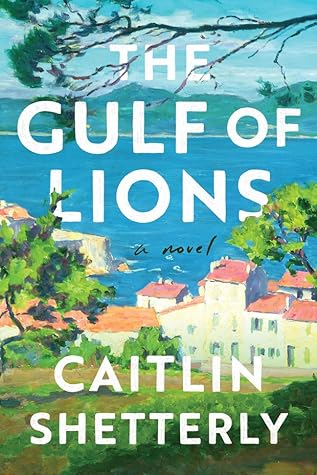
A novel by Caitlin Shetterly, called The Gulf of Lions. I’ve just recently become a huge fan of Rachel Joyce. Miss Benson’s Beetle was just a really fun and really lovely read, and also her new one, which is called The Homemade God.
GR: Excellent. You mentioned earlier that your readers know that you’re not going to leave them feeling hopeless. What do you want your readers to walk away with, for this book or your others?
BK: Our job as humans is to remember what’s good in ourselves and each other and make what we can out of that. Because this is the only life we get, and it’s the only world we get. Hope is our job. It’s our human duty to get up in the morning and put it on again with your shoes. There’s days when you’re going to run out of it, and that’s OK because it’s a renewable option. You get to do it again tomorrow, and you have to keep doing it because to abandon hope is to quit trying. And to quit on the future is a crime. That’s part of what I do as a writer is try to engage people with the parts of themselves and their imaginations that can re-engage that hope.
Barbara Kingsolver’s Partita will be available in the U.S. on October 6. Don’t forget to add it to your Want to Read shelf. Be sure to also read more of our exclusive author interviews and get more great book recommendations.
