Quadrivium


Quadrivium: The Four Classical Liberal Arts of Number, Geometry, Music, & Cosmology
Euclid's Elements
Boethius' The Principles of Music, An Introduction, Translation, and Commentary
A Mathematician's Lament: How School Cheats Us Out of Our Most Fascinating and Imaginative Art Form
Theon of Smyrna: Mathematics Useful for Understanding Plato Or, Pythagorean Arithmatic, Music, Astronomy, Spiritual Disciplines
The Thirteen Books of the Elements, Books 3 - 9
Arithmetic the Easy Way
Tonal Harmony: With an Introduction to Twentieth-Century Music
The History and Practice of Ancient Astronomy
The Thirteen Books of the Elements, Books 1 - 2
Mechanics from Aristotle to Einstein
The American Heritage Dictionary of the English Language
The New York Times Guide to Essential Knowledge: A Desk Reference for the Curious Mind
A New History of Western Philosophy
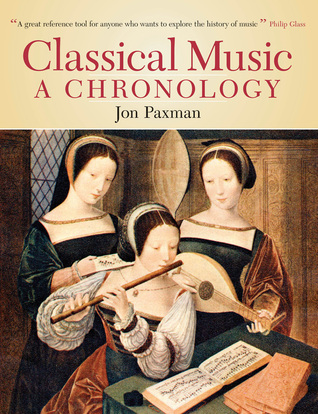
Classical Music: A Chronology
Mortimer J. Adler
The ordering of knowledge has changed with the centuries. All knowledge was once ordered in relation to the seven liberal arts— grammar, rhetoric, and logic, the trivium; arithmetic, geometry astronomy, and music, the quadrivium. Medieval encyclopedias reflected this arrangement. Since the universities were arranged according to the same system, and students studied according to it also, the arrangement was useful in education. [How to Read a Book (1972), P. 180]
Mortimer J. Adler and Charles Van Doren