Lenin

Vladimir Ilyich Ulyanov, alias Lenin (22 April [O.S. 10 April] 1870 – 21 January 1924), was a Russian communist revolutionary, politician, and political theorist. He served as head of government of the Russian Republic from 1917 to 1918, of the Russian Soviet Federative Socialist Republic from 1918 to 1924, and of the Soviet Union from 1922 to 1924. Under his administration, Russia and then the wider Soviet Union became a one-party communist state governed by the Russian Communist Party. Ideologically a Marxist, his political theories are known as Leninism.

The State and Revolution
Imperialism: The Highest Stage of Capitalism
What Is to Be Done?
Left-Wing Communism, an Infantile Disorder: A Popular Essay in Marxian Strategy and Tactics
The three sources and three component parts of Marxism. Karl Marx. Frederick Engels
The Proletarian Revolution and the Renegade Kautsky
The Right of Nations to Self-Determination
The Teachings of Karl Marx
Critical Lives: Lenin
Materialism and Empirio-Criticism: Critical Comments on A Reactionary Philosophy
Lenin Rediscovered: What Is to Be Done? In Context
Blank 133x176
One Step Forward, Two ...
 
by
Vladimir Lenin
The Foundations of Leninism
The April Theses
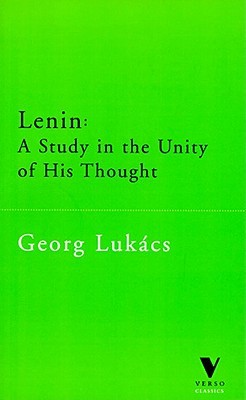
Lenin: A Study in the Unity of His Thought (The Verso Classics Series)
The Crown and the Crucible by Michael R. PhillipsThe Code Within by S.L.  JonesRasputin's Daughter by Robert AlexanderThe Kitchen Boy by Robert AlexanderThe Lost Crown by Sarah  Miller
Russia
57 books — 10 voters
With God in Russia, by Walter J. CiszekOne Day in the Life of Ivan Denisovich by Aleksandr SolzhenitsynAlexander Dolgun's Story by Alexander DolgunComing Out of the Ice by Victor HermanTransit Point Moscow by Gerald Amster
Gulag, 1918-1991 (Soviet History)
107 books — 6 voters

Constitution of the Union of Soviet Socialist Republics by Kremlin, Moscow
Soviet Law
1 book — 1 voter


In Lenin's view, such changes were positive: nations, as products of capitalist economic relations, fitted into classic Marxist stage theory of development. Even Stalin, who differed on the implications for Soviet policy, agreed that nations were an inescapable phase through which all humans communities must pass. Ultimately, they (like, capitalism) would be superseded, but for precapitalist societies national development and nationalist movements were treated as progressive. Lenin drew a furthe ...more
Douglas Northrop, Veiled Empire: Gender and Power in Stalinist Central Asia

In insisting that peasant activity contrary to Communist policies could be defined as kulak while at the same time maintaining that his approach to the peasantry was based on scientific Marxist class analysis, Lenin provided his successors with conceptualizations that would be used in collectivization when Stalin launched a war against all peasants.
Lynne Viola, Peasant Rebels Under Stalin: Collectivization and the Culture of Peasant Resistance

More quotes...
Situationist Theory This is a group for the discussion of Situationist theory, with an emphasis on modern contextual…more
30 members, last active 9 years ago
Discuss Marx and Lenin's works …more
7 members, last active 13 years ago
Political Philosophy and Ethics Study and discussion of the important questions of ethical and political philosophy from Confuci…more
6,542 members, last active 1 days ago

Tags

Tags contributing to this page include: lenin and vladimir-lenin