Intellectual Property


Free Culture: The Nature and Future of Creativity
Copyrights and Copywrongs: The Rise of Intellectual Property and How it Threatens Creativity
Remix: Making Art and Commerce Thrive in the Hybrid Economy
Piracy: The Intellectual Property Wars from Gutenberg to Gates
The Public Domain: Enclosing the Commons of the Mind
Against Intellectual Monopoly
Against Intellectual Property
The Future of Ideas: The Fate of the Commons in a Connected World
Wired Shut: Copyright and the Shape of Digital Culture
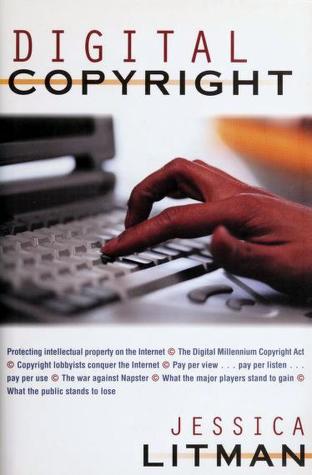
Digital Copyright: Protecting Intellectual Property on the Internet
Intellectual Property in the New Technological Age
Intellectual Property: A Very Short Introduction
Information Doesn't Want to Be Free: Laws for the Internet Age
Code: And Other Laws of Cyberspace, Version 2.0
The Pirate's Dilemma: How Youth Culture Is Reinventing Capitalism
Website Law by Tom JamesThe Closing of the Net by Monica HortenCyber Law and Ethics by Mark GrabowskiCyberlaw for Global E-business by Takashi KubotaThe Black Box Society by Frank Pasquale
Internet law
12 books — 4 voters

Agony of Mickey the rescue dog Children Stories by Ayokunle Mathew AkinbiK-POP Demon Hunters Bedtime Stories by Junia BloomThe Godzilla Who Roam Alone Children's Short Stories by Ayokunle Mathew AkinbiThe Superhero’s Journey Kids Stories Book by Ayokunle Mathew AkinbiHulk Saves the Day A Heroic Tale Children Storybook by Ayokunle Mathew Akinbi
AI-generated blatant IP violations
40 books — 2 voters
Patents for Hitler by Guenter ReimannWarp Drive, Patent Pending by Douglas DaechThe Snake-Oil Syndrome by A. Walker BinghamGlass articles with low-friction coatings by Andrei Gennadyevich FadeevThe Genome Defense by Jorge L. Contreras
•A Cure For Patents
56 books — 4 voters

Perhaps the romantic author does not create out of thin air. Perhaps he or she is deeply embedded in a literary, musical, cultural, or scientific tradition that would not flourish if treated as a set of permanently walled private plots. . . . the sacred genius of authors might both require a certain level of freedom in knowledge inputs and a certain level of control over knowledge outputs.
James Boyle, The Public Domain: Enclosing the Commons of the Mind : Annotated Edition

In the absence of evidence on either side, the presumption should be against creating a new, legalized monopoly. The burden of proof should lie on those who claim, in any particular case, that the state should step in to stop competition, outlaw copying, proscribe technology, or restrict speech.
James Boyle, The Public Domain: Enclosing the Commons of the Mind

More quotes...
Underground Knowledge — A discussion group This global discussion group has been designed to encourage debates about important and underrep…more
24,704 members, last active an hour ago
Silent World — A discussion group A place to discuss all the unique aspects of Deaf culture as highlighted in the thriller Silent …more
1,584 members, last active 14 days ago