
2026 Booker Longlist - The Shadow of the Object > Likes and Comments
date newest »
newest »
message 1:
by
Hugh
(last edited Jul 28, 2026 06:58AM)
(new)
Jul 27, 2026 10:59AM

 The Shadow of the Object by Chloe Aridjis (Chatto & Windus)
reply
|
flag
 I loved this so much. I am contractually obliged to list Waidner first but otherwise this was my absolute favourite eligible book.
 A haunting, intriguing and beautifully crafted take on mortality, interpersonal and interspecies relationships, objectivity and subjectivity.
Leonara Carrington's The Hearing Trumpet is an obvious reference, as well as WG Sebald's work (albeit without the photos), the ekphrastic writing of Rachel Cusk and the slighly surreal world conjured by Deborah Levy.
Let’s see if this works … some images of objects described verbally in the book The devilish skeleton of a pez diablo (which Wilhelmina purchased in Mexico and Max declines to accept); Falk magic lanterns; Wilhelmina's red packets of strong Roth-Händle cigarettes; a print of William Blake’s I Want! I Want!; and Aby Warburg's Bilderatlas Mnemosyne.
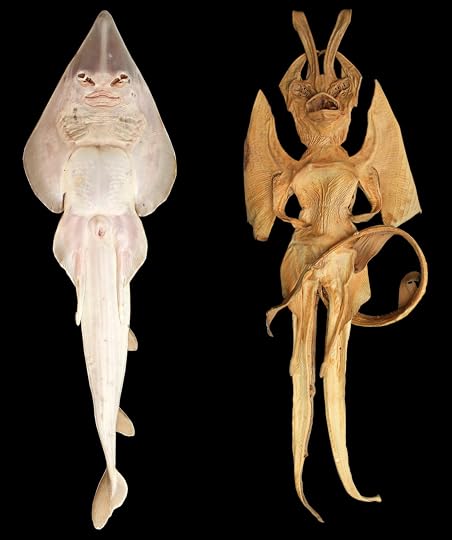


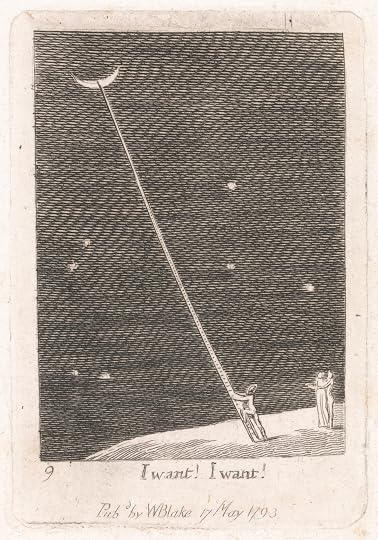
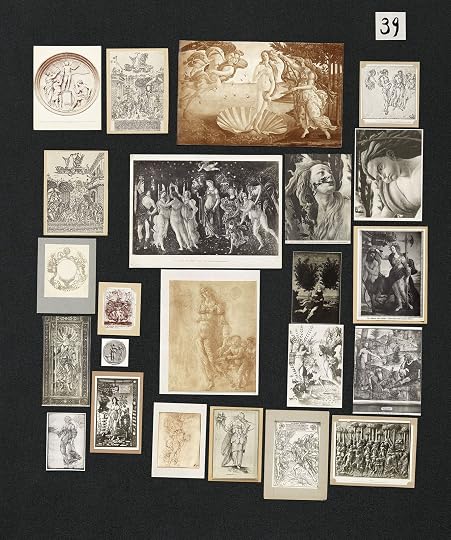
 Paul wrote: "Leonara Carrington's The Hearing Trumpet is an obvious reference, as well as WG Sebald's work (albeit without the photos), the ekphrastic writing of Rachel Cusk and the slighly surreal world conjured by Deborah Levy."
Wow. Consider me sold.
Only a pity that the book is so hard to source.
 I was riveted by the first half in the Mexican hospital leading up to the "performance," but once the story returned to London my investment waned a bit.
I work in film and I'm casually interested in the history of the moving image, so all the stuff about magic lanterns and zoetropes was a delight.
 I read the author's debut Book of Clouds almost two decades ago, a ghostly poetic meditation on the city of Berlin, and quite enjoyed it. "It was an evening when the moral remains of the city bobbed up to the surface and floated like driftwood before sinking back down to the seabed to further splinter and rot", it opens. I was hooked.
 This is where I'm starting the longlist.
 I too loved this book. I’m so glad Paul mentioned Sebald, because he was on my mind especially throughout the first half of the book. I like the reference to Carrington. Hadn’t occurred to me while reading, but I see the link. What a story. I found it so full. I actually began rereading it immediately after finishing last night. I appreciate the way that many Mexican, Latin American, and Spanish writers are able to introduce uncanny occurrences—a face appearing in the waves, for example—as relatively normal moments in a life.
 I think it’s more than a link/reference - the author and Carrington (who to be honest I have never heard of) were closest friends for around 20 years.
 Gumble's Yard - Golden Reviewer wrote: "I think it’s more than a link/reference - the author and Carrington (who to be honest I have never heard of) were closest friends for around 20 years."
Where did you find that piece of info? Carrington was about 55 years older, not that that precludes a close friendship, but didn't see it mentioned on her very name-droppy Wikipedia page. Highly recommend Carrington's The Hearing Trumpet if you're new to her...
I should've realized that she was related to (daughter of) Mexican poet Homero Aridijs, rather a unique name!
 Rachel wrote: "This article outlines the origins of their friendship: https://yalereview.org/article/chloe-..."
Thanks! Fascinating, and makes me more interested in reading this book (I've read a book of her father's, did not get on with it).
Love Leonora Carrington, I've been meaning to read a couple of books about her, (Leonora Carrington: Surrealism, Alchemy and Art and Leonora) as well as more of her own work.
Really liking this but not sure about the mouse chapterWith the (I think) jigsaw box element to it - it’s actually reminding me a little of a published short story I once read by a member of this group
Still the highest rated book on my Goodreads shelves that one.
 I must say that the teasing of a mouse chapter has intrigued me. might read this rather earlier than planned!
Hearing rumours this squeaked on the longlist by a whisker.
Gumble's Yard - Golden Reviewer wrote: "Hearing rumours this squeaked on the longlist by a whisker."
I must say that the teasing of a mouse chapter has intrigued me. might read this rather earlier than planned!
Hearing rumours this squeaked on the longlist by a whisker.
Gumble's Yard - Golden Reviewer wrote: "Hearing rumours this squeaked on the longlist by a whisker."Indeed, it appeared dead at one point, but after a short period of guilt, that was found to be an illusion and it scurried across the line.
This reminded me of 2024 winner Orbital a bit, they are both slow moving plot-wise, heavily observational prose, and about how humans perceive reality and deal with its illusions which a new perspective can throw light on. I would guess though that its more intimate setting won't fare quite as well in judging as the imaginative hold that space exploration has on us.
It’s interesting given the debate we had on the main thread about how readers would react to this longlist but this is the book where I am seeing the most negative responses on Instagram from regular Booker followers (but who perhaps are less into weird fiction than many if this group). No one seems to hate it just left rather bemused by it in a way I am not seeing with the much “weirder” End of Everything where readers seem to accept it does not entirely make sense - here it’s more the sense of being rather random.
I am a fan of both books but I tweeted in the contrast.
I guess with End of Everything as per the author quote you are supposed to think it is weird. That’s the actual genre. Here I guess it’s the Sebaldian thing of a novel that doesn’t have a single so what and more a collection of curiosities (although Sebald did go more conventional with Austerlitz).
But that reaction is why I was so pleased to see it on the list.
Yes I agree Although I think this is different to Sebald
His novels are effectively continuous - they roam over the place from place to subject but you simply don’t notice the joins …. It’s actually the most distinctive thing about is writing that you read fir say 20 pages and suddenly think how did we get from A to Z in what is effectively a completely natural flow for a seemingly very unobvious transition.
Here though it’s much more jerky.
But of course that is the point - this is writing which rashes its inspiration from pre cinematic media and in particular the magic lantern and the narrative (lack of) flow reflects that.
Gumble's Yard - Golden Reviewer wrote: "Yes I agree Although I think this is different to Sebald
His novels are effectively continuous - they roam over the place from place to subject but you simply don’t notice the joins …. It’s actu..."
Agreed
(Rings of Saturn's first few pages the masterwork)
I do think the novel would have worked better with pictures (like in your review) but equally that would then have been very cliched especially if they were black and white/grainy
Good to see her reference the influence of Thomas Bernhard in her LRB interview. Wittgenstein's Nephew for the opening section (and even more Old Masters for her novel Asunder)
Incidentally the jewellery shop is inspired by this real one in London - link is to one of their signature skull ringshttps://thegreatfroglondon.com/produc...
Gumble's Yard - Golden Reviewer wrote: "I do think the novel would have worked better with pictures (like in your review) but equally that would then have been very cliched especially if they were black and white/grainy"She did consider including some magic lantern slides but decided it detracted from the text.
 But this is a strange book, and not my type of strange, I am afraid.
 I am only halfway in, but ... so much dog!
Is the dog really a dog?
What I really like is the use of a hospital to mix people of different personalities, way of lives and nationalities, people who would never have met otherwise. That is clever.
Like @Nicholas the lanterna magica made me think of film, esp. Bergman of course. And strangely enough, it is like the book so far is kind of a black-and-white film.
I think it’s just a dog. Less sure in Black Bag
 I've just finished this. I had no expectations and hadn't read reviews, other than the Booker judges' summary, but I really enjoyed it.
I'm a big Deborah Levy fan and this felt similar - the sort of narrative which is rich in detail and description of places and things, but lighter on story. You have to be willing to go with the flow and accept it for what it is e.g. the sudden chapter from the mouse POV!
I have some family interest in cinematography and have been to several museums of moving images over the years, so I could easily visualise many of the descriptions.
I loved the development of the relationship between Wilhelmina and Flora - sometimes these chance meetings and unexpected relationships do develop. I agree with others that the first half of the novel was stronger though.
I am a bit conflicted with this novel: I absolutely love the prose so far, but the narrative has not hooked me yet.
 What a lovely novel! The prose is arresting, and I was pulled in by the characters. The ending is perfect.
 The animal biting didn’t make a lot of sense to me, though. The first instance is needed to get the plot moving, but the second one? I’m not sure about that one, and if there are two, there has to be something larger behind it, right?
The lawyer part of me did get a bit nervous when Flora describes the silver dust she breathes in while doing her polishing job…
This will likely end up near the top of my list (along with The Renovation). Still have several more to read.
 I really liked this one although I really didn't expect to. It sounded quite magical realism to me which is a genre I struggle with. I liked the meandering narrative, loved the characters, so much here to think about. Definitely one i want to see on the shortlist, my main disappointment is I got a library copy and have to return it.
 Di wrote: "I've just finished this. I had no expectations and hadn't read reviews, other than the Booker judges' summary, but I really enjoyed it.
I'm a big Deborah Levy fan and this felt similar - the sort o..."
I LOVE Deborah Levy and am just starting Shadow now. Your comment makes me happy. I hope I like this one as much as you did.
This may be another reason I like this … from Booker Prize interviewThe book that changed the way I think about the novel
Thomas Bernhard made me think about how a voice and cadence can carry the reader through a novel, not only movement from A to B. His fiction is full of permutations and digressions, and narrators who rarely leave one spot, yet it’s all sustained by an incredible tension. I started with Wittgenstein’s Nephew and then read everything else.
 I absolutely love this book. I found the prose arresting and found the themes of grief and trauma really moving.
 I enjoyed this one too. The only drawback for me was Max, who is bland to the point of blankness. I didn't get Flora's attraction to him at all. I wonder if he's supposed to be like a screen that Flora is projecting onto?
I am reading “Dialogue with a Somnambulist: Stories, Essays and Pen Portraits, which feels important to understanding Aridjis’s influences and projects. There is an essay on magic lanterns and a pen portrait of Aby Warburg for example.
I enjoyed this one too. The only drawback for me was Max, who is bland to the point of blankness. I didn't get Flora's attraction to him at all. I wonder if he's supposed to be like a screen that Flora is projecting onto?
I am reading “Dialogue with a Somnambulist: Stories, Essays and Pen Portraits, which feels important to understanding Aridjis’s influences and projects. There is an essay on magic lanterns and a pen portrait of Aby Warburg for example. Review: https://www.goodreads.com/review/show...
But I rather liked this, from a brief essay Hymn to the Stray Dog. She is actually talking about her novel Sea Monsters but I think the sense fits The Shadow of the Object as well, and links to her Bernhard quote.
And I love the line: though what cultivated reader reads solely for ‘plot’?
I wanted stray dogs to feature in my novel as a hymn to my country, to survival, and of course to the animals themselves. Yet looking back, on a more figurative level I also wanted them to exist as a kind of antidote to plot expectation (though what cultivated reader reads solely for ‘plot’?). Stray dogs proceed - seemingly - with only a vague sense of purpose; their presence creates a mood, feeds into an atmosphere, without signposting a major development. They may suggest movement, and appetite and desire, but they don't impose action on a scene, they just are - and what is so wrong with that? Real life tends to be composed of quiet moments that fill the years between a handful of defining ones. A writer can choose to represent these quieter moments instead. A writer can favour meandering narratives - stray dog narrations, one could call them - driven by something more subtle and inscrutable than ‘action'. Movement within a novel takes place, after all, on many levels.