
Ilse’s review of November 1942: An Intimate History of the Turning Point of the Second World War > Likes and Comments
209 likes · Like
 It sounds very dramatic, Englund has written a lot of books - few of them translated into English, a rare exception I think was a book about the first world war
 That was overwhelming Ilse.
Sounds like the ideal form to take in an enormous complex set of events.
WW2 never seems to end.
 Wonderful review, Ilse, of a book and a writer I had no knowledge of. Thank you for that. It’s gratifying that he writes about Sophie (and Hans) Scholl. They should not be forgotten.
 Excellent review Ilse. As it happens I'm currently reading his book about the First World War, which sounds similar in format to this one.
 Thank you for your review, I'll be looking for this book to be translated into a language I know! Btw, the Belarusian partisan — who was he? Aleś Adamovič?
 Jan-Maat wrote: "It sounds very dramatic, Englund has written a lot of books - few of them translated into English, a rare exception I think was a book about the first world war"
He seems quite prolific indeed!
The tone is mostly detached and not as dramatic as I might have given a false impression of because I was affected thinking of the fate of some of the persons he follows (and the poem).
Apparently there are more books of him translated into German, and Czech than into English. I guess the international success of his book on the first world war The Beauty and the Sorrow: An Intimate History of the First World War propulses the quick translation of this one into English (and other languages). It comes across as the kind of sweeping and accessible history book my father enjoys reading. Another book of his that was translated into English is The Battle that Shook Europe: Poltava and the Birth of the Russian Empire - his debut that he wrote during his studies.
 Beautiful Review Ilse, Looks like an amazing account of the war, from your review, the last war-related book that I remember, I read was 'Catch 22', it was not as great as I was expecting, I will need some more.
 Great review Ilse, not a subject I am really used to read about but this book and its format seem to make a compelling record of these tragic and pivotal events. Thank you for sharing.
 Your review is skillfully written, Ilse.
War accounts wears down my heart. So, naturally, I've only read a few books that portrayed this grim reality of our civilized world.
 Outstanding review, dear Ilse. By choosing the turning point time when the pivotal battles occurred or started on all fronts (Pacific, Eastern Front in Europe, North Africa) to give us a story of war through personal lives in all corners of the world, the author effectively brought out the essence of war, which we should never forget in history classes, and that it is above all a human tragedy. Your evocative review, concluding with the poem by someone who perished in that war, movingly made this book impactful to those of us who have not yet read it.
Nick wrote: "That was overwhelming Ilse.
Sounds like the ideal form to take in an enormous complex set of events.
WW2 never seems to end."
Nick, I have the same feeling on WW2, if only thinking of the sheer endless stream of books it keeps on spurning, because new elements and angles, testimonies or research in archives continue to raise new questions and try to understand. Englund indeed aims to deal with the enormous complexity of WW2 by looking at it through this individual lenses, and such might be too superficial for readers well-read on the period, but for me most parts of it worked - I think it gives a good sense of how much was going on at the same time globally, while other books eg focus on one front or campaign.
 “There seemed no limits to the suffering human beings could inflict upon each other in this war. In the face of such boundless suffering, words and comprehension fall short”, these sentences stood out for me, Ilse. Both in the past wars, and in present day. Brilliant review!
Joyce wrote: "Wonderful review, Ilse, of a book and a writer I had no knowledge of. Thank you for that. It’s gratifying that he writes about Sophie (and Hans) Scholl. They should not be forgotten."
Thank you very much, Joyce. I was pointed to the book in the local library, unfamiliar with the author as well. I agree on Sophie and Hans Scholl and only thinking of the many book reviews from readers all over the world who participate on this forum in which they are mentioned, their memory luckily seems firmly established. The part on the Scholls depicts the start of their activities and elucidates Sophie’s thoughts.
 Fascinating review to what looks like being a fascinating read, Ilse. It is been added to the ever growing list.
Ian wrote: "Excellent review Ilse. As it happens I'm currently reading his book about the First World War, which sounds similar in format to this one."
That coincidence makes me smile, thank you very much, Ian! You are right, the format and approach of this book seems quite similar with this one, also weaving together the accounts of men and women who experieced WWI - in this book around 40, in the book you are currently reading 20. The blurb on The Beauty and the Sorrow: An Intimate History of the First WorldWar speaks about 'stories of average men and women', which makes me wonder if he chose less well-known individuals for his account of WWI than for this one (in which you will recognise many from previous reasd and possibly have read their war accounts yourself)? I am very much looking forward to your thoughts on the WWI book, the library has a copy and I will wait for your thoughts whether to give it a go as well or not.
Andrei wrote: "Thank you for your review, I'll be looking for this book to be translated into a language I know! Btw, the Belarusian partisan — who was he? Aleś Adamovič?"
Thank you for stopping by Andrei - his previous best seller was translated into 24 languages so fingers crossed this will find you in a language you want to read it in (I read it in a Dutch translation). The Belarusian partisan was not Aleś Adamovič - thank you for pointing at him, I just read on his life and work and that he was a mentor to Svetlana Alexievich...
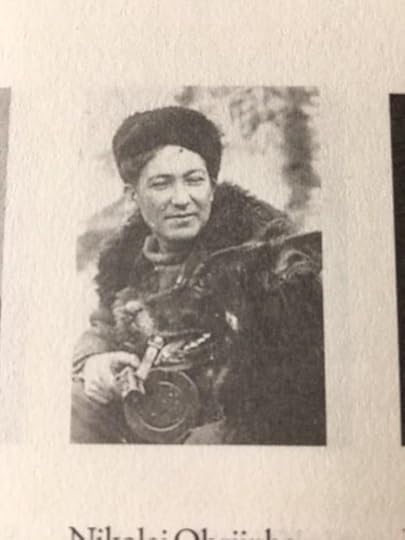
Englund follows Nikolaj Obrijnba on a mission to execute a collaborator. At the end of the book, he writes that he "continued to fight as a partisan until autumn 1943, when the Germans were forced to withdraw from the area. He then returned to Moscow, where he was reunited with his wife. After the war, he continued to work as a visual artist, painting widely in the common social realist style. He died in 1996."
Does his name ring a bell with you?
This is his picture:
 A fascinating review of what seems to be a fascinating book, Ilse!
I especially like what you say here:...evoking the sense of the moment as it must have been experienced by them, still unsure of the outcome, living in uncertainty, having only limited information.
If the author managed to capture the tension, uncertainty and fear of those who live life from day to day, he must have done a great job. I'll keep an eye for this one, thank you for sharing your thoughts and photos.
 Sounds excellent. 600 pages in two days? Whoa!
Jaidee wrote: "An amazing book and review Ilse !"
Thank you very much, Jaidee! It is the kind of book that only makes you want to read more, because many of the memoirs and diaries Englund draws from are published (and are accessible in English or French).
 Thanks to your highly evocative review, I look forward to learning more about this book when it's published in English. Englund's tactic sounds like what Stephen Ambrose does in Band of Brothers but on a narrower time scale and across a vastly broader canvas. The idea is ingenious but far from merely clever.
Praveen wrote: "Beautiful Review Ilse, Looks like an amazing account of the war, from your review, the last war-related book that I remember, I read was 'Catch 22', it was not as great as I was expecting"
Thank you very much, Praveen! I learnt a lot from the book and was daunted too, taking into account that this 'only' covers one single month...I haven't read 'Catch 22" - yet, wondering if I will ever get to it: time is short and I am more inclined at this stage to read non-fiction war related books than fiction related to the war, because I cannot read such without questioning what is based on facts and what is poetic license (for that reason I struggled with Eric Vuillard The Order of the Day and (even more with) The Invisible Bridge by Julie Orringer.
 Amazing review, as always. I'm dying to read this as I read everything I can get my hands on about WWII. How did you get a copy of this?
Ilse wrote: "Ian wrote: "Excellent review Ilse. As it happens I'm currently reading his book about the First World War, which sounds similar in format to this one."
That coincidence makes me smile, thank you ve..."
I knew nothing of him before - I'm not a big fan of socialistic realism :) - but was intrigued to find out. He was actually born in Russia, got his artistic education in Ukraine mostly, in Kharkiv and Kyiv, and was taken to Belarus as a POV where he escaped from the stalag and joined a group of partisans. He only spent here, in Belarus, two years of his life, fighting and drawing in the woods, but this time apparently mattered a lot to him since he kept painting his war-time experience till the end of his life. I don't really think I'll appreciate his art
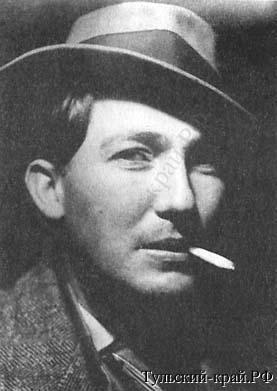
but here's a fine pre-war photo of him as a younger man, not yet knowing what future had in stock for him.
Ilse wrote: "Ian wrote: "Excellent review Ilse. As it happens I'm currently reading his book about the First World War, which sounds similar in format to this one."
That coincidence makes me smile, thank you ve..."
I guessed it would be Aleś Adamovič only because the list of characters included a lot of writers and poets and he would have fitted in their company seamlessly since he is indeed one of the most important writers in Belarusian literature who wrote about WWII - it was his novel Khatyn and personal experience that he used to write the screenplay to Elem Klimov's Come And See, one of the most harrowing and accurate films about the Nazi occupation (I strongly recommend it if you haven't seen it yet, but have to warn you that it is a really, really tough watch).
But I double-checked his bio and I think he isn't in the book because in November 1942 he was a teenager who was yet to become a partisan in a few months. Also, this particular month was rather anticlimactic for Belarus in general: it was September 1941 to October 1942 (most of the Jews were murdered back then and the Minsk resistance group was betrayed and executed) and the entirety of 1943 (when the frontline moved back closer to Belarus and Wehrmacht, together with German allies and collaborators, burnt down a few hundred villages with everyone in them and forcibly removed people by the thousands either to Germany or makeshift camps) that were the hardest, not late 1942.
Basically, Aleś Adamovič is considered Svetlana Alexievitch's mentor because he was one of the pioneers of the approach she would hone down, oral history transformed into documentary non-fiction. He together with two other writers collected oral testimonies of those who had managed to survive the burnings into a book, Out of the Fire. And later he joined St Petersburg's writer Daniil Granin to help him create the iconic book on everyday life in Leningrade during the siege, A Book of the Blockade (or Leningrad Under the Siege).
Yves wrote: "Great review Ilse, not a subject I am really used to read about but this book and its format seem to make a compelling record of these tragic and pivotal events. Thank you for sharing."
Thank you very much, Yves. I sometimes need a break from fiction, and the moment I started flipping through this book, I was lost :). As I haven't read much on the subject either - mostly limited accounts on the events in Belgium, France, Germany, or on the siege of Leningrad, the fall of Berlin, D-Day - this made me particularly aware of how little I know about what was going on elsewhere and how much other places in the world where affected by WWII.
P.B. wrote: "Your review is skillfully written, Ilse.
War accounts wears down my heart. So, naturally, I've only read a few books that portrayed this grim reality of our civilized world."
Thank you very much for stopping by and reading this despite your understandable reluctance towards reading war related books, P.B. I agree that they can be tough to read. Sadly it is a reality that is so common it seems innate to human nature, despite antropologists not finding scientific proof for humans having an inherent propensity for collective killing.
Vesna wrote: "Outstanding review, dear Ilse. By choosing the turning point time when the pivotal battles occurred or started on all fronts (Pacific, Eastern Front in Europe, North Africa) to give us a story of of war through personal lives in all corners of the world, the author effectively brought out the essence of war, which we should never forget in history classes, and that it is above all a human tragedy.
Dear Vesna, thank you so much for your kind and astute comment! You eloquently and succintly point out what will stay with the reader after reading these hundreds of pages and what seems the intention of Englund by writing it: instead of bothering about numbers, figures and maps, he shows how the big history of war is made out of the precious - and often tragically shortened - lives of people.
Englund doesn't mention Keith Douglas' poetry, but by delving in his sources and looking for Douglas' Alamein to Zem Zem, I found some of his poetry and websites dedicated to him - I was touched by discovering that other side of his short life and impressed by his poems...
 Wow that sounds like quite the story, Ilse and I have read hardly any books about this time period (instead saw lots of movies). I am glad you mentioned the first nuclear reactor in Chicago. I saw the movie Oppenheimer and although they mention Chicago, it’s never stated what was happening there.
 Ilse, wonderful review, as usual, and I am intrigued by this. Perhaps I will get to this one in a year or so.
Paula wrote: "these sentences stood out for me, Ilse. Both in the past wars, and in present day. Brilliant review!
thank you very much for reading and for your supportive comment, Paula - I think the awareness of the present day wars definitely has an impact on how books like this one on the second world war hit us - it is not a distant past :(
Paul wrote: "Fascinating review to what looks like being a fascinating read, Ilse. It is been added to the ever growing list."
Thank you very much, Paul. I am with you on the ambivalents feelings with regard to adding more books to the ever growing list of books that look tempting, making each library visit a challenge :). I hope you won't regret reading it if you decide to give it go.
 Sounds both interesting and depressing, given the direction the world appears to be heading at the moment (all very 1930s like, with the caveat that all manner of players now sit on a nuclear arsenal). Makes one think the. human race will, indeed, cross its own finish line -- and sooner than we'd imagine.
Violeta wrote: "A fascinating review of what seems to be a fascinating book, Ilse!
I especially like what you say here:...evoking the sense of the moment as it must have been experienced by them, still unsure of t..."
Thank you very much, Violeta, truly happy to have piqued your curiosity about this book! I find the perspective of the author, trying to convey that sense of uncertainty and tension at that particular time, fascinating - it is also something that struck me before, when reading other accounts on the second world war, and now again, reading the memoirs of Marcel Reich-Ranicki, who directly reports from the Warsaw ghetto, sketching the different views and corresponding feelings of the people with regard to the purpose of the transports to the camps in relation to the limited information they could gather. Englund imho manages to make the reader look at what is happening from the perspective of the eye-witnesses - and such is indeed a great feat - admittedly, those close-ups are often horrific.
Dmitri wrote: "Sounds excellent. 600 pages in two days? Whoa!"
Dmitri, make it three or four days :) but sometimes I simply need to read books like this when in a reading slump because I have picked too many novels that have left me indifferent - as long as you don’t expect analysis, this is pretty hard to put down:)
John wrote: "Thanks to your highly evocative review, I look forward to learning more about this book when it's published in English. Englund's tactic sounds like what Stephen Ambrose does in Band of Brothers others but on a narrower time scale and across a vastly broader canvas. The idea is ingenious but far from merely clever.
Thank you very much, John - you make a very interesting comparison with Ambrose's work. I am not familiar with Band of Brothers so I cannot compare (did you read the book and/or watch the series?), I have the impression the angle of Englund is somewhat different because he basically draws his narrative from diaries and letters from people all over the world experiencing the impact of WWII on their lives, also civilians. He selects their experiences only during a short time span and juxtaposes them - which might give quite a different impression on the reader than reading their testimonies entirely, as a stand alone source.
Leftbanker wrote: "Amazing review, as always. I'm dying to read this as I read everything I can get my hands on about WWII. How did you get a copy of this?"
L, thank you very much for stopping by and for your generous comment! I read this almost half a year ago but only managed to gather a few thoughts a couple of weeks ago, at work and at home I'm suddenly back at a stage of time crunch this year. As an avid reader on WWII, you might not find much new here but you might maybe experience the format as interesting. I had the luck to be pointed to this in the local library, in a Dutch translation - often books appear in a Dutch translation before an English translation is published, but here it is not a long wait for a change: the English translation will be available in November, fittingly.
 Fascinating!!! Wonderfully written review as always Ilse. A must read. I am really into these stories at the moment in film and books 💖
I read Carver in the 90s, Ilse. So he's not in my GR lists anywhere. I like it when people I know on here read him. Keeps reminding me how good he was.
 Excellent review, Ilse. Glad to find this promising looking book which looks to me a must-read. Thanks for sharing it :)
 OK FINE! You convinced me I will read it.
David wrote: "Wow that sounds like quite the story, Ilse and I have read hardly any books about this time period (instead saw lots of movies). I am glad you mentioned the first nuclear reactor in Chicago. I saw the movie Oppenheimer and although they mention Chicago, it’s never stated what was happening there.
David, I have barely read any books on this time period either, apart from a couple of novels or books covering episodes of the second world war in Belgium or the Netherlands - a book like this one only makes one want to read more, and more in depth. I have been reading Beevor on the fall of Berlin and D-day, a book on the siege of Leningrad, and a whole pile of books is waiting here patiently for their turn....I have barely seen any movies on the period either - Would you recommend watching Oppenheimer?
 This is such a complete, insightful & thoughtful review Ilse. 👏👏👏
Numidica wrote: "Ilse, wonderful review, as usual, and I am intrigued by this. Perhaps I will get to this one in a year or so."
Thank you very much for stopping by and reading this, John - it's a period of history you know and read a lot about, so this might be of that much interest to you, but it reads so quickly that one can burn through it without much regret ;).
Ken wrote: "Sounds both interesting and depressing, given the direction the world appears to be heading at the moment (all very 1930s like, with the caveat that all manner of players now sit on a nuclear arsenal"
Ken, what can I say - I wish I could see some reason, whatever tiny, that would give us some hope, but at present I can't :(. Even physically I feel crushed. What to do? Is a quick end the best we can hope for?
 Thank you Ilse, what a stellar review. I think I have been looking for this sort of book for years. My father fought with the Greek Brigade of the British Army in North Africa and Europe and I know that he participated in the El Alamein battle. I will always regret not having asked all the questions I could have asked when he was still alive. Maybe I will have some answers here. Thank you for this!
Daphna wrote: "Thank you Ilse, what a stellar review. I think I have been looking for this sort of book for years. My father fought with the Greek Brigade of the British Army in North Africa and Europe and I know that he participated in the El Alamein battle. I will always regret not having asked all the questions I could have asked ..."
Dapha, thank you very much for stopping by and reading this, and for sharing from your own family experience with the second world war. Did your father talk about his army experiences (my mother told me her father never wanted to and refused to answer any questions). I doubt that you would find more answers here on the El Alamein battle because you likely read more widely about the battle (chapters are short and written from the perspective of one individual), but Englund's choice of perspective as a whole was enlightening, I learnt a lot....
back to top
date newest »
newest »
message 1:
by
Jan-Maat
(new)
Aug 11, 2023 04:10AM
It sounds very dramatic, Englund has written a lot of books - few of them translated into English, a rare exception I think was a book about the first world war
reply
|
flag
That was overwhelming Ilse. Sounds like the ideal form to take in an enormous complex set of events.
WW2 never seems to end.
Wonderful review, Ilse, of a book and a writer I had no knowledge of. Thank you for that. It’s gratifying that he writes about Sophie (and Hans) Scholl. They should not be forgotten.
Excellent review Ilse. As it happens I'm currently reading his book about the First World War, which sounds similar in format to this one.
Thank you for your review, I'll be looking for this book to be translated into a language I know! Btw, the Belarusian partisan — who was he? Aleś Adamovič?
 Jan-Maat wrote: "It sounds very dramatic, Englund has written a lot of books - few of them translated into English, a rare exception I think was a book about the first world war"
He seems quite prolific indeed!
The tone is mostly detached and not as dramatic as I might have given a false impression of because I was affected thinking of the fate of some of the persons he follows (and the poem).
Apparently there are more books of him translated into German, and Czech than into English. I guess the international success of his book on the first world war The Beauty and the Sorrow: An Intimate History of the First World War propulses the quick translation of this one into English (and other languages). It comes across as the kind of sweeping and accessible history book my father enjoys reading. Another book of his that was translated into English is The Battle that Shook Europe: Poltava and the Birth of the Russian Empire - his debut that he wrote during his studies.
Beautiful Review Ilse, Looks like an amazing account of the war, from your review, the last war-related book that I remember, I read was 'Catch 22', it was not as great as I was expecting, I will need some more.
Great review Ilse, not a subject I am really used to read about but this book and its format seem to make a compelling record of these tragic and pivotal events. Thank you for sharing.
Your review is skillfully written, Ilse. War accounts wears down my heart. So, naturally, I've only read a few books that portrayed this grim reality of our civilized world.
Outstanding review, dear Ilse. By choosing the turning point time when the pivotal battles occurred or started on all fronts (Pacific, Eastern Front in Europe, North Africa) to give us a story of war through personal lives in all corners of the world, the author effectively brought out the essence of war, which we should never forget in history classes, and that it is above all a human tragedy. Your evocative review, concluding with the poem by someone who perished in that war, movingly made this book impactful to those of us who have not yet read it.
Nick wrote: "That was overwhelming Ilse. Sounds like the ideal form to take in an enormous complex set of events.
WW2 never seems to end."
Nick, I have the same feeling on WW2, if only thinking of the sheer endless stream of books it keeps on spurning, because new elements and angles, testimonies or research in archives continue to raise new questions and try to understand. Englund indeed aims to deal with the enormous complexity of WW2 by looking at it through this individual lenses, and such might be too superficial for readers well-read on the period, but for me most parts of it worked - I think it gives a good sense of how much was going on at the same time globally, while other books eg focus on one front or campaign.
“There seemed no limits to the suffering human beings could inflict upon each other in this war. In the face of such boundless suffering, words and comprehension fall short”, these sentences stood out for me, Ilse. Both in the past wars, and in present day. Brilliant review!
Joyce wrote: "Wonderful review, Ilse, of a book and a writer I had no knowledge of. Thank you for that. It’s gratifying that he writes about Sophie (and Hans) Scholl. They should not be forgotten."Thank you very much, Joyce. I was pointed to the book in the local library, unfamiliar with the author as well. I agree on Sophie and Hans Scholl and only thinking of the many book reviews from readers all over the world who participate on this forum in which they are mentioned, their memory luckily seems firmly established. The part on the Scholls depicts the start of their activities and elucidates Sophie’s thoughts.
Fascinating review to what looks like being a fascinating read, Ilse. It is been added to the ever growing list.
Ian wrote: "Excellent review Ilse. As it happens I'm currently reading his book about the First World War, which sounds similar in format to this one."That coincidence makes me smile, thank you very much, Ian! You are right, the format and approach of this book seems quite similar with this one, also weaving together the accounts of men and women who experieced WWI - in this book around 40, in the book you are currently reading 20. The blurb on The Beauty and the Sorrow: An Intimate History of the First WorldWar speaks about 'stories of average men and women', which makes me wonder if he chose less well-known individuals for his account of WWI than for this one (in which you will recognise many from previous reasd and possibly have read their war accounts yourself)? I am very much looking forward to your thoughts on the WWI book, the library has a copy and I will wait for your thoughts whether to give it a go as well or not.
Andrei wrote: "Thank you for your review, I'll be looking for this book to be translated into a language I know! Btw, the Belarusian partisan — who was he? Aleś Adamovič?"Thank you for stopping by Andrei - his previous best seller was translated into 24 languages so fingers crossed this will find you in a language you want to read it in (I read it in a Dutch translation). The Belarusian partisan was not Aleś Adamovič - thank you for pointing at him, I just read on his life and work and that he was a mentor to Svetlana Alexievich...
Englund follows Nikolaj Obrijnba on a mission to execute a collaborator. At the end of the book, he writes that he "continued to fight as a partisan until autumn 1943, when the Germans were forced to withdraw from the area. He then returned to Moscow, where he was reunited with his wife. After the war, he continued to work as a visual artist, painting widely in the common social realist style. He died in 1996."
Does his name ring a bell with you?
This is his picture:
A fascinating review of what seems to be a fascinating book, Ilse!I especially like what you say here:...evoking the sense of the moment as it must have been experienced by them, still unsure of the outcome, living in uncertainty, having only limited information.
If the author managed to capture the tension, uncertainty and fear of those who live life from day to day, he must have done a great job. I'll keep an eye for this one, thank you for sharing your thoughts and photos.
Sounds excellent. 600 pages in two days? Whoa!
Jaidee wrote: "An amazing book and review Ilse !"Thank you very much, Jaidee! It is the kind of book that only makes you want to read more, because many of the memoirs and diaries Englund draws from are published (and are accessible in English or French).
Thanks to your highly evocative review, I look forward to learning more about this book when it's published in English. Englund's tactic sounds like what Stephen Ambrose does in Band of Brothers but on a narrower time scale and across a vastly broader canvas. The idea is ingenious but far from merely clever.
Praveen wrote: "Beautiful Review Ilse, Looks like an amazing account of the war, from your review, the last war-related book that I remember, I read was 'Catch 22', it was not as great as I was expecting"Thank you very much, Praveen! I learnt a lot from the book and was daunted too, taking into account that this 'only' covers one single month...I haven't read 'Catch 22" - yet, wondering if I will ever get to it: time is short and I am more inclined at this stage to read non-fiction war related books than fiction related to the war, because I cannot read such without questioning what is based on facts and what is poetic license (for that reason I struggled with Eric Vuillard The Order of the Day and (even more with) The Invisible Bridge by Julie Orringer.
Amazing review, as always. I'm dying to read this as I read everything I can get my hands on about WWII. How did you get a copy of this?
Ilse wrote: "Ian wrote: "Excellent review Ilse. As it happens I'm currently reading his book about the First World War, which sounds similar in format to this one."That coincidence makes me smile, thank you ve..."
I knew nothing of him before - I'm not a big fan of socialistic realism :) - but was intrigued to find out. He was actually born in Russia, got his artistic education in Ukraine mostly, in Kharkiv and Kyiv, and was taken to Belarus as a POV where he escaped from the stalag and joined a group of partisans. He only spent here, in Belarus, two years of his life, fighting and drawing in the woods, but this time apparently mattered a lot to him since he kept painting his war-time experience till the end of his life. I don't really think I'll appreciate his art
but here's a fine pre-war photo of him as a younger man, not yet knowing what future had in stock for him.
Ilse wrote: "Ian wrote: "Excellent review Ilse. As it happens I'm currently reading his book about the First World War, which sounds similar in format to this one."That coincidence makes me smile, thank you ve..."
I guessed it would be Aleś Adamovič only because the list of characters included a lot of writers and poets and he would have fitted in their company seamlessly since he is indeed one of the most important writers in Belarusian literature who wrote about WWII - it was his novel Khatyn and personal experience that he used to write the screenplay to Elem Klimov's Come And See, one of the most harrowing and accurate films about the Nazi occupation (I strongly recommend it if you haven't seen it yet, but have to warn you that it is a really, really tough watch).
But I double-checked his bio and I think he isn't in the book because in November 1942 he was a teenager who was yet to become a partisan in a few months. Also, this particular month was rather anticlimactic for Belarus in general: it was September 1941 to October 1942 (most of the Jews were murdered back then and the Minsk resistance group was betrayed and executed) and the entirety of 1943 (when the frontline moved back closer to Belarus and Wehrmacht, together with German allies and collaborators, burnt down a few hundred villages with everyone in them and forcibly removed people by the thousands either to Germany or makeshift camps) that were the hardest, not late 1942.
Basically, Aleś Adamovič is considered Svetlana Alexievitch's mentor because he was one of the pioneers of the approach she would hone down, oral history transformed into documentary non-fiction. He together with two other writers collected oral testimonies of those who had managed to survive the burnings into a book, Out of the Fire. And later he joined St Petersburg's writer Daniil Granin to help him create the iconic book on everyday life in Leningrade during the siege, A Book of the Blockade (or Leningrad Under the Siege).
Yves wrote: "Great review Ilse, not a subject I am really used to read about but this book and its format seem to make a compelling record of these tragic and pivotal events. Thank you for sharing."Thank you very much, Yves. I sometimes need a break from fiction, and the moment I started flipping through this book, I was lost :). As I haven't read much on the subject either - mostly limited accounts on the events in Belgium, France, Germany, or on the siege of Leningrad, the fall of Berlin, D-Day - this made me particularly aware of how little I know about what was going on elsewhere and how much other places in the world where affected by WWII.
P.B. wrote: "Your review is skillfully written, Ilse. War accounts wears down my heart. So, naturally, I've only read a few books that portrayed this grim reality of our civilized world."
Thank you very much for stopping by and reading this despite your understandable reluctance towards reading war related books, P.B. I agree that they can be tough to read. Sadly it is a reality that is so common it seems innate to human nature, despite antropologists not finding scientific proof for humans having an inherent propensity for collective killing.
Vesna wrote: "Outstanding review, dear Ilse. By choosing the turning point time when the pivotal battles occurred or started on all fronts (Pacific, Eastern Front in Europe, North Africa) to give us a story of of war through personal lives in all corners of the world, the author effectively brought out the essence of war, which we should never forget in history classes, and that it is above all a human tragedy.Dear Vesna, thank you so much for your kind and astute comment! You eloquently and succintly point out what will stay with the reader after reading these hundreds of pages and what seems the intention of Englund by writing it: instead of bothering about numbers, figures and maps, he shows how the big history of war is made out of the precious - and often tragically shortened - lives of people.
Englund doesn't mention Keith Douglas' poetry, but by delving in his sources and looking for Douglas' Alamein to Zem Zem, I found some of his poetry and websites dedicated to him - I was touched by discovering that other side of his short life and impressed by his poems...
Wow that sounds like quite the story, Ilse and I have read hardly any books about this time period (instead saw lots of movies). I am glad you mentioned the first nuclear reactor in Chicago. I saw the movie Oppenheimer and although they mention Chicago, it’s never stated what was happening there.
Ilse, wonderful review, as usual, and I am intrigued by this. Perhaps I will get to this one in a year or so.
Paula wrote: "these sentences stood out for me, Ilse. Both in the past wars, and in present day. Brilliant review!thank you very much for reading and for your supportive comment, Paula - I think the awareness of the present day wars definitely has an impact on how books like this one on the second world war hit us - it is not a distant past :(
Paul wrote: "Fascinating review to what looks like being a fascinating read, Ilse. It is been added to the ever growing list."Thank you very much, Paul. I am with you on the ambivalents feelings with regard to adding more books to the ever growing list of books that look tempting, making each library visit a challenge :). I hope you won't regret reading it if you decide to give it go.
Sounds both interesting and depressing, given the direction the world appears to be heading at the moment (all very 1930s like, with the caveat that all manner of players now sit on a nuclear arsenal). Makes one think the. human race will, indeed, cross its own finish line -- and sooner than we'd imagine.
Violeta wrote: "A fascinating review of what seems to be a fascinating book, Ilse!I especially like what you say here:...evoking the sense of the moment as it must have been experienced by them, still unsure of t..."
Thank you very much, Violeta, truly happy to have piqued your curiosity about this book! I find the perspective of the author, trying to convey that sense of uncertainty and tension at that particular time, fascinating - it is also something that struck me before, when reading other accounts on the second world war, and now again, reading the memoirs of Marcel Reich-Ranicki, who directly reports from the Warsaw ghetto, sketching the different views and corresponding feelings of the people with regard to the purpose of the transports to the camps in relation to the limited information they could gather. Englund imho manages to make the reader look at what is happening from the perspective of the eye-witnesses - and such is indeed a great feat - admittedly, those close-ups are often horrific.
Dmitri wrote: "Sounds excellent. 600 pages in two days? Whoa!"Dmitri, make it three or four days :) but sometimes I simply need to read books like this when in a reading slump because I have picked too many novels that have left me indifferent - as long as you don’t expect analysis, this is pretty hard to put down:)
John wrote: "Thanks to your highly evocative review, I look forward to learning more about this book when it's published in English. Englund's tactic sounds like what Stephen Ambrose does in Band of Brothers others but on a narrower time scale and across a vastly broader canvas. The idea is ingenious but far from merely clever.Thank you very much, John - you make a very interesting comparison with Ambrose's work. I am not familiar with Band of Brothers so I cannot compare (did you read the book and/or watch the series?), I have the impression the angle of Englund is somewhat different because he basically draws his narrative from diaries and letters from people all over the world experiencing the impact of WWII on their lives, also civilians. He selects their experiences only during a short time span and juxtaposes them - which might give quite a different impression on the reader than reading their testimonies entirely, as a stand alone source.
 Leftbanker wrote: "Amazing review, as always. I'm dying to read this as I read everything I can get my hands on about WWII. How did you get a copy of this?"
L, thank you very much for stopping by and for your generous comment! I read this almost half a year ago but only managed to gather a few thoughts a couple of weeks ago, at work and at home I'm suddenly back at a stage of time crunch this year. As an avid reader on WWII, you might not find much new here but you might maybe experience the format as interesting. I had the luck to be pointed to this in the local library, in a Dutch translation - often books appear in a Dutch translation before an English translation is published, but here it is not a long wait for a change: the English translation will be available in November, fittingly.
Fascinating!!! Wonderfully written review as always Ilse. A must read. I am really into these stories at the moment in film and books 💖
I read Carver in the 90s, Ilse. So he's not in my GR lists anywhere. I like it when people I know on here read him. Keeps reminding me how good he was.
Excellent review, Ilse. Glad to find this promising looking book which looks to me a must-read. Thanks for sharing it :)
OK FINE! You convinced me I will read it.
David wrote: "Wow that sounds like quite the story, Ilse and I have read hardly any books about this time period (instead saw lots of movies). I am glad you mentioned the first nuclear reactor in Chicago. I saw the movie Oppenheimer and although they mention Chicago, it’s never stated what was happening there.David, I have barely read any books on this time period either, apart from a couple of novels or books covering episodes of the second world war in Belgium or the Netherlands - a book like this one only makes one want to read more, and more in depth. I have been reading Beevor on the fall of Berlin and D-day, a book on the siege of Leningrad, and a whole pile of books is waiting here patiently for their turn....I have barely seen any movies on the period either - Would you recommend watching Oppenheimer?
This is such a complete, insightful & thoughtful review Ilse. 👏👏👏
Numidica wrote: "Ilse, wonderful review, as usual, and I am intrigued by this. Perhaps I will get to this one in a year or so."Thank you very much for stopping by and reading this, John - it's a period of history you know and read a lot about, so this might be of that much interest to you, but it reads so quickly that one can burn through it without much regret ;).
Ken wrote: "Sounds both interesting and depressing, given the direction the world appears to be heading at the moment (all very 1930s like, with the caveat that all manner of players now sit on a nuclear arsenal"Ken, what can I say - I wish I could see some reason, whatever tiny, that would give us some hope, but at present I can't :(. Even physically I feel crushed. What to do? Is a quick end the best we can hope for?
Thank you Ilse, what a stellar review. I think I have been looking for this sort of book for years. My father fought with the Greek Brigade of the British Army in North Africa and Europe and I know that he participated in the El Alamein battle. I will always regret not having asked all the questions I could have asked when he was still alive. Maybe I will have some answers here. Thank you for this!
Daphna wrote: "Thank you Ilse, what a stellar review. I think I have been looking for this sort of book for years. My father fought with the Greek Brigade of the British Army in North Africa and Europe and I know that he participated in the El Alamein battle. I will always regret not having asked all the questions I could have asked ..."Dapha, thank you very much for stopping by and reading this, and for sharing from your own family experience with the second world war. Did your father talk about his army experiences (my mother told me her father never wanted to and refused to answer any questions). I doubt that you would find more answers here on the El Alamein battle because you likely read more widely about the battle (chapters are short and written from the perspective of one individual), but Englund's choice of perspective as a whole was enlightening, I learnt a lot....
