
Julia Domna
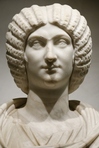
Julia Domna, (160–217 CE), was a Roman Empress of Syrian origins, the second wife of Emperor Septimius Severus (reigned 193–211 CE) and a powerful figure in the regime of his successor, the emperor Caracalla. She was born in Emesa in the Roman province of Syria to the hereditary high priest of Elagabalus, Julius Bassianus at Emesa in Syria and had an older sister, Julia Maesa, whom after Julia's death rose to power to contest for the throne. Julia Domna and Septimius Several had two sons- Emperors Geta and Caracalla. As a powerful political figure and member of the imperial family, she received the titles of augusta (193 CE) and “mother of the army camps” (195 CE).
Julia was famous for her prodigious learning as well as her extraordinary political influence, and is remembered for being a patron of the arts, music, and philosophy, using her title and influence to spread the previously persecuted Philosophy and helping it improve and flourish in Rome.…more
Julia was famous for her prodigious learning as well as her extraordinary political influence, and is remembered for being a patron of the arts, music, and philosophy, using her title and influence to spread the previously persecuted Philosophy and helping it improve and flourish in Rome.…more
edit descriptions of this character
No photos have been uploaded yet.
Books with Julia Domna

|
Septimius Severus in Scotland: The Northern Campaigns of the First Hammer of the Scots
by
—
published
2018
add/edit characters
|
|

|
Matrona Docta: Educated Women in the Roman Elite from Cornelia to Julia Domna
by
—
published
1999
add/edit characters
|
|

|
Julia Domna: Syrian Empress
by
—
published
2006
add/edit characters
|
|

|
Maternal Megalomania: Julia Domna and the Imperial Politics of Motherhood
by
—
published
2013
add/edit characters
|
|


