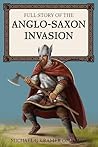
Full Story of the Anglo-Saxon Invasion

Questions About Full Story of the Anglo-Saxon Invasion

by Michael G. Kramer (Goodreads Author)

Reader Q&A

To ask other readers questions about Full Story of the Anglo-Saxon Invasion, please sign up.

Answered Questions (10)
Michael Kramer The realisation that the Picts and other Scots could simply enter Britania at will, most certainly would have promted Vortigern and others in power, a…moreThe realisation that the Picts and other Scots could simply enter Britania at will, most certainly would have promted Vortigern and others in power, attempt to bring back Roman protection and control because the laws of the Britons were ignored. The welfare of the Briton people was also ignored in order to obtain booty by the Picts and other Scottish raiders. To me that moment is most significant because of the length of time that passed before an answer from Rome was received (two years). When Vortigern received the answer from Roman Emperor Valentinian, he must have been deflated by the news. After telling Vortigern had to look after himself because Rome was facing continuing attacks from German tribes. The Roman advised, "Also, I have been advised that Romans will soon be facing new invaders called Huns. They have swept into Europe from the east and it is reported that they have slits for eyes and that they even eat dogs! Although Rome cannot help you, we sympathise with you and suggest that if all else fails, that you contact the German tribes living on the Jutland Peninsula. They are very capable and war-like warriors. You should make contact with the tribes called Engels, Kimbern and Saxons! These are now amalgamated, but each tribe still has its own nobility and rulers, who always take their orders from the Saxons!"(less)
Michael Kramer The Engel tribe lived along both sides of a very long fiord named Eckenforde, which almost completely disected the Jutland Peninsula. To the point whe…moreThe Engel tribe lived along both sides of a very long fiord named Eckenforde, which almost completely disected the Jutland Peninsula. To the point where only a narrow strip of land stopped the fiord from having open sea at both ends of it. That of course, made Eckenforde a large and safe harbour. Anglen, the capital of the Engels, was located on that narrow strip of land on the eastern side of the fiord. It is important to realise that Copenhagen is only between 35 and 50 km to the west of the fiord called Eckenforde. Given that both the Engels and their close neighbours, the Danish Vikings spoke Old German, is it highly probable that there would have been contact between those people, including trade. As to the longships, there is a lot of argument as to who invented them, with some saying it was the invention of the Danish Vikings, while others say it was in fact the Engels who invented them. What is known, is that the Engels left their homeland on the Jutland Peninsula and went to Britain using using their longships. They did so as a mass migration, leaving several of their longships at various stages of construction behind them. The Engel version of the longship had a keel plank. The Danish version of the longship, which first appeared of the coasts of Britain 150 years later, had a "T" shaped keel, which gave it much beter handling charactaristics in rough weather. Seeing the coasts of Britain now before them, the Engels thought it reminded them of the coasts of Germania which they had left behind. Accordingly, they named the land before them as Engel-land!(less)
Michael Kramer Vortigern wrote in Latin to leaders of the three German tribes of Engels, Kimbern and Saxons asking them to provide help to keep the Scots from raidin…moreVortigern wrote in Latin to leaders of the three German tribes of Engels, Kimbern and Saxons asking them to provide help to keep the Scots from raiding his people. Horsa and his twin brother Hengest were princes of the Kimbern Tribe of fierce warriors who were called Cimbri by the Romans who dreaded them. So the two brothers led the Kimbern tribe to settle in Kent. The Kimbern tribe used the tradition of naming their offspring twice. The fiirst name was given at birth and the second name (permanent name) was given when the child developed her/his charactistics. The complete story of why Horsa and Hengest received those names in in the book.(less)
Michael Kramer In 178 A.D., Pope Eleutherius received a letter written in Latin from King of Britons, called Lucius. The letter begged the Pope to send missionaries …moreIn 178 A.D., Pope Eleutherius received a letter written in Latin from King of Britons, called Lucius. The letter begged the Pope to send missionaries to the British Islands to convert the pagans of his country into Christians. That was done and the Roman Chatolic church was established, long before the German warriors and their families arrived. Even though there was religous intolerence between the German and the Britons, they managed to keep their differences under control and worked together to rid Britania of the Pict raids. However, totally unlike earlier German invasions into Gaul, when the Germans intermarried with the locals and even adopted their language, in Britain that did not happen, and both the Germans and the Britons remained apart. Eventually, the German warriors and their decendents became the English people, with the German laguage forming the language of Engle-land. With the coming of the Normans in 1066, the English lanuage was complete with its present mix of about 50% German and 50% French orgin words.(less)
Michael Kramer You are absolutely correct, the early chapters detail the areas in northern Germania where the three tribes of Engels, Kimbern (called Jutes by some p…moreYou are absolutely correct, the early chapters detail the areas in northern Germania where the three tribes of Engels, Kimbern (called Jutes by some people.) and Saxons lived. All three of them lived on the Jutland Peninsula. Prior the the migration of the tribes, they all amalgamated, but retained their autonomy. They were all governed by ther own kings, who took on the role of princes, and were subservient to the Saxons. When they went forth and made war upon others, it was always under the banner of the Saxons. I felt that it was necessary to put that information into the early chapters so that readers can identify with where these people came from. The tribes therefore, do stand out as the book's argument about their origins and belongings.(less)

Unanswered Questions

About Goodreads Q&A

Ask and answer questions about books!

You can pose questions to the Goodreads community with Reader Q&A, or ask your favorite author a question with Ask the Author.

See Featured Authors Answering Questions

Learn more